State of Belief
Faithful Pride: Rev. Kimble Sorrells and Lanie Cohen
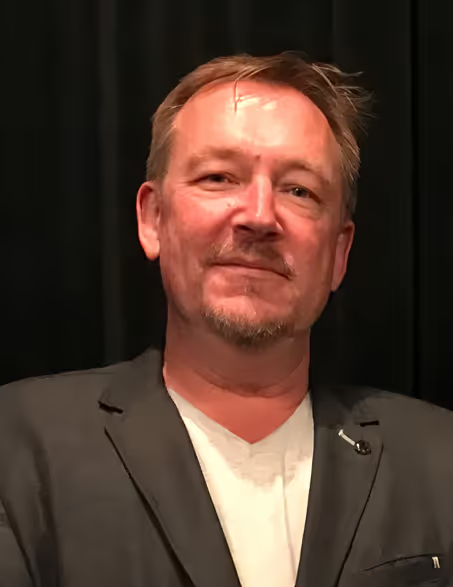

Each year, Pride Month is a vital reminder to uplift and celebrate the inherent dignity of all people while honoring LGBTQ people and allies who bravely fought against hate and extremism before us. This year, we have seen a rise in anti-LGBTQ hate and know that extremist groups intend to target, disrupt, and intimidate Pride events this June. That’s why Interfaith Alliance and our partners help organize Faith for Pride every year, to let extremists know that faith will not be weaponized to oppress our LGBTQ siblings. This week on The State of Belief, Interfaith Alliance’s weekly radio show and podcast, Rev. Paul Brandeis Raushenbush is joined by two effective activists to discuss why this year, it’s more important than ever that faith communities play a leading role in defending LGBTQ communities and Pride celebrations.
“We as people of faith have that responsibility to reclaim that faith voice. To say that this is not in my values, to say that we affirm trans and queer people, to try to protect the youth in particular that are, I think, being affected by this, and to engage in a way that gets involved in the process, the legislative processes that are happening.”
- Rev. Kimble Sorrells is an ordained minister in the United Church of Christ, and is dedicated to integrating spirituality with social activism. Kimble is a trans-identifying pastor seeking to support transgender people's well-being through increasing access to wellness and resilience skills, while also organizing to counter anti-transgender legislation and other oppressive forces. In addition to a Master of Divinity from Candler School of Theology at Emory University, they hold a certification in cognitively based compassion training and is a registered yoga teacher. Kimble is also a member of Interfaith Alliance’s new Interfaith Leadership Network.
“I think part of this is realizing that LGBTQ Jews have always existed and been a part of our history, of our stories, of our culture. it's not a new phenomenon,” they said. “And maybe we just have this new language to talk about ourselves and to talk about our experiences. But LGBTQ Jews have always been our people. and so it's only going to become more and more important to make sure our spaces are inclusive.”
- Lanie Cohen, community mobilization manager at Keshet, an organization dedicated to LGBTQ equality in Jewish life. Lanie has a rich background in social justice and community building, from facilitating gender violence prevention trainings, to contributing to the passage of progressive policies such as the Reproductive Health Equity Act. She's a part of the Faith for Pride Coalition which includes Interfaith Alliance, Keshet, SPLC, Pride Peacebuilders, and other leading organizations working for the dignity and inclusion of everyone.
The State of Belief host Rev. Paul Brandeis Raushenbush is President and CEO of Interfaith Alliance.
Transcript
REV. PAUL BRANDEIS RAUSHENBUSH, HOST:
Rev. Kimble Sorrells is an ordained minister in the United Church of Christ, and is dedicated to integrating spirituality with social activism. Kimble is a trans-identifying pastor seeking to support transgender people's well-being through increasing access to wellness and resilience skills, while also organizing to counter anti-transgender legislation and other oppressive forces.
Kimble is a member of our brand-new Interfaith Leadership Network – Yay - a select group of diverse faith leaders from across the country, each working on individual projects to collectively strengthen interfaith relationships and positively impact their communities. In addition to a Master of Divinity from Candler School of Theology at Emory University, Rev. Sorrells holds a certification in cognitively based compassion training and is a registered yoga teacher - and I am delighted to have them with us on The State of Belief.
Kimble, welcome!
REV. KIMBLE SORRELLS, GUEST:
Thank you. I'm so glad to be here.
PAUL RAUSHENBUSH:
My goodness, I am so excited. It was so great to meet you in Washington, D.C. I told you about this earlier, but we gathered all these wonderful people from across the country to our convening in Washington, D.C. and Rev. Kimble was there as part of this new program that we launched, the Interfaith Leadership Network, which we had dreamed about for so long. And then it's wonderful when your dreams are actually even better than what you hoped they would be. And Rev. Kimble, I hope you enjoyed yourself in D.C.!
KIMBLE SORRELLS:
I did. it's been a few years, actually, since I've been back up to D.C. to lobby. And so it was really, really great to be back in the city and to meet everyone, from the cohort as well as just the wider network, and just see the connections and the potential of places of collaboration and learn from each other. It was really just wonderful to be there. So thank you for having me.
PAUL RAUSHENBUSH:
Oh my goodness, it was our pleasure. So, Kimble, maybe you can kind of take us back - I actually don't know what part of the country you grew up in - and a little bit about your background and how you arrived at this amazing, important place of offering others hope and potential in this moment that we're in, where we need it so much. So where do you come from, and how did the evolution of your identity as a person of faith, as well as as a trans leader and trans man evolve?
KIMBLE SORRELLS:
Yeah. So I'll try to give you the short version, because it is quite a journey. I grew up in Birmingham, Alabama, I think the buckle of the Bible Belt, and came into the faith community sort of by what many might call a dramatic conversion experience in early, early adolescence where I, as part of this process, thought that God was wanting me to be straight.
Looking back, I think that the turning point there for me was the interest in spirituality. Not that God wanted me to be straight, but the desire to know God was what I think as the starting point of my journey at that point. So sort of in spite of all of the other things happening around me, I just didn't have the people to quite nurture that in the right way.
So I came out of the evangelical community, went to college, was in very right-wing scholarship programs, let's say. I won't drop any other funders now, I just don't throw them too much shade. But it was very kind of conservative circles, even involved in some of what might be considered right-wing kind of apologetics type activities as well.
PAUL RAUSHENBUSH:
Was this in Alabama, or had you gone somewhere else?
KIMBLE SORRELLS:
Well, I grew up in Alabama, went to high school in Alabama. I went to college up at Berry College in Rome, Georgia. so still in the South. Berry is a non-denominational Christian-based university, but the student body overall tends to be more evangelical or Southern Baptist. But there are progressive people and there are progressive professors. And so it was there that I actually kind of came out the first time late in my college career, because despite all of my trying to be straight and all of the things, it was just like, this isn't working. This is not working, and this is hurting me.
And I would say the academic study of religion - I was a religion major - really was the means of deconstructing. But I think it took a while, it was easier for my head to come around to deconstructing my faith. It took a little while longer for me to trust it and to believe it, and to believe that God loved me as I am.
And so that was college, and at that time also kind of discerning a call to ministry. and then I came down to Atlanta, after college was in AmeriCorps. so that experience was really formative to me, of working with the homeless population here in Atlanta. And that was a whole new crisis of faith, of seeing just the pain in the world - and in a way that I think I had really been sheltered from, growing up. So, more kind of reexamining faith at that time in a different way.
And I came into the United Church of Christ at that time, and found a place where all of my self was welcome, but also all of my questions and questions about what I was seeing in the streets of Atlanta and the pain and the suffering, and so started on the ordination track around that time, went to Candler. it was at Candler that I started to sort of understand my gender identity. It's still very early in the stage. I would say kind of was aware of my being non-binary, but just didn't really quite know how to live into that, what that looked like. And I think trying to get through all the things of ordination and all that, I think I sort of maybe pushed it a little to the back burner, and didn't really fully live into that until after I kind of completed that process. So that's sort of my faith journey.
And then I think in terms of my interest in contemplative practices, I think I've always sort of been a little bit of a mystic and had that desire to connect with God - or the divine, if that language works better for people. That's always been there. And then it was really kind of after seminary that I was able to start exploring that with different programs, whether that's some of the formation programs at Columbia Seminary here, have some classes that I took, yoga, and was just really able to find a lot of peace in that. But also just a lot of really practical help. It can be really helpful in just alleviating distress, and giving skills for coping.
So I left parish ministry and was sort of in the non-profit sector for a while. Just have always been sort of dancing in two worlds a little bit in that regard of by vocational ministry. When I started working at Emory and got trained in cognitively based compassion training, or you might hear me just say CBCT for short, I feel a little bit less like I'm doing two different things at once. I feel a little more conversational now, which is lovely. And really, I think just in the last several years, as I've been doing activism and doing contemplative work and just sort of as a dance together, a little bit. I've just seen the need for them to be more intentionally integrated. And I think, especially as we're in this time of really, I guess, just hatefulness, I don't know how to say it other than that. It's just the legislations that we're facing, those kind of things.
PAUL RAUSHENBUSH:
It's an amazing story, and I think one of the things that's so helpful to hear stories like yours for younger people. But also for all of our listeners to just recognize that it's not one and done; this idea of constantly learning, constantly asking the next question, constantly being curious about what's inviting you into the next thing. I just think hearing the specifics of your journey and how admirable it is that you never just shut it all down or just decided, I'm just going to ignore it because it's not a convenient way for me to go, you know? I mean, even your initial come to come to Jesus moment, whatever it looked like, you recognize it as some sort of desire to know God. And I think that's a really beautiful thing, which is still true today.
In your contemplative practice it may look very different, but it's driven from the same spiritual exercise that has driven the mystics and the truly religious since the beginning of time, which is to - the Spirit, no divine, you choose your language. It's just a really important language kind of use. And I think what I really want to emphasize here is that this is also intertwined with your understanding who you are, and that these stories are the religious testimonies of our time. And we tend to kind of go very quickly to how people present to us in the moment, not recognizing the incredible stories that bring them to that moment. And so I just want to thank you for taking the time to bring us in that. I love the story.
I think it's very powerful in the context of this moment and of the project that you're bringing to the Interfaith Leadership Network. What I understand that you're hoping to do is actually create resources, especially for trans people who are feeling attacked from all sides, and giving them wellness techniques based on all of your spiritual wisdom. Can you talk a little bit more about what you're working on right now and what it hopefully will offer? Sounds like life-giving strategies for and tools in this, as you call it, a very hateful time.
KIMBLE SORRELLS:
Yeah, it is a time. I think it has some different facets to it, I guess. And I am really interested sort of where it will go as things unfold. You know, I think there is the very practical side of things, which is: we as people of faith have the responsibility to be engaged and to act in a way that can potentially counter some of what we're seeing happening legislatively, verbally, those kinds of things. Preaching to the choir here, right, we've been saying for years that a certain particular population has tried to claim the faith voice and kind of weaponize that. And so I think that's a part of it is that we as people of faith have that responsibility to reclaim that faith voice, to say that this is not in my values, to say that we affirm trans and queer people, to try to protect the youth in particular that are, I think, being affected by this, and to engage in a way that gets involved in the process, the legislative processes that are happening.
You know, we're out of session right now in Georgia. So there's not a ton happening here. But I think the sort of practical component of it is how do we continue to build these interfaith relationships here and everywhere, really. But, building those networks so that when these things happen, we're able to respond in a way that we can try to counter those harmful bills, harmful legislation, harmful rhetoric.
I think that that's one piece of it, because the reality is, again, We can train and offer care and offer contemplation. But if we're not alleviating or at least seeking to alleviate the causes of distress, I think that's an inadequate response. So that's a piece of it is that practical part. But also, how is it that we as people of faith, communities of faith, congregations, how is it that we can then also provide care, provide resources? You know, provide ritual, provide space to care for people who are experiencing really tremendous causes of distress, whether that's legislation, again, or just the rhetoric which itself…
You know, one thing I like to tell people is, even if a bill doesn't pass, there's trauma that happens to the community just by enduring the anxiety of, will this pass? There's trauma from listening to having your humanity debated on the public stage. And so I do believe that people of faith have the ability to provide care in response to that, whether that's, in times of distress, kind of providing healing spaces, providing workshops that could potentially offer things like any of the kind of contemplative practices or wellness skills like CBCT. You know, communities of faith have that network to be able to offer that.
But I also think, how do we even get in there and provide care even in the moment? Like, can we show up as chaplains at the ropes when we're lobbying, when people are actively experiencing emotional dysregulation in that moment? So that's, I guess, kind of a high level view. Those two facets of, both very practical, but also how do we network to provide and increase our care and support to the community?
PAUL RAUSHENBUSH:
It's very holistic, it's comprehensive, and it recognizes that it's all important and it isn't an either-or. You can actually do them together.
I want to read one thing. I went on your wonderful website, and I want to just mention it to the listeners, it's RevKimble.com. And it's really a beautiful website, very simply laid out. But you do have a blog, and you did this really beautiful piece to young trans youth. And there was a passage that jumped out to me and I'm going to read it. I'm going to read your words at you. But it says, “On the days when the world seems cruel, I remember that my transness is a spiritual gift to myself and the world around me. It is a blessing to embody a transcendent space, in the same way that so many spiritual realities defy categories or definition.”
And I just think that that is wonderful - to kind of flip the narrative and make sure that people understand: Actually, no, this isn't something I'm surviving; it's actually the gift that I was given that informs the spirituality that I am offering in the world, and that I'm experiencing and that I'm sharing. I mean, it's such an important message. And it expands the idea of what spirituality can be and should be in all of our lives. But it comes out of your reality.
So talk a little bit about what was behind that passage, but then also your desire to write to younger trans folks who might be feeling bereft at this moment.
KIMBLE SORRELLS:
Sure. Oh, goodness. And I think that particular one I actually even wrote a little bit earlier, as we were first starting to get some of these bills coming down. I think the spirituality behind it for me… You know, I think often you look at, like Genesis I gets kind of thrown at trans people. It's like, well, God made man and woman. But if both of these entities are in God's image, then God encompasses both man and woman and everything in between - and so in that way, I tell people, yeah, so we reflect a different aspect of the image of God and reflect the expansiveness of God that is not bound into a binary.
And I can sometimes be a little bit snarky and mildly off-color. But in seminary people would say, well, I don't understand non-binary. Like, are you like, is it man, woman? Like, what is, what are you, how does that work? And I said, well, okay, Candler Emory students being very progressive that you are, well, all right. Is got a man? And then they, like good Candler students, said, oh no, no, I use gender-inclusive language for God. And I said, well, is got a woman? They say, well, no, not exactly. I said, well, there you go. I'm just more like God than you are.
PAUL RAUSHENBUSH:
Nice. But even to that point, you go into churches where they’re just like, God the Father, God the Father, God the Father - and I'm just like, to me, it just rings idolatrous, actually, like that. We're just giving God a pronoun that God doesn't prefer, if you will. And really, I almost can't sit through it anymore. And I think that that's a gift that you gave them. I mean, I don't know that you're more God than anyone, but the point is very well taken.
I live in New York City, and we just discovered that a school board for my district - I have two kids in school for my district - passed an anti-trans resolution. And they do it in the name of protecting… It's always, I guess, protecting women, girls, you know what I mean? And it's very interesting how erased trans men are from that whole conversation. I'm curious - you've been thinking about this a lot more than I have, but it's always, oh, no, this isn't anti-trans. But then actually, when you actually push them on it, it's very anti-trans, and it's just been so disturbing. A lot of us have been rallying against this, showing up to the school board and all of this. But, you know, I just think it must feel very, very difficult in this moment when we have 500-plus bills across the country that are specifically targeting, largely targeting trans - because they've decided: we're not really going to win, necessarily, on the on the marriage issue or the love… But trans - we can make them scary. And I'm curious how you're maintaining, but then also, how can other members of the LGBTQ community be better allies in this moment.
KIMBLE SORRELLS:
Yeah. So all great questions. And it is a really difficult time. I think for me personally, leaning into my practices, leaning into this piece of resilience where - I'm not actually more like God than other people, it's a joke, right? But to celebrate the things about myself - whether that's being a parent, whether that's any of the things that are great in my life, to lean into that, to lean in my practices, using the skills I have to stay, as much as I can, in the moment without going down the rabbit trail for what-ifs. Those are all some of the ways that help kind of personally coping. Leaning into community, especially during Pride month. Leaning into the places of trans joy. Because we need that.
PAUL RAUSHENBUSH:
Can you just say a couple more words about what that means when you say, “Leaning into trans joy?” I'd love to hear more about that.
KIMBLE SORRELLS:
Yeah. And it means different things for different people. But all of the ways that we celebrate who we are in our existence, whether that's a spiritual kind of thing - for me is sort of seeing the ways that I reflect the image of God; whether that's trans joy that delights in their creativity and their art, whether that's performance art, whether that's painting, you know, I think that we are people that create and recreate ourselves. Seeing the ways that we are wonderful, and just celebrating that and celebrating our community and our resilience and our strength. yeah. Because yeah, things are really hard, but we're strong, you know? So that's also true.
In terms of allyship – yeah, we need it. You know, I think we often think of allyship as being something that only straight people do. But I think in terms of trans allyship, yeah, LGB or other non-trans queer folk can show up and should show up. Sometimes that can be as simple as just disrupting when someone's saying something or misgendering, things like that, to speak up in conversations. Also, getting involved in the legislative efforts, showing up to things.
And it's important not to like center over trans voices, but to come in and be alongside trans people as we are doing this. You know, sometimes it's even just when something crappy happens or a crappy bill passes or passes through one stage to another, just reach out and just acknowledge, even just acknowledging things are really hard right now. Get someone a cup of tea, you know? I mean, just being in it with us, I think, is really important in this time.
PAUL RAUSHENBUSH:
That's excellent. Excellent advice, and something I think we can all hear. You know, I read something from a piece that you wrote to a young trans person who might be feeling disheartened. If someone is kind of either at the beginning stage of their process or beginning to wonder and really feeling like you mentioned, you in Birmingham. You didn't have anywhere to turn. For someone who is beginning to have these questions, where would you recommend that our listeners could point people if they know of anybody in that situation or encourage people. What are some resources out there, online resources, resources yourself have developed or just places that feel really important for people who are, especially those who might be coming out or in a religious community who don't want to throw out that in order to go here. What are some what are some resources you can encourage people to investigate?
KIMBLE SORRELLS:
Well, you know, some of it depends on where you are located, obviously. But I think in terms of faith resources, there are affirming faith communities. I always tell people, don't just go where you're tolerated, go where you're celebrated. And for all of the bad things that came out of Covid, the fact that you can live stream just about any church service all over the country is maybe, perhaps in this case, something that I think is helpful.
You know, I remember, being in Rome, Georgia, and I was a little too scared to go to the Episcopal Church at first, because I grew up Southern Baptist, and I was like, I don't know what to do with my hands. and so I was afraid, and I didn't think there was anywhere I could go to church. And I it would have been nice to maybe be able to join by Zoom.
And I will say I ended up going to that, church, the Episcopal Church around Georgia, and I loved them dearly. They were such a wonderful, welcoming congregation. I still am in touch with one of my priests from undergrad. But maybe there isn't as much resources in your area. I think the blessings of where we are as a very digital place is that you can join online. There are support groups online, there are support communities online.
I do think Transmission is one that's doing a lot of online work in particular and I think has a lot of engagement. There's a lot in Atlanta I could point people to, but that's kind of specific to Atlanta. But I think usually if you can go to your either closest Pride organization or closest Equality Federation organization, they're going to have a list of resources for your area. There's different online sites, like if you go to any of the denominational sites, you can search for, churches that have like what we call in the UCC Open and Affirming congregations. So I think going to those places is one of the best things to do.
And inasmuch as we can have those in person, in real life, connections, it's great. Even if it's one or two close friends, that's something. But I think utilizing those online networks can be helpful when needed, especially to get access to care and stuff.
PAUL RAUSHENBUSH:
Yeah, absolutely. Well, one of the things we ask everybody on this show is the question: what gives you hope? And so I want to invite you to let us know what gives you hope as a source of inspiration.
KIMBLE SORRELLS:
There's a lot of things to give me hope. But maybe the ability that I see in people to care deeply and to love deeply. That, I think, is the catalyst that can fuel all of this. And I have seen people who have surprised me along the years, who you would have never thought would have come around, have come around. And I've seen people that defy the stereotypes. You know, I think a lot of people think that people who are older aren't necessarily going to be affirming, but I have had some amazing adopted grandparents, unofficial adopted grandparents through my faith community who have just loved on me at different places in life.
And so I think if there's anything that gives me hope, it's that I believe that we as humans have a very deep and real innate capacity to love, and that through our faith practices, whether it's contemplative practices, whether it's ritual or whatever, we can grow and cultivate that, and extend that to more and more people. And that can really change things. Because if we love people, if I can see how this person is like me, then that's going to shift things a lot.
PAUL RAUSHENBUSH:
How are you planning on celebrating Pride this month? Do you have any special, special rituals or anything you really like to do?
KIMBLE SORRELLS:
Oh, good question. And it's funny because in Atlanta, we sort of get to do Pride twice because our Atlanta Pride festival is in October. There's a lot happening, though, in June. There's some interfaith services that I might attend. I love to just be with people that I love and that love me and celebrate together.
PAUL RAUSHENBUSH:
For me, the ritual can just be I'll go to the Pride parade, which in New York City is just enormous. but you know what? I just could be around it. You know, there was a time when I would march in it. But I'm in this moment where I'm just like, this is awesome. And just seeing the people and people having a good time. And I don't need to make it a centerpiece of my month, but just the fact that people are showing up, it can be very fun. And so I like to just kind of peek in on it for an hour or so. I don't have to sit there for the like, whatever, seven hours that it takes for it to go through. But there's something still nice for me about seeing it happen.
KIMBLE SORRELLS:
Yeah. Well, and I do always go to the festival in October here, and I love that our Pride is free. And it is pretty big, but I think has a lot of kind of local flair to it. I usually participate in the Trans March on Saturdays. That feels really important to me, because it's a little bit more of a political and a protest march, and it's also one where - because it's not so big - the protesters are a little bit more kind of in-your-face. And so things like that, I do like to encourage faith communities and thinking about de-escalation and those kinds of things to think about, like some of those smaller spaces like trans marches, dyke marches. A lot of times the protesters there can be up closer and more personal, and kind of can get a little dicey. And so I've seen some really amazing work with communities, whether they're faith communities or just local people - we call them the Pansy Patrol come out with these big flowers and hold them up to just sort of run interference. It's great.
So I usually do the Trans March. I have marched with different groups in the main Pride parade, that's always a little more fun thing. And usually churches will have sort of a celebratory service either the week before or the week of. And I do love to do that, to be in a faith service where we observe that and celebrate that and celebrate the ways that God is affirming us. I love when we do communion and sort of queer communion. Some of them do do a Pride Eucharist usually during that week and stuff. So yeah, those are some of the ways I celebrate. There's always some good entertainment, too.
PAUL RAUSHENBUSH:
Rev. Kimble Sorrels is dedicated to advocating for justice and using contemplative practices to foster peace and resolve among justice makers. They’re an ordained minister in the United Church of Christ.
Kimble, thank you so much for being with us today on The State of Belief, and Happy Pride!
KIMBLE SORRELLS:
Happy Pride. Thank you so much for having me.
-----------------------------------------------------------------------------
REV. PAUL BRANDEIS RAUSHENBUSH, HOST:
Lanie Cohen is community mobilization manager at Keshet, an organization dedicated to LGBTQ equality in Jewish life. Laney has a rich background in social justice and community building, from facilitating gender violence prevention trainings and college, to contributing to the passage of progressive policies such as the Reproductive Health Equity Act. She's a wonderful part of the Faith for Pride Coalition that includes Interfaith Alliance, Keshet, and other leading organizations working for the dignity and inclusion of everyone. Lanie, welcome to the State of Belief.
LANIE COHEN, GUEST:
Hello. Thank you for having me.
PAUL RAUSHENBUSH:
Oh my goodness, I'm so glad. You know, the last time we saw each other, it was in person and we were tromping from one office in on the hill to another, like all these congressional offices, mostly Republican offices. And we were talking about the writers. Do you remember this?
LANIE COHEN:
Yeah. Which many of them ended up failing.
PAUL RAUSHENBUSH:
Yeah. Well, that was actually like a really kind of great example of, you know, just informing offices of what's going on, because most of the people we were talking to weren't even sure what we we went in there talking about these anti LGBTQ writers that were being attached to the, to the appropriation to the budget bill. And, and they were like, wait, what what are you talking about? And and then when we, you know, when we explained it to them and reminded them that the majority of people and especially religious people in America, are not in favor of anti-LGBT equality writers and things like that, they're kind of like, okay, well, I'm going to study this more and bring this up to the members. So it just seemed like a very positive I mean, I be interested in your memory of that, that experience.
LANIE COHEN:
It's always a funny thing to be the one informing the legislators on the bills they will be voting on, but that's why we have to do it, right?
PAUL RAUSHENBUSH:
I mean, especially about this. And it was one of those moments where you realize showing up and, you know, and explaining things to legislators really matters. And so it's an invitation to all of our listeners. It actually matters that you reach out to your, you know, representatives, your legislators, your school board members, and explain to them what's going on and your perspective on it, and it really makes a difference. And so that was actually kind of an amazing thing that pretty much everyone we visited voted no on those writers. And, you know, and so we, we, you know, Interfaith Alliance just appreciates the partnership with Keshet so much and and happy pride. I guess I should have started with that. Happy pride. but, Lainey, can you just give me a little bit of your own background? Like, kind of, you know, I'm not sure where you grew up. Like what? Like, were you raised in a religious home? Tell me a little bit about your own spiritual background and how that intersects with your amazing activism today.
LANIE COHEN:
Yeah. Thank you. Paul. I grew up in Chicagoland, Highland Park, Illinois, and that included a secular Jewish or culturally Jewish upbringing where I was not attending synagogue or observing High Holidays. But our faith was a reason to rally in the community and around the table with family members. And so after leaving Chicago, I went to the University of Denver and spent a lot of time in Denver working for our state legislature. I was on the staff of our House Majority Leader, and she was the first lesbian majority leader in Colorado. That was a treat. We worked a lot on labor issues, on LGBTQ issues, and passed some really awesome legislation to protect abortion access and reproductive health in the state of Colorado.
PAUL RAUSHENBUSH:
That is fantastic. Yeah. I just want to just pause for a second just to acknowledge, like, there's so many different ways to be Jewish. And I think that, you know, I mean, I think sometimes like, you know, people who are not, you know, having, having, you know, my, my closest cousins being Jewish and, and realize even within my family there's so many different manifestations and, and it doesn't necessarily always require this overt religiosity.
But there is there's another part of Judaism that, you know, which is like this really strong secular social justice throughline. And that's actually much more of the tradition that my family is in is like this really, you know, a sense of Judaism is definitely a part of who they were, but also this real drive towards making the world a better place in in some ways informed by that, you know, that heritage. And so I just think it's really important that we always pause and say, like, there's so many different ways to be be everything these days, and no one gets to be like the standard of this. This is the way it's done.
LANIE COHEN:
I don't know who said this or where it came from, but I've heard a quote once, like, there are millions of Jews and millions of ways to do Judaism, right?
PAUL RAUSHENBUSH:
Like, I love that, I really love that. And it's just so important to mention that today, right now, when it's almost like there's a, there's a there's a struggle to figure out, like what is true Judaism, what does it really mean? And I think it's just great to, to to pause.
So, so you have all this background that you're bringing to this work that you're doing today.
LANIE COHEN:
Yeah, I have had the privilege of working in politics, kind of seeing how the sausage gets made for turn of phrase and taking that knowledge to the community based side of things to try to use our Jewish values, our Jewish faith, to make a difference in where the needle lands, and changing the narrative to say that faith and religion are incompatible. Right. We have a rise in Christian nationalism and extremism that tells us that faith has to look like this one thing, right? Exactly what we were saying. Our interpretation of faith is not there is no monolithic way to be religious. And that is why it's important we use our religious terms to say, our religion looks like this. It looks like respecting the inherent dignity and worth while people. It looks like going to the Capitol and telling our legislators that there is no place for anti LGBTQ budget amendment riders, a whole plethora of things.
PAUL RAUSHENBUSH:
Yeah, yeah. And I actually I really love the, you know, this, this phrase, how the sausage is made and it's a little grotesque and you're like, let's, let's skip over that. But one of the things that I actually have really kosher sausage. Yes. How the course. Of course, of course. how the vegan sausage is made. But the, the I think that the idea of like really understanding how laws are created passed. We have that you know I back I'm old enough to remember this like this like schoolhouse Rock that was like I'm just a bill. But but I do think we forget that every bill has an origin story. And then it has, like, people really trying to figure out how to make the bill pass. I remember, you know, I've been doing this, this long project about my grandmother, who, you know, she and her husband created the first unemployment compensation bill in the nation. And they really worked so hard to figure out how do we get what we need and also have it pass, you know, it was like all these different things.
And I just think it's really important, like people like you who have really been through it, that's part of what it's not all just it's not all glamour, Laney. I mean, I, I know the majority of your life is just glamour, glamour, glamour.
LANIE COHEN:
But it's what inspired me to be in this role, right? I was sitting outside the legislators office and seeing all the good faith efforts of advocates in the community and listening to people's personal narratives and their stories and their experiences, and trying to uplift those. That is what supplements all of the legislative work is movement behind it that need the bill to pass to protect their family or protect their civil rights. Right. 100%, 100%. Is, integral to any bill being passed, right?
PAUL RAUSHENBUSH:
It's it's about coalition and it's also about narrative. And and it's it's just about like this this will land this way for this community. And how wonderful it will be. Now tell me a little bit about Keseht. What for those who haven't heard of this amazing organization that is really a close partner to Interfaith Alliance, especially in our work around, LGBTQ equality and rights.
What's the origin story of Keshet and and what is the, you know, the the thing that you are most working on right now?
LANIE COHEN:
Yeah, so Keshet is over 20 years old and started in, a suburb in Massachusetts as a way for LGBTQ issues to be connected to each other. And it's really evolved from there. Right? It is now a major part of the Jewish institutional world, trying to make sure that every Jewish space is ready to accept and affirm the dignity and worth of LGBTQ Jews and our families. That looks like a lot of different things. We have an education and training team that goes into these spaces, whether it be day schools or summer camps, and teaches them that cultural competence piece that is really important to respecting and affirming community members. And then I am on the community mobilization side of things, which means that after those spaces, they write, they respect one another. They have the language to talk about LGBTQ identity and issues. They know that LGBTQ Jews belong in their spaces and always will be in their spaces.
And then they think, what can I do to make the world a better place for my community, for the LGBTQ people in my community? And we teach them, you know, how to think about things Jewish, how to think about taking social action by using your Jewish values again, to go to the public arena and say, this is what my mate says about LGBTQ rights. It says that it is an inherent part of our our tradition and our faith, and that we can use that perspective and that identity to bolster the argument for LGBTQ rights. Well, and we also recently added a Jews of Color department, programming department. And so we are doing programs specifically for Jews color as well.
PAUL RAUSHENBUSH:
I just I think it's it's so important to kind of recognize the need within our own communities. I mean, I can't even begin to talk to you about the Christian world, which is like so. But, you know, I think it's it's really important that the way you're framing this is that this is not an external, effort to kind of make the Jews accept LGBTQ people.
It's actually a Jewish effort to make sure that everyone within the Jewish community is accepted within the Jewish world, which is a very different kind of frame. And, you know, really it allows, it allows people who might be a little less immediately inclined to say, okay, we want to we do want to represent the, the, the Jewish people in our lives, and we don't want to leave people out. So, like, what have we not been seeing? And I can imagine there's lots of moments. I mean, that's just the way, you know, the world is. We've all, all of us have had these moments where I didn't even see that until you told me. And it's very important to be open to that. Do you find that the Jewish community is largely open to your work?
LANIE COHEN:
Yes, especially because I have the honor of going into the places where the education and training team, as already kind of provided that language, that understanding. I can go and build upon that.
But to circle back to what you were just saying about, like thinking about what is already in our community, I think part of this is realizing that LGBTQ Jews have always existed and been a part of our history, of our stories, of our culture. it's not a new phenomenon. And maybe we just have this new language to talk about ourselves and to talk about our experiences. But LGBTQ Jews have always been our people. and so it's only going to become more and more important to make sure our spaces are inclusive.
PAUL RAUSHENBUSH:
it's it's also an opportunity to celebrate some of the brilliance. I mean, some of the, you know, I, you know, I'm like such a Tony Kushner had, you know, and, you know, if you kind of if you, if Jewish life were just to kind of excise the Jewish luminaries who have been like, you know, some of the major, like LGBT Jewish luminaries who have been some of the major contributors to culture in America. I mean, how how much what paucity do we do? We end up with as far as, as far as like not just American life, but Jewish life.
And so it's really also like a recognition of all the all the amazing contributions that have been done and also the, the ones that are waiting to happen. And you kind of think of young, you know, LGBTQ kids today who are like in some ways stepping into a much more welcoming space, but then also like looking around and saying, this, this world is scary. And I think it's so I'm so it's so great that they could immediately find a place like Keshet that would be like, okay, yeah. You know, there are there's a space works.
LANIE COHEN:
Our youth program teams works very hard to put on programs by and for queer and trans youth and create those spaces where they can say, this is the world we're going to live in, this is the world we're going to build together. And it looks like everyone in this room, right?
PAUL RAUSHENBUSH:
Yeah. Isn't that isn't that incredible? So what are some of the the big projects that are, underway that feel, that feel daunting, but that you want to let our listeners know are happening in case they have any way of supporting you.
Like, what is something that you're, you know, that Keshet as a whole or you're embarking on that is like, whoa, this is a major project, but we're we're going to go in.
LANIE COHEN:
Right. dismantling Christian hegemony and Christian nationalism. That's our next project. No, I'm just kidding.
PAUL RAUSHENBUSH:
I was like, awesome. Good. I could take that off my list because it's going to do it. That's great. Yeah.
LANIE COHEN:
That's that's on the list. Right. But maybe I can zoom in and be a little bit more specific. For any members of the Jewish community listening to this, if you are a part of a Jewish organization or institution that I co facilitate a coalition called thrive, we facilitate this with sojourn. And this coalition aims to create a world where trans youth are not under attack. We work with over 250 Jewish organizations to think about how to stop negative policy on the state level and bolster positive legislation to protect LGBTQ rights. And really, it has an educational and community based format where we learn from one another, we talk to one another, and we see what can we do to be a coordinated effort to protect trans youth when there is a very coordinated effort to attack the rights of trans?
PAUL RAUSHENBUSH:
It's incredible the the amount of vitriol and negativity and violence that the trans community is experiencing. And, and, you know, some of that violence comes in the form of these the legislation that is, you know, being proposed and and what it indicates. And, you know, you and I both have friends, you know, Rory Maher, Rory has been on this show and who has a trans, I think trans daughter, I think and, and, you know, you think about her as a mother trying to care for her child and that there are people who are trying to get in between her and the care for her child that she feels her child needs. And it's just really the whole thing is so heartbreaking and, and really, and it also, again, it's like someone else knows better than than the people who themselves how to care for themselves.
LANIE COHEN:
Right. We can talk about bodily autonomy in terms of gender affirming care, or we can talk about bodily autonomy in terms of reproductive health and abortion rights and access.
So it kind of demonstrates how all of this really is a coordinated effort to, and a coordinated effort to attack our rights. But that is why we have to be coordinated in our response. And we have to talk to one another, and we have to community builds and coalition build and be in conversation about these difficult topics. And I think it's important to note that. You know, it's not what the American population is against trans identity or LGBTQ rights, right? This is a really coordinated, intentional effort by extremist politicians and their supporters to reach voters that are on the margins and who will be motivated to go to the polls if they think that their rights are at stake. And if we can make this a moral issue of, you know, trans kids are making your kids unsafe in school, then they can realize that that helps bring maybe parents to the polls that didn't have a reason to go before, and now they feel like they have something they need to show up for them. But that's not how we want it to our politics.
We don't want to fearmonger. We don't want to make people afraid that about their rights. We want to say that it's not a competition. We can all create school spaces where we put our children can be safe. and we can do that by like you asked me. What it's working on is getting people to vote for our general election, and vote with LGBTQ rights in mind and vote with thinking about what is going to protect my community. Is it? Based on hate and fear or is it based in love?
PAUL RAUSHENBUSH:
Thank you. Thank you so much for that. I really, really appreciate that. And it's just it's so important. Also like, you know, a lot of times people hide behind religion when they're talking about these radical anti-trans policies and anti LGBTQ at large as well as anti abortion rights laws. And and yet, you know, religion religious people do not support that. Across the board the majority of religious people do not support it. And so we have to also be really loud about reminding politicians and reminding one another that that doesn't represent the religious point of view for Americans writ large, and that this is a very radicalized, minority religious position that is trying to impose their view on the rest of us.
And so it's just a it's helpful for you to say that we are a podcast/radio show that really believes in also lifting up the possibility and hope. And so I always ask every guest, what is giving you hope right now? So Lainey, what is giving you hope right now?
LANIE COHEN:
It's giving me hope is the amount of people like you and I who show up and do this work. I see my wonderful colleagues, my friends, other community members who they're putting their life's purpose and their 40 hours plus a week to thinking about, how can I make the world a better place. That gives me hope because it's it's not easy. And. If we can choose to continue to show up for one another, and that can be outside of, you know, an official employment. That's just how I'm thinking about it, because that's my route to work in the justice realm. But we can think about how our lives can be meant for showing up for one another and making our world a better place.
That is like that is the hope is is seeing the dignity in one another. When we do this work and I'll always show up. I know that there are people around me who are coming at it with the same amount of energy and force as I would hope to inspire me.
PAUL RAUSHENBUSH:
Lanie Cohen is community mobilization manager at Keshet working for LGBTQ equality in Jewish life again this year. Keshet is an important partner in the Faith for Pride initiative. Find out more and join at FaithforPride.org. Lainie, thank you so much for making the time to be with us today on the state of belief and happy pride.
LANIE COHEN:
Thank you. I am so lucky to be your colleague and co-conspirator. Thank you for having me.
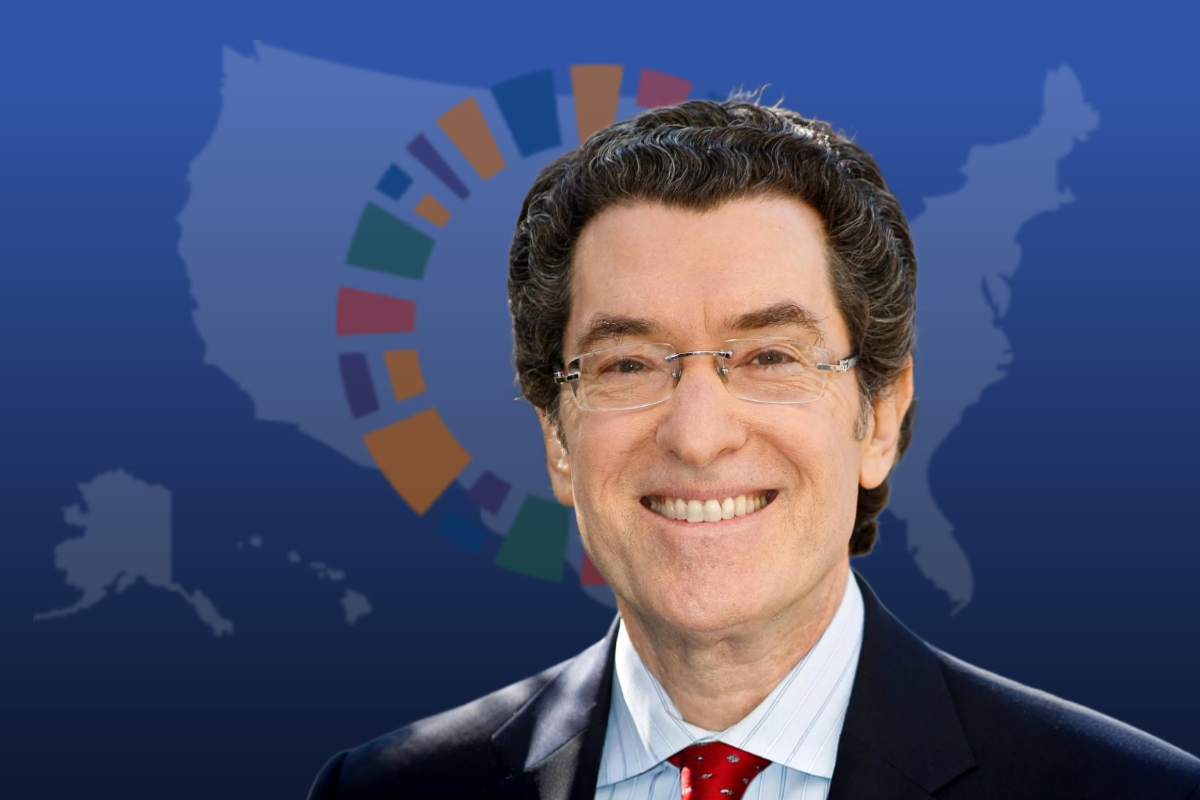
"We Are Ready": Attorney Extraordinaire Norm Eisen Talks 2026 Midterms and Beyond
The co-founder of Democracy Defenders Fund and former Obama Administration ethics czar joins Rev. Paul Brandeis Raushenbush on the eve of the election to recount victories and unveil strategies for ensuring a full and fair vote.
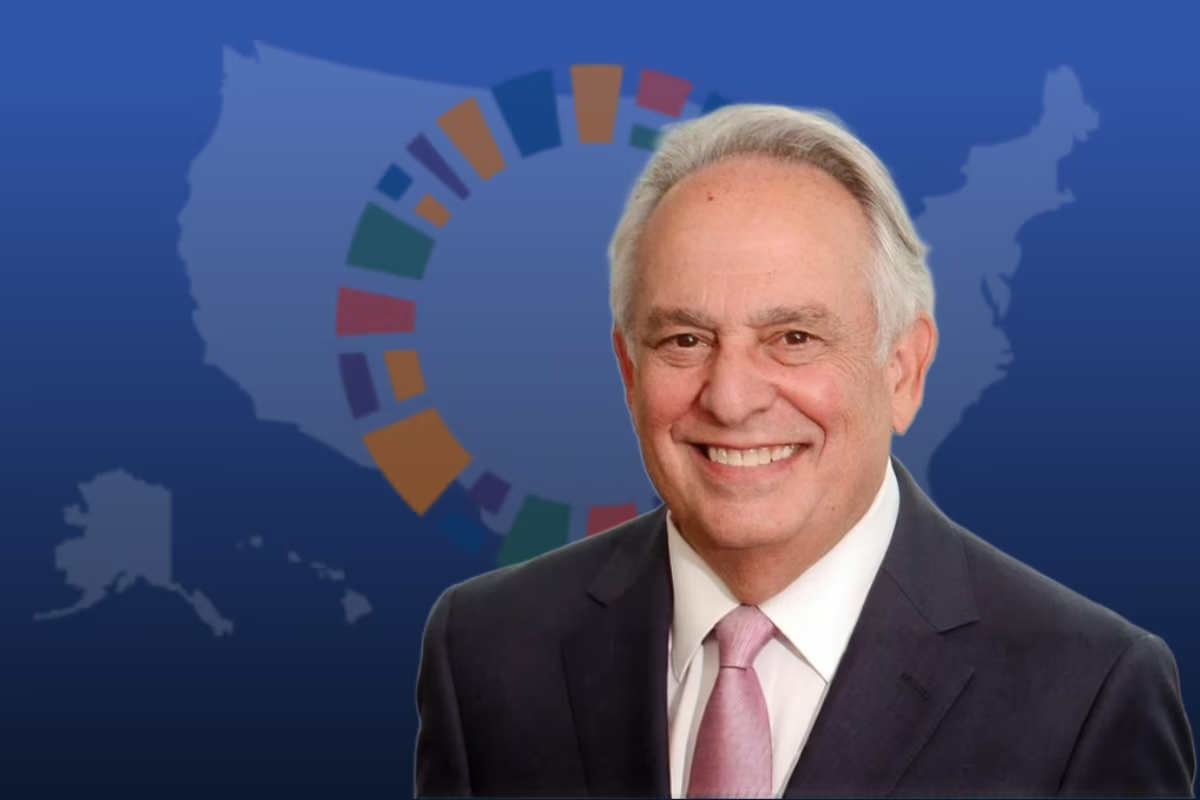
“Nauseously Optimistic”: The 2026 Vote Through A Legal Lens
American Bar Association Election Law Committee Chair attorney Jerry H. Goldfeder joins Rev. Paul Brandeis Raushenbush to discuss how lawyers, faith leaders, and many others are poised to defend the midterm election against all threats, foreign and domestic