Analysis
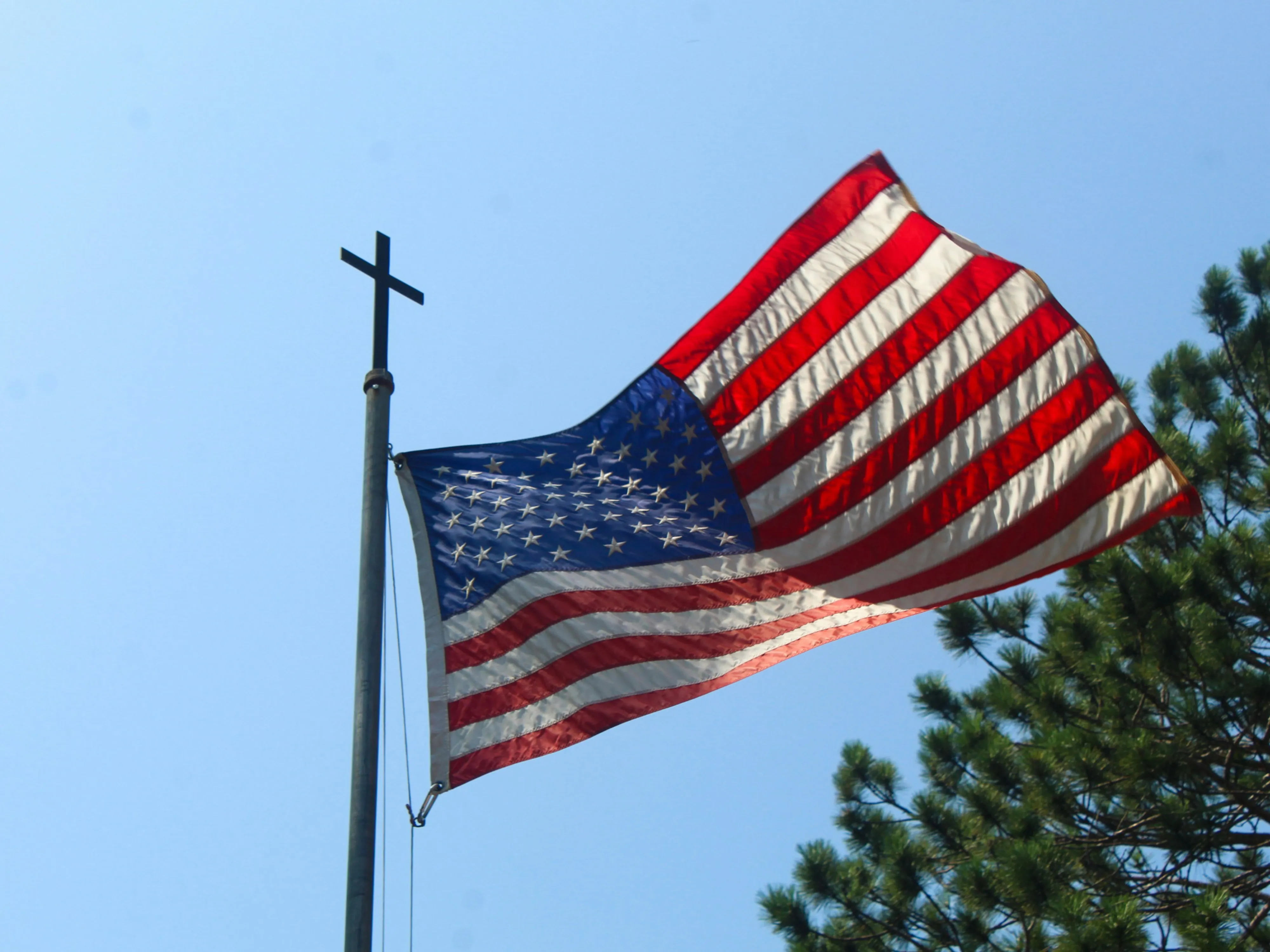
New Report Sheds Light on the the Growing Threat of Christian Nationalism


On February 17th, 2026, the Public Religion Research Institute (PRRI) published a new report showing that nearly a third of Americans qualify as Christian nationalist adherents or sympathizers – an increase since 2022 – while the number of skeptics and rejectors of Christian nationalism has declined.
Christian nationalism is defined in this study based on five questions – if the government should declare America a Christian nation; if laws should be based on Christian values; whether we can have a country without Christian foundations; if being Christian is important to being American; and if Christians should dominate all areas of American society. The more survey participant agrees that Christianity is foundational to the country based on those questions, the higher they score. Mostly or completely agreeing with the majority of those ideas makes one categorized as a Christian nationalist sympathizer or adherent, and those who mostly or completely disagree are categorized as skeptics and rejectors.
The study found that support for Christian nationalism is not uniform across the country – states in the South and Midwest have higher rates of Christian nationalist adherents and sympathizers, particularly in Arkansas, Mississippi, and West Virginia. In these states, rates of support for Christian nationalism exceed 50% of the population, while several states in these regions trail closely behind with rates of support well over 40%.
As Interfaith Alliance has long argued, these Christian nationalist beliefs about the direction of our country are dangerous, and often explicitly support the use of violence. In PRRI’s survey, they asked if respondents agree that “because things have gotten too far off track, true American patriots may have to resort to violence in order to save our country.” They found that 30% of adherents agreed, compared to only 10% of rejectors who agreed. Adherents also scored 79% on PPRI’s right-wing authoritarianism scale, further illustrating the dangerous link between Christian nationalism and authoritarianism.
Perhaps most urgent in our current moment, Christian nationalists support policies that make the country extremely unsafe for immigrants. They show disproportionate support for deportations without due process, for example. In a broader context, one of the ideas undergirding opposition to immigration is belief in the “Great Replacement Theory,” the idea that Jewish leaders are facilitating the mass immigration of non-Christian people of color to the United States to fundamentally change its white Christian cultural and ethnic background. The Great Replacement Theory has been linked to a number of high profile hate crimes, including an attack in Buffalo, a shooting at a Sikh gurdwara in Wisconsin, and the attack on the Tree of Life synagogue in 2017. The PRRI report also showed that Christian nationalists show less support for birthright citizenship; 66% of adherents and 56% of sympathizers even favor stripping US citizens of their citizenship and deporting them “if they are determined to be a threat to the country.”
Christian nationalism is a dangerous, growing movement causing harm in every corner of the nation. As a key leader of the pro-democracy faith movement, Interfaith Alliance is rallying people of diverse faiths and beliefs to come together to advocate against religious extremism and to support true and inclusive religious freedom.
Pushing back against Christian nationalism seems like an immense task, but it is possible. By advocating against states requiring the 10 Commandments to be displayed in public schools, resisting the Trump Administration’s attacks on faith communities and religious freedom, supporting bodily autonomy, and defending immigrant communities from brutal ICE attacks, we are advancing the pluralistic vision of America held by the vast majority of people living in this country.
Click here to view the full report by PRRI.
Joey Katzenell is a Policy Intern at Interfaith Alliance.
The views and beliefs expressed in this post and all Interfaith Alliance blogs are those held by the author of each respective piece. To learn more about the organizational views, policies, and positions of Interfaith Alliance on any issues, please contact [email protected].
Transcript


Why Hasn't Ted Cruz Canceled this Islamophobic Hearing Yet?
In May, the U.S. Senate scheduled a hearing titled "Hidden in Plain Sight: Confronting the Muslim Brotherhood Network in America" that threatened to escalate anti-Muslim fearmongering and disinformation in the halls of Congress. A postponement isn't enough. Cruz must cancel this hearing for good.