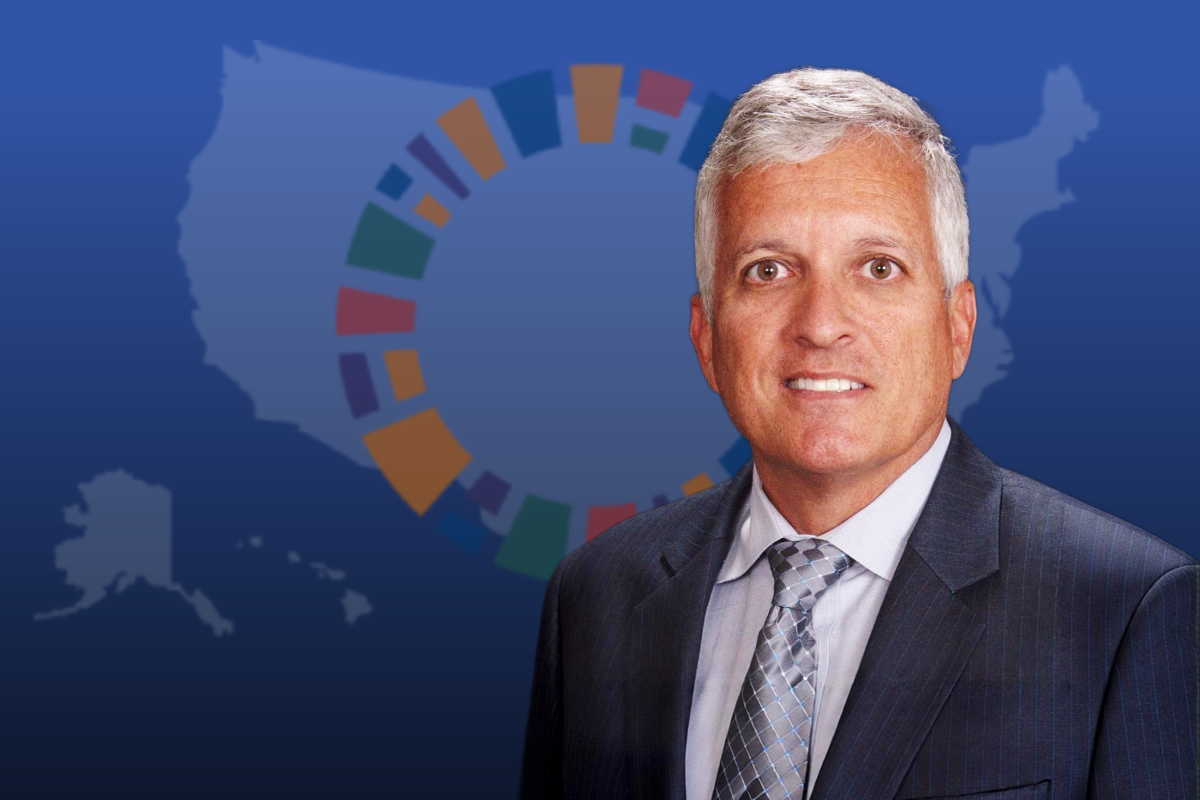
State of Belief
Room in the Inn: A Call for Immigrant Solidarity with Rev. Gabriel Salguero
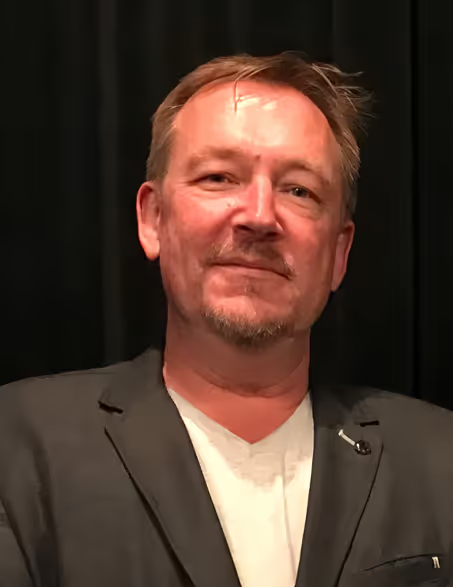

This week, the National Latino Evangelical Coalition launched the AdventWelcome Campaign, which says, "There's room in the inn." That in Advent, we should have space for immigrants, for foreigners, for refugees fleeing political persecution and fleeing places that are very difficult. That’s why we’re releasing this week’s episode of The State of Belief early – because it’s a chance to hear NaLEC President and Founder Rev. Dr. Gabriel Salguero’s powerful words about the season and pressing social issues, the importance of advocacy, and the role of faith in addressing the challenges faced by immigrant communities, in conversation with host Rev. Paul Brandeis Raushenbush.
Here are three key takeaways:
· The Importance of a Diverse Evangelical Voice: Gabriel emphasizes that Latino evangelicals are not a monolith. With over 10 million Latino Evangelicals in the US, it's crucial to recognize the diversity of thought and experience within this community. They are not just swing voters; they have their own unique voices and public policy priorities that extend beyond the traditional party lines. This diversity enriches the broader evangelical conversation and highlights the need for inclusive dialogue on issues that matter to all of us.
· Courage in Advocacy: Courage is a recurring theme in our discussion. Gabriel calls for faith leaders from all backgrounds to stand up for the marginalized, particularly immigrants facing unjust treatment. He shares powerful stories of families torn apart by indiscriminate immigration enforcement and the moral imperative for faith communities to respond with compassion and action. This episode serves as a reminder that true faith is not just about belief but also about living out those beliefs through advocacy and support for those in need.
· The Advent Welcome Campaign: Paul and Gabe also discuss the launch of the Advent Welcome Immigration Solidarity Initiative, "Room in the Inn." This campaign invites all faith leaders and communities to create space for immigrants and refugees during the Advent season. It’s a call to action that aligns with the core message of hospitality found in the Christian tradition. As Gabriel eloquently states, “When Jesus said, ‘I was a stranger and you welcomed me’, he wasn’t kidding.” This initiative is a powerful reminder of our shared responsibility to welcome the stranger and uphold human dignity – especially at this time of the year.
Rev. Dr. Gabriel Salguero is a prominent Latino evangelical pastorand the founder of the National Latino Evangelical Coalition (NaLEC), a movement that is non-partisan, Biblical, Gospel-centered, pastoral, and rooted in the life of Christ. He was the former Director of the Hispanic Leadership Program (HLP), and the Institute for Faith and Public Life at Princeton Theological Seminary. He also leads a multicultural congregation as pastor of The Gathering Place, a Latino‑led Assemblies of God church in Orlando, Florida, alongside his wife, Rev. Jeanette Salguero.
Please share this episode with at least one person you think would benefit from hearing the conversation!
Transcript
REV. PAUL BRANDEIS RAUSHENBUSH, HOST:
Rev. Dr. Gabriel Saguero is a prominent Latino evangelical pastor and a public faith leader. He serves as president and founder of National Latino Evangelical Coalition, a network representing thousands of evangelical congregations across the United States. He also leads a multicultural congregation as pastor of The Gathering Place, a Latino-led Assemblies of God church in Orlando, Florida. The Coalition is launching the National Advent Welcome Immigration Solidarity Initiative, “Room in the Inn”, and you're going to be hearing about that today. We've been working on scheduling an interview for probably more than a year now, so I am so happy to welcome Rev. Salguero, with us today, on The State of Belief.
Rev. Gabe, welcome!
REV. DR. GABRIEL SALGUERO, GUEST:
Awesome to be here, Paul. Finally, I think, is the word I'm looking for. And it couldn't come at a better time than Advent. Paul, I appreciate The State of Belief and all that you do to put in the air and in the ecosystem what I call sober faith voices. So appreciate being here.
PAUL RAUSHENBUSH:
I love that. Listen, let's get into it. First of all, National Latino Evangelical Coalition. What is it? How can we learn about it? How can people support it? Tell us about that. You were the founder. When did it start and what is your mission?
GABRIEL SALGUERO:
Well, the National Latino Evangelical Coalition - most people know it by its acronym, NaLEC, that's how you met us some years ago - it's about 15 years old, and we founded it because we felt we needed a Gospel-centered Latino evangelical voice to speak to the issues that are impacting the more than, get this, Paul, 10 million Latino evangelicals living in the United States. More than 10 million. And so we founded NaLEC with that commitment.
Our slogan is: “Serving and Empowering the Latino Church.” And that means advocacy, training, scholarships for pastors. We think that if you have a healthy Latino Church in the United States, it contributes to the overall health of the nation. And so that's what we've been doing for 15 years. My wife, Jeanette, and I founded it 15 years ago right here in the great city of New York. And so, it's been doing great work. And we have several thousand Latino evangelical congregations across the country.
PAUL RAUSHENBUSH:
It's incredible. And I love that this is something that you and your wife did. And really, I see it everywhere, that your wife is included in all of the leadership and really is a force, also. So, you know, she's not here today, but we lift her up and we lift her ministry up and leadership up.
GABRIEL SALGUERO:
Well, look, I think that it probably comes as no surprise to you and to the people who are listening that, like most faith groups, women are the majority of the people. And so Jeanette is ordained. She's the Rev. Jeanette Salguero, and she helped co-found it. The chairperson of our board is a woman, Rev. Enid Almanzar, and she's a person under 50. And so we're looking, because Latinos and Latinas are a young demographic, because predominantly women are in our worship spaces, they should be represented at the highest levels of leadership.
PAUL RAUSHENBUSH:
And I think that there's an idea, like, immediately, you say, Latino, evangelical, we're coming off an election… I want to get this out of the way quickly, because there's an idea that, okay, we have a monolith right here of a voting bloc that has one idea. And I just think it's important for you to talk a little bit about the various issues that you view that impact the Latino evangelical community and why you show up for these issues that are not about one party or the other. They're actually about the well-being of a faith community that is an important part of American life.
GABRIEL SALGUERO:
Look, I often say that when I show up into places and I say I'm evangelical, people assume I'm a Republican. And when I show up into a place and I say I'm a Latino leader, they assume I'm a Democrat. I'm a Latino-evangelical, so I embrace the hybridity and the hyphen of that reality, of my cultural reality and my theological ecosystem and base. And so we have been historically a quintessential swing voter.
Before, in elections before, Obama won the majority of the Latino evangelical vote as did Hillary when she ran. Biden won it the first time, but Trump won it this time. And so there has been, if you're looking at studies by Pew and others, there's been a tendency towards political conservatism, although we've always been socially conservative, as evangelicals tend to be. And so what I tell people is when you hear “Latino evangelical” - first, remember that we stand on our own two feet and we have our own voices and our own public policy priorities and political priorities. We appreciate our White evangelical brothers and sisters, but we are not a monolith. And we speak with our own voice and we have our own leaders.
The second thing I would say is that we're not one-issue voters. So most people, when they call NaLEC, they say, hey, what do you think about these two or three issues they think Latinos are interested in. But we talk about immigration. We talk about AI. We talk about criminal justice reform. We talk about life. We talk about religious liberty. We talk about foreign aid, PEPFAR, and GAVI, and all of those things. What has happened, Paul, is that Latino evangelicals have come of age in the last decade, and now we're seen as part of the leadership structure of faith communities in America.
PAUL RAUSHENBUSH:
I love that. I want to recognize what is the reality in this country right now. The current administration's approach to ICE and to immigration, it is not hitting us all equally. And I just want to put that into this conversation quickly, because I recognize that however I might be experiencing this moment, it is not the same as brown-skinned people, frankly, who are really living in a reality that's got to be dystopian. And I'm not going to put any more words in your mouth. But I did want to acknowledge the particular moment we're living in, and if you could speak into that as a social issue, but also a pastoral issue.
GABRIEL SALGUERO:
Well, look, it is a pastoral issue. And as you rightly posit, we are disproportionately impacted. It's for that reason that this week we launched the Advent Welcome National Campaign that your listeners have heard, where we as Latino evangelicals are calling other evangelical brothers and sisters - Asian, African American, White, First Nations, Native American, and people of goodwill to join our Advent Welcome Campaign, which says: “There's room in the inn.” That in Advent, we should have space for immigrants, for foreigners, for refugees fleeing political persecution and fleeing places that are very difficult.
It is quite true that we are disproportionately impacted. I can't tell you how many texts and emails NaLEC gets every day. Every day. I'm not talking about two or three. Dozens, if not hundreds, for either our attorneys, our comms team: Hey, somebody was picked up at the local shopping center. Somebody was picked up and now they can't pick up their kid at school. This is about families, you know, that they removed worship spaces and hospitals and playgrounds from the sensitive locations list, and that there can be indiscriminate enforcement action in these places.
There was research that just came out from Pew that says that Latino Christians are severely disappointed with the administration's indiscriminate action. And Pew is not just talking about evangelicals. It's Latino Catholics, Latino evangelicals, Latino mainliners - that there is a sharp ascent in disapproval in what's going on here.
Let me say this. We've all heard the narrative: they're going to target violent criminals. It's just not true on the ground. I live in Orlando, Florida. I see what's going on. I can drive to Alligator Alcatraz. Alligator Alcatraz is a descent into moral cruelty. That's what Alligator Alcatraz is. We don't treat human beings created in the image and likeness of God that way. We can't say, as a country, we love families, we're pro-children, and then separate families and we don't know who's going to pick that kid up from preschool or from kindergarten or first grade and they're going to be put in a foster care system when they have parents who want to take care of them and are trying to get legal status.
And so we have a crisis, Paul, and our churches are feeling it. In some churches, attendance - Latino immigrant churches and other immigrant churches - has decreased by 30, 35, 40%. I have a pastor friend in Maryland who had a church of 400; 40 are attending on a Sunday - 10%.
PAUL RAUSHENBUSH:
Yeah, this has just decimated churches. And, you know, the party that is responsible for this often talks a lot about religious freedom. And yet they yanked away the sensitive spaces protections, and people are not free to worship. And it is one of the most heartbreaking things. And if you can't worship, especially coming out of a tradition that is really about communal worship - the evangelical tradition is about you come together in the Spirit, and to take that away is another form of cruelty on top of cruelty.
GABRIEL SALGUERO:
Think about all of the lip service we've heard about being pro-religious liberty and pro-family, and how removing churches from sensitive locations does not align with that speech. If it is true that we are pro-religious freedom and pro-families and pro-children, removing hospitals and schools and churches from sensitive locations does not morally align with that declaration. If you're going to church, think about this. I'm a pastor. Our children are in Sunday school classes. Imagine if there's an enforcement action in the main sanctuary and the children are in another part of the building. The chaos. the absolute anxiety and fear that causes.
Now, to be frank, a lot of people say, but we haven't seen any enforcement actions in sanctuaries. Well, how about if you park half a mile from the church parking lot? when people are leaving their church sanctuary. Or how about you know that at certain hours there's worship and within a two mile radius there are enforcement actions. Look, we want to work in a bipartisan fashion to get this immigration crisis solved. But what's happening here is exacerbating the anxiety and the fear in our community. I had a mother write something called a power of attorney and say, hey, if something happens to me, I want this person and this person from the church to take my child, to take my car, to help with my small business. That people have to do that, incomprehensible.
PAUL RAUSHENBUSH:
I want to keep coming back to this Advent program. By the way, Advent, for those of you who are not Christian, Advent are the four, it's the season before Christmas. And one of the stories that I think, even if you're not Christian, you've probably seen depictions of this: It's Mary and Joseph coming, and Mary is pregnant with Jesus, and they come to an inn, because they have to go and register. They're in a foreign place.
GABRIEL SALGUERO:
By executive order. By executive order. They have to register for a census. In an unknown land.
PAUL RAUSHENBUSH:
The innkeeper says, we have no room at the inn for you. And so they have to go to the cave or the barn or whatever behind. And so this idea of room at the inn, let's flip that. What is the message? And again, this country is made for all of us. But for those who are like, we want to be Christian in this country, okay, what does Christian mean when you're saying there's no room in the inn, and what you're trying to do is flip that story and say, there is room at the inn. And that's the other thing that drives me so insane, is that when you're taking people out of places like daycare centers, when you're taking people out of places where they're working, where they're contributing to society - or even more egregious, when you're taking people out of where they're going to do their appointment for their legal process of becoming… I mean, they're doing the right thing, and you yank them.
GABRIEL SALGUERO:
They're in process.
PAUL RAUSHENBUSH:
And they're in process, and you yank them out of there. This is outrageous. So tell us a little bit about what are some of the things that are going to be happening with this project, because I think it sounds amazing.
GABRIEL SALGUERO:
First of all, we're doing a national campaign with recognized evangelical leaders and faith leaders saying, this is the message we want our country to hear from our tribe, from Christian leaders. That when Jesus said, “I was a stranger and you welcomed me,” he wasn't kidding. That when the Old Testament prophets, the Hebrew prophet says, “Treat the stranger like the citizen because you were once a stranger in Egypt;” When the New Testament says, “Remember hospitality,” which in the original language is, “Remember love of the stranger, for many of you have entertained angels unaware.”
I think that we need to break through the noise and the myth that all evangelicals support indiscriminate immigration actions. That is not the case. Actually, overwhelmingly, pastors and leaders who are working with families on the ground are saying, this is not the way forward. This is not a solution. What this is, is intimidation and striking fear. And Room In the Inn is saying, we want to exhibit the character of Christ, that we have space for you. Of course it has to be judicious. Of course we have to be wise. I think they draw straw adversaries. Oh, everybody. No, that's not it.
PAUL RAUSHENBUSH:
Let's remember that we actually had a very quite conservative immigration proposal that was bipartisan before the election. And they torpedoed it because it wasn't good for Trump's elections process. That's my take on that. But there had been work done and they just said, oh, we're not going to go forward with that. And so the idea that we can't do it is not true. And whatever I thought about that proposal, they don't want to do it. And this is really about - I mean, I'm going to say it, a lot of it is driven by this whiteness and this Make America White again. And I don't want to put words in your mouth, I'm White, so I'm going to say that, but I'm not going to put it on you.
GABRIEL SALGUERO:
Look, I think Jesus calls us to love our neighbor as ourselves. Our White neighbor, our Black neighbor, our Jewish neighbor, our Muslim neighbor, our Christian neighbor, our atheist neighbor, our agnostic neighbor, the list goes on and on. Jesus did not put a qualifier on loving our neighbors as ourselves. By the way, neither did the Ten Commandments, right? It's the second great commandment after loving God, and it is like the first. It is like the first. You cannot love God whom you don't see and not love your neighbor. And so I think that this national narrative of e pluribus unum, we say it all the time, “Out of many, one” - that we are a welcoming nation and we have been.
John F. Kennedy wrote a book called A Nation of Immigrants years ago. I think that's right, but my concern is that we put fear over faith. And fear is not a good policy. When you begin to enact policies out of fear, people are going to get hurt. Real people. People are talking about the numbers. Did you know, Paul, that 70% of the people in immigration detention centers have no criminal record? Yes, they entered undocumented into the country, which is, by the way, a civil offense. But overwhelmingly, we're talking about moms, we're talking about nannies, we're talking about construction workers, we're talking about hotel workers. We're also talking about people who have STEM, who are working in science and working in math and technology. And so I think that we have to, as Jesus taught us, know the truth and the truth shall set us free.
And there's so much misinformation. We lack the political will. And let me be clear. Both sides have lacked the political will to do this. The last time we had a major immigration enforcement – national, not cut piecemeal here in their state or something - was under Ronald Reagan. So we have 20th century immigration policy with 21st century immigration challenges. And here's the rub, Paul. I'm a pastor. I'm not a politician. I'm registered not party affiliated. But the job of the Church, as Dr. King told us, is to call balls and strikes. And if something is wrong, we should say it. We should not have blind allegiance to anybody but to the God we serve and the people God has called us to serve.
And so I'm really disconcerted that there are people who are saying, oh no, it's just - this is an actual quote - it's just the bad hombres. Well, no, you're not gonna tell me that. I just got a call yesterday that they took somebody's mother and they don't know which detention center she's at. And so it's time to take the mask off and say, no, this immigration action is not making our country healthier. It's not making our country stronger. It's not making our economy stronger. And it doesn't represent the deepest of Christian and moral values.
PAUL RAUSHENBUSH:
I agree completely. I want our listeners to get to know you a little bit more because you know we came out of the gate - and we're going to talk more about all of that, but where did you come from? What's your call? How did you become this guy? Because at some point, you decided you felt called to the ministry. You clearly could have done many, many things, but this was the path. What's your background?
GABRIEL SALGUERO:
Thank you for asking that, because I think it's true that biography is often formative in your calling, whether you're a lawyer or a scientist, a teacher, a judge. My father was a homeless man who was addicted to heroin. He was a heroin addict. And Christ found him. He had a conversion experience, in the language of our tradition. Other traditions use other language, and I understand that, and I respect that. That changed the trajectory of my father's life.
My father is one of 11 children. He has eight brothers, plus him is nine, and two sisters, that's 11. All 11 have been formerly incarcerated persons. Both my grandfathers were alcoholics. And they had an encounter with the gospel that transformed them. My father learned to read in prison, because there was a woman who did prison visits. I'm all for prison ministries and chaplains in prisons and in jails, because those men and women need kind of a faith presence.
After that, he became a faithful member of a church, married my mom, who is a fourth generation Pentecostal. Not very common in Latinos. I'm fifth generation Pentecostal. And they became pastors. So I'm a pastor's kid. I was born in New Jersey. I am this phenomenon, Paul, called Jersey Rican. A Puerto Rican born in the diaspora. I'm a Jersey Rican.
PAUL RAUSHENBUSH:
I think you may be making that up.
GABRIEL SALGUERO:
No, my wife says the same thing. My wife's a New York Rican born in Brooklyn. And I said, no, no, no, no. There's this other thing called Jersey Rican. So I was born in the Jersey Shore, in Long Branch. And I grew up in a small church, small storefront church. But my father, because his life was radically transformed by acts of mercy and justice, he had a soup kitchen. He had drug rehab programs. I remember men and women coming to our house to break addictions to heroin and cocaine. And I remember every day my mom and dad sweeping up vomit and the cold sweats. And so it's been a part of my life.
My mom and dad underline that they didn't pull up the ladder behind them, you know, and they didn't lead with judging. They led with empathy, because they knew that to whom much is given much is required. So I grew up in compassionate ministry and direct service drug rehabs, prison recidivism programs, soup kitchens in the local storefront pentecostal church in New Jersey. 300 people but they punched above their weight class because of gratefulness; because hey - I had a second and third chance at life, why not run it forward?
But then I went to seminary, and I started reading King and Bonhoeffer. And I said, there's gotta be more to direct service. There has to be justice. So I added to my experience as a Pentecostal kid, of compassionate ministry to just advocacy. And I started advocating when we started NALIC. And you know, anything from civil disobedience around the issues of immigration and criminal justice reform - we're the first national evangelical organization, first in America, to come out against the death penalty - because we knew it disproportionately impacted people of color. Over 140 men and women were on death row and later exonerated since 1973. And so we said, no, if one innocent person dies, that's too many. And it was a matter of principle. So we started doing that.
But I will tell you, it was difficult for me. Because I first wanted to go to law school. I took pre-law classes and that's how I grew up. But that work of saying, hmm, yeah, I have a soup kitchen, but if policies don't change, every year the soup kitchen line gets longer.
PAUL RAUSHENBUSH:
It's a great story of the Good Samaritan, where you keep on helping the person getting beat up along the road, but at some point, you have to change the situation so people don't get beat up along the road.
GABRIEL SALGUERO:
And I learned that. And I'm still learning it. People say, hey, teach a man to fish. Give him a fish, he'll eat one day; teach him to fish, he'll eat his whole life. Yeah. Ask them who owns the pond where the fish is swimming, and you'll change the whole region. And so I learned that. I'm learning that. But it was hard for me, because the Latino evangelical Church, with some good exceptions historically, was not on the same par as the African-American Church in terms of justice. We're learning that, and we're younger.
PAUL RAUSHENBUSH:
But also, if you look at some, like Dolores Huerta or something, in some ways, maybe some of the Latino Catholics, they may have had that in their ethos.
GABRIEL SALGUERO:
In the Latino Catholic social teaching, Cesar Chavez, Dolores Huerta. So we are newer to that. And I'm going to tell you something really challenging for me. when I started getting into this work, one of the things that's hard is that your own tribe labels you. I'm a bona fide evangelical. Fifth generation, radical conversion. My dad's a Teen Challenge grad… I preach every Sunday.
PAUL RAUSHENBUSH:
He's tried to convert me five times and I'm already a Baptist minister. That was a joke, but not entirely.
GABRIEL SALGUERO:
And so you get labeled when you speak up for certain issues. You get, oh, he's this or he's that or he's a liberal or he's a conservative. Or you're kicked out.
PAUL RAUSHENBUSH:
You're kicked out of the club. And you see that with all—that's with any evangelical who stepped out of the prescribed idea of what you could talk about, as far as justice issues.
GABRIEL SALGUERO:
Yeah.
PAUL RAUSHENBUSH:
And I think we all have that: what's acceptable? And it's very hard, because what you've done is you've kind of shrugged off this constriction and said, actually, we're more than that. Because the Gospel…
GABRIEL SALGUERO:
The whole Gospel, the whole Gospel. Not just my favorite verses. But I want to say this: I've gotten uninvited from places because of my public stances. Whatever radio show or television show, when I'm on some news show and I'm talking about: hey, evangelicals need to speak about immigration, they need to speak about PEPFAR and foreign aid. And oh, here it comes. But at this point in my life, I can sleep well because I'm being faithful to the God who called me and rescued my family.
Listen, Paul, I was poor. I was poor. I wore hand-me-down clothes, holes in my shoes. I know what poverty does to children. I know. I received WIC and SNAP. I know what if you don't get SNAP and you don't get that free and reduced lunch in school does to the psyche of a child. And how he or she cannot concentrate on their math.
This is not abstract for the Latino Church. We're living it, right? Some children, their only meal they get is the lunch meal at school. And when you cut snap, that affects free and reduced. So I know this experientially. And how can I pastor people? And here's, Paul, look, it troubles me to no end that there are people, denominations, who will take the tithes of immigrants but won't speak up for them. So their money's good, but their dignity's not. How can I preach to people about the loving, gracious Gospel on Sunday and not care what happens to them from Monday to Saturday? So the pastoral task is not just proclaiming the Gospel, it's living the Gospel. It's the incarnation, right? We're in the Advent season. It's the Word becoming flesh: in the prophets; it's walking with the people. Moses had a decision, right? And we have that decision now as evangelicals. Will we be with Pharaoh or will we be with the people? We have a Moses decision. Are we Pharaoh people or are we the people's people?
PAUL RAUSHENBUSH:
You know, you're claiming that question. I claim that every time I talk. I say, we're at a moment of test. And I'm talking not to Latino evangelicals. I'm talking largely to mainline Protestants, but mixed interfaith groups. I'm like, at every juncture in American history, religion has faced a test. And which side are you going to be on? Slavery? Abolition, civil rights movement, there were always religious people who were like, oh no, don't worry about it, it's fine. And then there were religious people who decided, we're going to speak up and we're going to move it forward, we're going to be part of it. And that is part of the test we're in right now.
I want to make sure that you get to talk about why you're actually in New York, because I love the fact that we're together. We are together right now, people! You came here for a very specific reason. What are you doing right after this conversation? Where are you going? Because I want people to also know about this.
GABRIEL SALGUERO:
Well, I'm joining a Catholic priest and evangelical leaders and Catholic leaders and Jewish leaders for an interfaith rally on behalf of immigrants. Father Gary Graff started walking from Chicago to here, Liberty Island in New York, and today here in Manhattan, that march ends, to draw attention to indiscriminate enforcement actions that are negatively impacting immigrants, particularly children. So yesterday and today, I've been with Father Gary Graff, who's leading this march.
And since we started the Advent Welcome Campaign this very week - actually, your audience might be the first national audience to hear about the Advent Welcome, where thousands of pastors and leaders and youth pastors and children's pastors - because it's all hands on deck, as you said. So I'm joining this where people are saying, We're better than this. We're better than tearing away a nanny with a kid screaming. We're better than being around Home Depots and Lowe's where people are just trying to make a living and build homes for other people, and tearing them away. We're better than racial profiling. Do you know that I carry my passport now, even though I was born in New Jersey?
PAUL RAUSHENBUSH:
I believe it.
GABRIEL SALGUERO:
That should not be.
PAUL RAUSHENBUSH:
And the Supreme Court said it's okay to racially, you said earlier, indiscriminate. That's actually discriminate. You know what I mean? It's actually, like, Brown people are enough reason for ICE and police to pull people over.
GABRIEL SALGUERO:
And the Constitution is clear. You can't be subject to search and seizure that doesn't respect your constitutional rights. And so my sons, I have a 20-year-old son and a 16-year-old son, they're driving age now, I have to have that conversation. have all your documents with you.
And so this march that Father Gary did, combined with this Advent Welcome, it just happened, we didn't know we were both doing that. I was just two weeks ago in La Villita, a little village in Chicago. Hundreds of evangelicals showed up. then they say, what's happening here in Chicago, in Humboldt Park and Little Village, this does not represent our values. And so I hear there's a faith rising. There is a faith rising. I do feel it. Let me say, Paul, I'm so thankful for you because I think people need to hear they're not alone. They need moral cover, because courage is contagious, Paul.
People who are hearing us right now, they're saying, oh, wait a minute, I'm not the only one who thinks this is insane. This is morally reprehensible, what's happening. And it's not just Latino evangelicals. There are White evangelicals, there are mainline people, there are Jewish rabbis I'm walking with, there are Catholic priests like Father Graf. And the problem becomes, if we let intimidation win the day - we are right now, I love what you said Paul, at a test. We're at a Letter from Birmingham Jail moment. This Advent Welcome is Latino Evangelicals' letter from a Birmingham Jail. This campaign that you are highlighting today is our letter from Birmingham.
We will not just remember the cruelty of our adversaries, but the silence, overwhelming silence... Listen, man, this is hard. This is hard. When you have to go to somebody's house and tell their kids, your mother is in a detention center. People talk about numbers. Those numbers are faces and families. Like, who, quien, quien, quien va a hablar? Who's gonna speak up? And let me say something. History has a way of recording our action and our inaction. So there's a Faith Rising, this Advent Welcome, this Step Up and Speak Out, led by a Catholic priest from Chicago, and so many other efforts.
PAUL RAUSHENBUSH:
And the thing that you're doing today - and by the way, we're recording this on the ugliest day. It is the most grotesque weather that we've had this year, and you all are, but I think you're going out, do I have this right, going out to Ellis Island?
GABRIEL SALGUERO:
Because of the weather, there's been a change. So now we're doing an inside thing here in Midtown Manhattan. Listen, people have been marching in snow, in the rain. We did an event several years ago here in Harlem. 2,000 people came out in a snowstorm to a Latino Pentecostal church on the Upper East Side of Manhattan on East 125th. Listen. No rain, no sleet, no storm… Because people are hurting.
If I say nothing else, this is not about, hey, Gabe Salguero and Latino Evangelicals coming of age. That's an important story. Yes, there is a prophetic stream of Hispanic evangelicalism. I want to be clear. Not all of us feel the same way. There are, here's a word, religious apologists. There are people who are doing moral somersaults to defend the indefensible. and, oh, it's not really happening, or they're only going after the bad hombres, or they're only doing this for a season so that then we can get it right. None of that is true. None of that is true. The truth is that children, families are suffering.
Yes, deport and detain with due process. Due process. Violent criminals. We want that because we’re disproportionately impacted. Whose communities are these violent criminals in? Ours. We're impacted the most, so we want it. But this is not what's happening. No. If you're going to do it, We're all for it, due process. Respect human dignity.
PAUL RAUSHENBUSH:
Which is guaranteed everyone. Every person, by being in this country you are guaranteed due process. And so I really just want to make sure, we're going to say it more than once, but where can we find all of this information? What is the best place? Should people Google it, or is there a landing page?
GABRIEL SALGUERO:
There's a landing page, Advent Welcome landing page, but they can also visit our webpage, nalec.org.
PAUL RAUSHENBUSH:
Let's do that slower, one more time.
GABRIEL SALGUERO:
Nalec.org, N-A-L-E-C dot O-R-G, nalec.org. There obviously are Facebook, National Latino Evangelical Coalition-NALEC, and we'll share that with everyone who wants to. And the Advent Welcome Landing page will be available so people could see it. December is a good month to remember, people, what John Lennon told us. “So this is Christmas, and what have you done?”
PAUL RAUSHENBUSH:
Well, I want our listeners to really understand this, hear Rev. Gabe's voice, but also recognize that this is invitation. We talk a lot about courage on this show.
GABRIEL SALGUERO:
That is the language that we are— High demand and low supply, Paul. Courage is in high demand and low supply. And I get it. People are afraid.
PAUL RAUSHENBUSH:
People are afraid.
GABRIEL SALGUERO:
I get it.
PAUL RAUSHENBUSH:
One of my good friends and who's on our board, her name is Skye Perryman. She's the president of Democracy Forward, a major legal group. And when we started this whole thing with the Sensitive Spaces Act, the Pope, the two popes speaking up against, and the Catholic bishops speaking up against J.D. Vance coming after the other. She was saying among all the all the folks - when law firms were caving and universities were capitulating - she said religious folks, actually, have been among the most courageous. And I'm actually hopeful.
And so we talk about courage and she says, “Courage is the new currency.” That's her line. And I take that as, courage is the new currency, and it's up to religious folks, religious leaders, religious folks, to start minting that currency and start spending it. How are we going to make our churches, all of our churches, all of our synagogues, all of our mosques, locations where courage is created and then spread? And that, I think, is really the task right now.
GABRIEL SALGUERO:
Well, listen, the Old Testament prophet, the Hebrew prophet, says, “God sings songs over the exiles, over the immigrants. Songs of victory.” And then it says, “And you are prisoners of hope.”
PAUL RAUSHENBUSH:
Prisoners of hope.
GABRIEL SALGUERO:
The arc of the moral universe is long, but it bends towards justice. But once in a while, Paul, we got to kind of lean on the other end of it. So it bends towards justice. Listen, we're not going to stop voices and platforms like this who have the… Listen, I know that sometimes talking to evangelicals is not the safest conversation for some mainline Protestants. I want you to know it's not always the safest for me. Why are you talking to those men? But we are at a point where it's all hands on deck. We can disagree on a whole host of issues, and that's America. I'm married, and I don't agree with my wife on 100% of the things, right? That's okay. My church. But on this issue and on other issues of dignity, of due process, of democracy, of foreign aid to save lives, all hands on deck.
PAUL RAUSHENBUSH:
And that is democracy. I think it's so important. I try to explain this. I have a vision for the future of America that includes very conservative Christians who disagree with me on many issues, that they are allowed to live their lives and they are allowed to express their beliefs freely, worship freely, and that we can live side by side and figure out a way forward together. A beloved community. A beloved community, and we don't have to agree on every single thing, but we do know, in this moment, that our community, our beloved community is under attack.
GABRIEL SALGUERO:
There's some things that are axiomatic. In our tradition, they're called absolute truths. Kant called them categorical imperatives, right?
PAUL RAUSHENBUSH:
He's quoting Kant at me, what am I gonna do?
GABRIEL SALGUERO:
I just want you to know, Latino evangelicals read books, okay? I'm breaking myths today, this is a myth-busting thing. We met at Princeton, so, you know…
PAUL RAUSHENBUSH:
Yeah, we met at Princeton, 100%.
GABRIEL SALGUERO:
Listen, there are things, democracy, human dignity, due process, love of the stranger, standing up for poor, hungry, and vulnerable people, help to our brothers and sisters in Africa, Latin America, and Haiti who need life-saving medication. For me, this is not difficult. This is like my kid would say, that's easy, Dad. That's easy. That's low-hanging fruit. Love your neighbor as yourself means you stand up for these things. And I will tell you that if we don't speak up, where there's a vacuum, other voices who think cruelty, they think that cruelty is a moral principle, we can't stay quiet.
PAUL RAUSHENBUSH:
Let me ask you the last question that I'm asking everybody right now, and we've already talked about it, but what does courage really look like right now? As someone who is living on the front lines of this moment, what does courage look like?
GABRIEL SALGUERO:
Courage is picking up somebody else's kid when they've been deported and say, I'll take care of this kid. We may not be even related to you. Courage is accompanying undocumented immigrants to their immigration hearings. Courage is pastors, rabbis, imams, people of goodwill speaking up and saying, trying to repeal birthright citizenship. It's not in keeping with the highest, noblest angels of our spirit. Courage is not being silent and not capitulating to hyper-partisanship. It's just so that you have access to power. We cannot be court prophets. And finally, courage - and this is my Pentecostalism – prayer. Dietrich Bonhoeffer: prayer and righteous action. This Faith Rising, of marching, of doing this national campaign where thousands of people are going to be praying - but not just praying, calling for policy that defends the human dignity of people created in the image and likeness of God. That's courage.
PAUL RAUSHENBUSH:
Rev. Dr. Gabriel Saguero is president and founder of the National Latino Evangelical Coalition, which represents thousands of evangelical congregations across the United States. He's also pastor of The Gathering Place, a Latino-led Assemblies of God church in Orlando, Florida, that he pastors with his wife. The coalition is launching the National Advent Welcome Immigration Solidarity Initiative “Room in the Inn.”
Rev. Gabe, thank you so much for being with me on The State of Belief.
GABRIEL SALGUERO:
Thank you, and tikkun olam.