State of Belief
Congressman Jared Huffman: The Fight to Save Democracy From Christian Nationalism

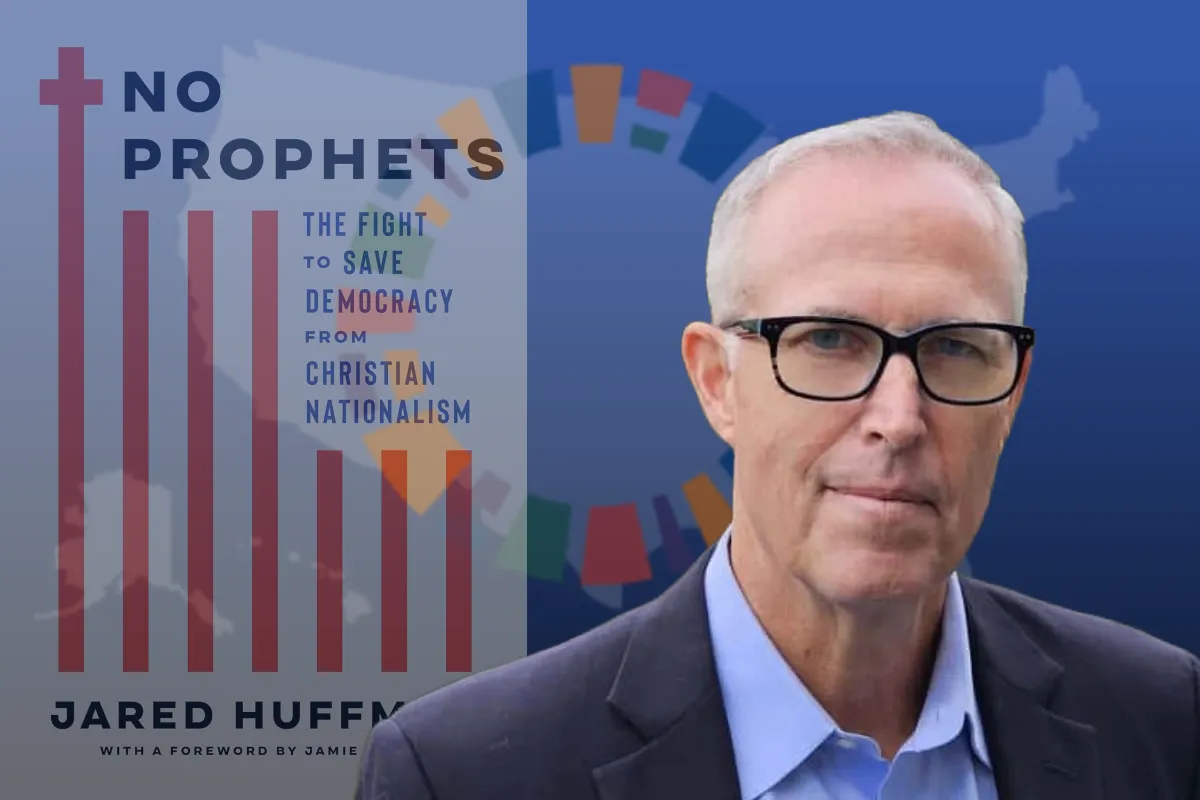
What happens when religious belief becomes a tool for political control? This week, Congressman Jared Huffman (D-CA) joins host Rev. Paul Brandeis Raushenbush to discuss Christian nationalism, the unexplored religious dimensions of January 6, and why church-state separation protects people of faith and nonbelievers alike. The congressman shares some of the stories in his best-selling new book, No Prophets: The Fight to Save Democracy From Christian Nationalism.
They also explore Rep. Huffman’s journey from devout Christianity to humanism (spoiler alert: he was ordained!), the growing influence of religious networks in Congress, and what it means to defend a pluralistic democracy from authoritarian threats.
More About Rep. Jared Huffman: First elected to Congress in 2012, Jared Huffman represents California’s 2nd District. With Rep. Jamie Raskin, he co-founded and co-leads the Congressional Freethought Caucus, and works to promote sound public policy based on reason, science and moral values, while protecting the secular character of government and championing the value of freedom of thought worldwide. Prior to his legislative service, Jared worked as a Senior Attorney for the Natural Resources Defense Council (NRDC).
The State of Belief host Rev. Paul Brandeis Raushenbush is President and CEO of Interfaith Alliance.
Transcript
REV. PAUL BRANDEIS RAUSHENBUSH, HOST:
Congressman Jared Huffman represents California's second district on Capitol Hill. But what brings him to this conversation is something bigger than his day job. It's a deep concern about what happens to democracy when religious belief becomes entangled with political power. Jared, if I may, is an openly non-religious member of Congress and a longtime advocate for religious freedom and the separation of Church and State. He's also someone who believes that protecting religious liberty means making room for everyone, people of different faiths, people whose faith is deeply personal, and people who don't profess a religion at all.
In his new book, No Prophets: The Fight to Save Democracy From Christian Nationalism, he draws on his own experience in Congress, including January 6th, to take a close look at the rise of Christian Nationalism and the challenge it poses to a genuinely pluralistic democracy. It is such an important time for a conversation about faith, power, freedom of conscience, and what it takes to build a democracy where all of us are welcome and all of us have a place. And I'm thrilled to have Congressman Huffman join me on The State of Belief.
Welcome.
REP. JARED HUFFMAN, GUEST:
Well, Reverend, Paul if I might, I am just delighted to be with you and to have this conversation today. Thank you.
PAUL RAUSHENBUSH:
Listen, congratulations on this book. I mean, New York Times bestseller. Well deserved. Well deserved.
JARED HUFFMAN:
Pretty exciting. Thank you.
PAUL RAUSHENBUSH:
It really is a thrilling book to read because it is both informational, it is a great deal of intelligence, but also it does have your perspective, which is really important. It's a throughline that actually being true to ourselves and true to what we believe and coming to that honestly and being able to make space for not only ourselves but other people through our integrity. I just love that about this book. And you know, of course, you are singing from the… I won't say the hymnal, but I will say…
JARED HUFFMAN:
It's okay. It's a metaphor. It's a metaphor.
PAUL RAUSHENBUSH:
It’s a metaphor. I feel that so strongly. So thank you for being here. And I want to start by, honestly, I thought there was a heartbreak in the center of the book, which was January 6th and the insurrection at the Capitol. And the book is much bigger than that, but when I read the book, I was kind of like, there's something here that really was shocking to you, to all of us. But I wonder if you could open with that and talk a little bit about why that was such a pivotal moment for you.
JARED HUFFMAN:
January 6th, that violent insurrection that attempted to topple our democracy and and prevent the peaceful transfer of power, it was central in this conversation because it was when this Christian Nationalist movement which I had watched grow in power and militancy the whole time I was in Congress, it's when it erupted in a way that should have been obvious to everyone. But the media didn't talk about the religious dimension to it. My colleagues that the mob wanted to kill that day did not see it or didn't want to talk about it.
And then the select committee that we convened to investigate and tell the full story of what happened in the insurrection was on the verge of talking about it. There was a mountain of evidence that pointed to all this religious fervor, all of the radicalization and mobilization by fanatical faith leaders. I mean, thousands of fervent Christians do not just show up at the Capitol and try to topple the government. A lot went into this. That story was on the verge of being told by the select committee until one person, Liz Cheney, vetoed it from being in the final report. And my book is the only place where you will get that full story. It hasn't been reported. So so much of this just remains poorly understood, ignored, and not even a part of our national discourse. And that's scary. It makes us less safe.
PAUL RAUSHENBUSH:
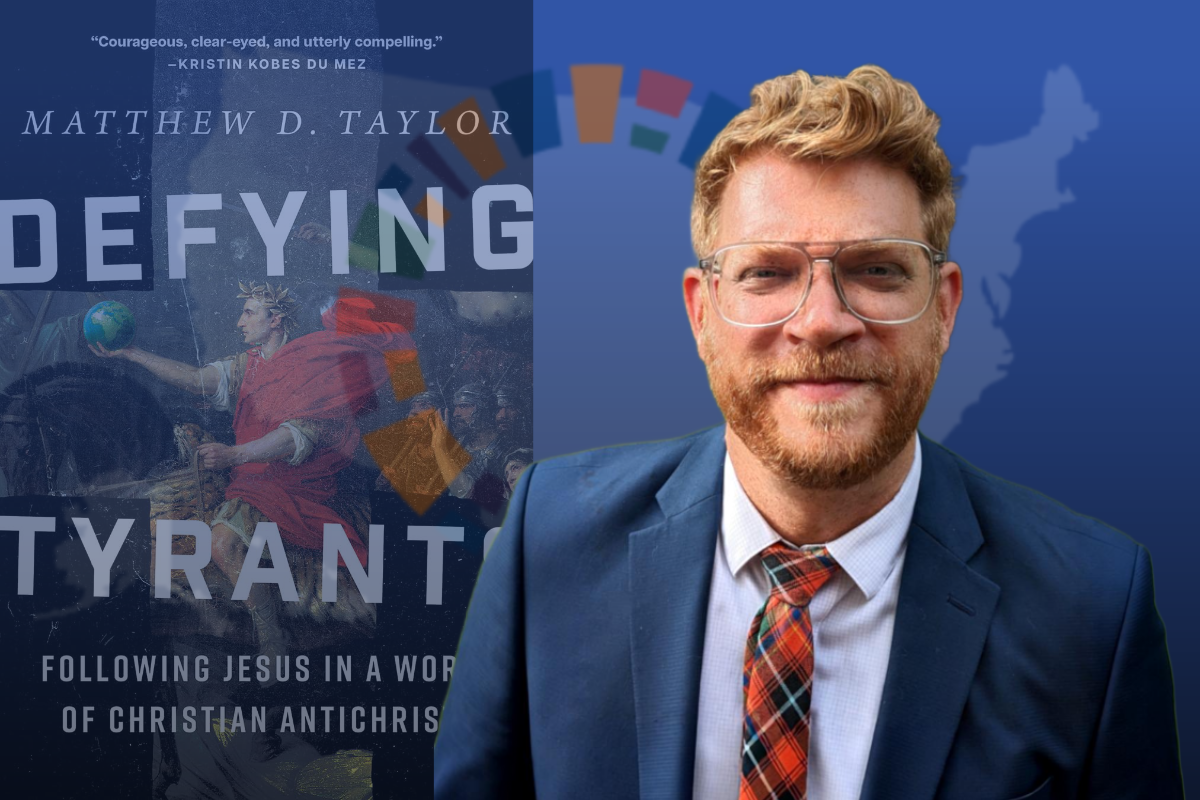
I thought that was so important and you know, I have the privilege with this podcast and with my job to talk to many of the the wonderful people who you talk to that helped inform this book, like Matthew Taylor and Samuel Perry and Catherine Stewart all have been on this podcast. But when I talked to really astute political folks, I was like, you don't really understand what happened that day. You don't understand what was underneath this idea that Trump couldn't lose because he was anointed by God to win. And I think that's one way to understand the title of your book, No Prophets: The Fight to Save Democracy from Christian Nationalism, because these self-appointed prophets who were saying, no, no, no, no, no, no, the reason I'm praying outside of the vote counting machine is because it's demonically possessed because he can't have lost, because God anointed him. Whether it's a serious Cyrus, whatever…
JARED HUFFMAN:
Cyrus the Great, yes.
PAUL RAUSHENBUSH:
And so people didn't understand that was in the mentality of why they had…
JARED HUFFMAN:
It truly was.
PAUL RAUSHENBUSH:
And why they continue to not acknowledge that they lost 2020, because they can't acknowledge it - because it would be saying that God was wrong.
JARED HUFFMAN:
Exactly. Now Reverend, you would know better than me, but I'm pretty sure the Bible deals rather harshly with false prophecy.
PAUL RAUSHENBUSH:
Well are you going to start preaching at me? Please do. Please do. I get to be the lucky one that Rep. Huffman is going to preach at. Come on, give it to me.
JARED HUFFMAN:
Well, I grew up a devout Christian. I've got kind of a workmanlike understanding of these things, although I am now a Humanist and I don't have a God belief. But I do know that false prophecy is a very serious religious crime.
PAUL RAUSHENBUSH:
It it's a serious thing. And I just think that it's not just these fringe folks. I'm happy to call them false prophets, but the self-appointed prophets and the people who adhere to them are the Speaker of the House; are the Secretary of Defense. This is not a fringe thing.
JARED HUFFMAN:
It it should be a fringe. It it used to be fringe, but this is what has happened in the last decade or so. You have seen these fringe actors mainstreamed. You've seen them empowered. You've seen them put in Cabinet positions. One of them, as you you just mentioned, is two heartbeats away from the presidency: Speaker of the House Mike Johnson. So this is dangerous. This movement is so much more entrenched than most people understand. And I really wanted to try to do my part with this book to pull back the curtain and show you what it looks like inside Congress, what I see every single day as a U.S. Congressman.
PAUL RAUSHENBUSH:
I want to get to the day-to-day, but I do want to go back - because you mentioned it briefly - that you have a history, and your family has a history, of religious belief. And one of the very poignant moments in the book is when you were being sworn in and all of a sudden you were like, wow, okay, my mom is here, she's devout. There's a Bible right there. I hadn't planned for this.
And I think there was something touching about that. It's like, okay, you know, I'm gonna respect my mom, not because the Bible tells me to do it, but because I want to respect my mom. I'm not gonna make a huge deal about this moment. So you do come out of a tradition that's actually quite intense. And you even talk about someone who you knew growing up with getting into a cult, and brought into some messy situations.
So tell us a little bit about where you're from, and because I think it's important to recognize that these are also your people. This is not painting you as some sort of weirdo on the outside of American culture. You are American culture and that's a really important point.
JARED HUFFMAN:
Look, I am a Humanist today. I'm an oddball in the United States Congress, the only Humanist, only public member of Congress to admit that I don't have a God belief. But I grew up a devout Christian. I was ordained into the priesthood of an offshoot of Mormonism, the Reorganized Latter-day Saints.
PAUL RAUSHENBUSH:
Let me just say - sorry to interrupt, but this is in praise of your book. Because I'm reading your book and I'm like, wait a second, he was ordained into the priesthood and it was announced from the pulpit? Someone just says: And by the way, you're now ordained into the priesthood.
JARED HUFFMAN:
Well, there was another step after that, but that does take us back to prophecy, right? Because the Church I grew up in embraced prophetic belief. In fact, the whole Mormon faith is based on prophecy and revelation. The angel Moroni coming to Joseph Smith Jr. and the whole Book of Mormon is a revelation delivered to him in that way.
So the Mormon faith and my faction of it, the RLDS, believed that God could talk in real time to any one of us. And at any church service, there could be someone who is moved by the Holy Spirit and just stands up and starts speaking in tongues or issuing prophecies. And I believed this as a young person. I thought it was pretty exciting to have a relationship with God where there's an ongoing actual conversation. It can really bring a lot of vitality to a faith community. And I think I appreciate that from having grown up in it.
But as as you mentioned, Reverend, I also saw what happens when it goes off the rails. And you know, within a denominational structure, there are at least some guardrails. You know, folks that say crazy things in the name of God can be admonished, they can be excommunicated, there are some quality control measures in place. When you get outside of that, it can be quite dangerous.
And one of my high school basketball teammates and another kid that I grew up with in Independence, Missouri, followed this charismatic person who believed he was channeling the Word of God and he was a new prophet starting a new church. This happened fairly frequently in my faith community. People would start new sects and new churches. but they followed him off to Ohio, lived communally, and one day this prophet said that God had ordered a blood sacrifice and that they had to kill this innocent family.
So these people I grew up with and knew very well helped to murder a mother and father and their three beautiful kids. and that's not the only time that prophetic belief has gone off the rails. I mean, if you really think about it, it happens all the time. it's whether it's Branch Davidiens or…
PAUL RAUSHENBUSH:
I mean, we're seeing that today. That's what you're talking about in this book. And what you just described is a horrific, very extreme example. But we are seeing these self-appointed prophets who are saying, okay, I get to say for the rest of these people how they will live, how American life is not meant to be a democracy. It's meant to be a theocracy and I get to decide. Like, me. Me, me, me, me, me.
JARED HUFFMAN:
Absolutely.
PAUL RAUSHENBUSH:
What I always hasten to say is, although I am a Christian, my Christianity doesn't count. I'm equally unwelcome in this idea.
JARED HUFFMAN:
Yes, you're an obstacle to this movement.
PAUL RAUSHENBUSH:
So it becomes a very sort of self-aggrandizing way and a legitimizer of just about anything.
JARED HUFFMAN:
Here's what's so dangerous about that. You were talking about Dr. Matthew Taylor earlier and the New Apostolic Reformation, which is really this ascendant, very militant, very theocratic network that has asserted so much influence over right-wing Christianity and was so involved in the January 6th insurrection. this is not just random people popping up and declaring themselves as prophets. These are people who call themselves the ecclesia, God's governing authority on earth. Their belief is that God is reconvening the apostolic order that died off with the original disciples and that these new apostles and prophets have all these special powers. And they have tens of millions of followers who hang on their every word.
And they are constantly sharing prophetic dreams and edicts and revelations with these people who will do whatever they tell them to do. And there are no guardrails.
So I talked about denominational guardrails, which exist in a normal church setting. This is a loose network with none of that There's no governance, there's no one to excommunicate or correct anyone when they do crazy things. There's just thousands of these prophetic freelancers all over the country with startup ministries that are just seething with violence and theocratic intensity - and this is dangerous stuff. And it's what I saw Donald Trump mainstreaming when he became President of the United States.
PAUL RAUSHENBUSH:
The irony here is of course Donald Trump doesn't believe in anything and couldn't be less, you know, I mean, it's just so interesting that Donald Trump's own ruthlessness and amorality is the vehicle for this kind of prophetic… It's kind of a perfect marriage, unfortunately.
Talk to me a little bit about, you do see in a day-to-day way that most of us are not privy to, the way things move in Congress. I I've never spent any time - I've known members of Congress, but this question of these ideas and how they're influencing in subtle and less subtle ways, even, the operation of Congress and what they decide is a priority and what they decide they want to, how they want to convene, and how they want to behave. I would love a little bit more about that and what you're seeing.
JARED HUFFMAN:
I want to take folks behind the scenes and show them this because I think most people will be very surprised to hear how this movement is constantly chipping away in ways that are big and small at what is supposed to be the wall of separation between Church and State. It is just everywhere in the routines and rhythms and rituals and the agenda and the institutions of our supposedly secular government. And I do my best to show you what that looks like.
I I show you, for example, what I call the Ministry-Industrial Complex, these semi-official ministries that exist inside the Capitol with the support of Republican members of Congress and members of the administration to basically lobby and educate and influence members of Congress and their staff, not about how to be good people because of the Sermon on the Mount or to just pray together, but about what these prophets and faith leaders believe God wants these people to do with their power on all sorts of things. And it's very political. so this is part of what I call the “shadow theocracy.” It is a good example of how our secular guardrails are buckling. And I don't think it's good for anyone's true religious liberty.
PAUL RAUSHENBUSH:
Well, that's the thing is that if you really believe in religious liberty, which I do and I know you do as well, once you start pick and choose - believe me, you're going to get picked off eventually, too. And it's very insidious and it's so frustrating when you kind of think what they're going after and the hypocrisy of the whole thing. It's very annoying to me.
I think you know that Interfaith Alliance and, actually, me as an individual sued the Religious Liberty Commission. The hypocrisy of having a Religious Liberty Commission in which every single person is a Christian with more or less the same ideology that could be described as Christian Nationalists, with one Orthodox Jew who probably is more or less aligned with the the Christian Nationalists. And that was the extent of the representation of the Religious Liberty Commission.
And we sued on the grounds that they weren't transparent about how they were constructing it, but also there was no representation. And you know, the judge said, well, it's impossible to have a fully representative commission. Well, that's probably true, but you can do a lot better than that.
JARED HUFFMAN:
Yeah, that's for sure.
PAUL RAUSHENBUSH:
And it's just disrespectful. It's disrespectful of the incredible diversity in American life, including the non-religious. I just think it's so important. And I'd love to get your take on this: What is the best way that you would like to see interfaith or multi-faith or those of us who are really trying to build a big tent - how can we best include people who have strong moral commitments what we say diverse beliefs and traditions, because everybody has some belief but it doesn't have to be a faith and it doesn't have to be a religion. The Religious Liberty Commission just drove me crazy and the anti-Christian Bias Task Force, which was just a hit job.
JARED HUFFMAN:
JARED HUFFMAN: (22:49)
These are shams. These are charades. These are attempts by this Christian Nationalist movement and by Donald Trump, who finds this movement very useful to himself because it is helping him consolidate absolute power, which is his end game. But, you know, these folks are trying to destroy Church State separation outright. And they're doing it in the most insidious ways: a sham Religious Liberty Commission, that, you're right, was just chock-full of religious extremists who do not represent anything close to the majority of Christians or other people of faith in this country. They didn't even try.
And as I write in the book, this Religious Liberty Commission is like a case study. It's worth looking at because you find out how Christian Nationalists are wielding these fake narratives about our founding, are lying about people like Thomas Jefferson and our founders and what the Declaration of Independence even says and means about the meaning of the Establishment Clause in the Constitution. And, you know, it was so obvious from the jump, and this is why you litigated, and I really admire the stand that you and the Interfaith Coalition took. They were going to come out with a report that disavowed Church-State separation. It was just plainly obvious.
And they did a 200-page report that said Church-State separation is a misunderstanding. It's not even a thing. And we need to just be done with it. This is dangerous. This is un-American. And so we've got to reclaim the true founding ideal of a secular government that guarantees everyone's religious freedom. It's really been a beautiful thing. It's worked so well for 250 years. We're on the verge of losing it, though, right now.
PAUL RAUSHENBUSH:
It's insane. And it's insane for religious people to support it. It's insane for you to think that you will be better off when there is a theocratic government that begins to dictate what religion is for your country. The vast majority of us will not be part of that club. And the brilliance that - you know, they didn't do a lot right, they did a lot wrong, frankly, our founders - they got that right. They actually got that right. You know, that there will be no established religion, and that we will allow everyone to make their own decisions.
And by the way, there were a lot of non-believers when we were founded. People forget that. This nation had all kinds of diversity, including Christian diversity, and Muslims were here and Jews were here and other people, but also people who were not religious, who were afforded - as long as they were men, white men who had property - they were afforded every right. I just think it's such a shame.
I wonder if you could just talk a little bit about what Humanism means to you. We've said that word a few times and and it's worth exploring.
JARED HUFFMAN:
Sure. You know, when I lost my God belief during my college years, I wasn't resentful of my religious upbringing. I grew up in a beautiful faith community with wonderful people and I think I learned some really valuable things that helped shape me as a person.
But it took me a long time to figure out that the things I liked about my upbringing are available in all sorts of faith traditions and also among non-believers, that they're basically universal values: Let's be nice people, let's be honest, let's be compassionate, let's treat each other well. You don't have to have a God belief to accept any of that. And Humanism was the label that I settled on - because technically, I am an Atheist. I don't believe that there's the all-powerful God that created everything and that intervenes in our life. I don't believe in an afterlife or any of that.
But it's a negative label. Atheism defines what you don't believe. And I believe in all kinds of things. I believe in science. I believe in this awesome power of reasoning and the human intelligence and a moral framework that is grounded in reality and our obligation to each other as human beings. Humanism is that affirmative expression of a non-theistic moral framework. And I I just feel much better about that label.
PAUL RAUSHENBUSH:
PAUL RAUSHENBUSH: (27:34)
I love that. And one of my cousins was a famous Secular Humanist, I think people called him. Richard Rorty, who was a a philosopher and just an exceptional guy. And you know, similar story. He actually, growing up his parents weren't particularly religious, although his grandfather was a famous pastor, my great grandfather, Walter Rauschenbusch, a very progressive Christian. But I had really interesting conversations with him about about faith. And when he was dying, it wasn't like I was trying to say like, it wasn't an evangelical moment. I just said, are any thoughts turning to God? And he said, Paul, you just can't be in love with something you're not in love with.
And I thought that was actually s the most beautiful way to describe a h
Humanist point of view. He probably is exactly like you. He wasn't interested in a Theistic belief. But just the way he described it is like, I just am not in love with that. And I'm in love with the world.
JARED HUFFMAN:
Yeah, that's sweet.
PAUL RAUSHENBUSH:
And it was very interesting because he then went on to say, philosophy also had nothing to say. It was poetry for him. And there was a a deep beauty in the world that was inspiring to him and there was all sorts of things. I think that Humanism is a big term that can describe many, many people. There's even some of my friends who are theologians or religious professors, they use the term “Christian Humanism” to describe kind of where they land, that actually, their focus and their interests is in this world. And that, actually, is kind of somewhat my belief, as well, that I am very agnostic, actually, around what happens later. But my faith is much more focused on what's happening here and the people around me and how I can love them in a way that I feel inspired to.
But I think it's so important that you and others are creating space for that articulation because it's not the absence of morals. It's not the absence of commitments or deep connections. And it can look so many different ways. And yet unfortunately I think people - maybe less, now, but there was a time when Richard Rorty was like the bogeyman for the Christian right because he was so clear about where he was, and I just feel like what you're offering is a way forward with beauty that is also a part of a broader conversation about meaning.
JARED HUFFMAN:
Well, I feel like it is, too, and I'm intrigued by the Christian Humanism that you describe. That's an intriguing label and an intriguing philosophy. I find all this stuff really fascinating because it's people struggling with sort of our place in the universe, our obligations to each other, how we can live together in civilization without hating and killing each other. I mean, these are big and important questions that we should grapple with. And nobody's got a monopoly on the exact way you have to think or believe.
PAUL RAUSHENBUSH:
PAUL RAUSHENBUSH: (31:12)
But I think what you just said is the opposite of Christian Nationalism, who believe that they do have an a monopoly on the way you have to think and the way you have to…
JARED HUFFMAN:
Here's the other thing that strikes me about it. I think they've - all right, easy for me to say - I think they've got a fragile faith. you know?
PAUL RAUSHENBUSH:
PAUL RAUSHENBUSH: (31:35)
I think if you need everyone to think what you think and do what you do, that there is something about it that makes me feel like, okay, are you okay? you know, I mean, I think that's true. Here's the thing that I try to say when I'm speaking publicly, because you know, I'm a, like, kind of notorious liberal Christian or whatever you want to call me. But I say: My future actually includes very conservative Christians. I don't want to tell you how to have your faith. I really don't. I want you to live as you want to live. I want you to marry as you want to marry. I want you to pray as you want to pray. I want you to love as you want to love. And I want you to raise your family as you want to raise your family. I just don't want you to be able to tell me how to do mine. And we can live side-by-side. And I think that's what democracy is.
I mean, I live in New York City. My kids are going to public school side by side with people who are very different than them. And they have two dads. I'm partnered with a a man and they and we have kids who may disagree with us completely, who may not believe in that weird… You know, I don't care. Just l be respectful with my child. Let's all support our school together. Let's celebrate the diversity. We don't have to agree on everything.
JARED HUFFMAN:
Yeah, where did all the meanness and cruelty that is so central to this Christian Nationalist movement come from? I don't remember reading that in the Sermon on the Mount.
PAUL RAUSHENBUSH:
PAUL RAUSHENBUSH: (33:08)
See, you keep preaching at me. I'm just curious about this. I’m going to name the book again and we will talk about it more, No Profits: The Fight to Save Democracy from Christian Nationalism, it's a New York Times bestseller. You're going to want to read this. It's so interesting to read this book from the perspective of someone who's serving in Congress as well as a Humanist. But I would love for you to talk a little bit about the Freethought Caucus, because one of the things that has attracted me to that is that I have friends - who have been on this show - like Jamie Raskin has been on this show who wrote a foreword for you, which is stunningly interesting and good and shows kind of where you're coming from. You know, you're not just associating with people who toe your line of belief. You're not demanding that everybody be a Humanist who you're going to hang out with.
Another someone who's been on this show is Rep. Breyer, who has his own beliefs, whose grandmother, by the way, was my grandmother's best friend. So I'm writing a book about my grandmother, Elizabeth Brandeis, and Clara Byer, who I don't know if you know, she was an amazing person working with Frances Perkins in that era. Anyway, that's his grandmother. So we've bonded over that, and then he came on the show. But this show's like an arrangement because he does have some sort of faith position. I mean, he wouldn't describe himself as a Humanist, I don't think. But the Freethought Caucus is inviting everyone to say, actually, freethought.
JARED HUFFMAN:
JARED HUFFMAN: (34:51)
He's a member. He's a member of the Freethought Caucus. Don is. And obviously Jamie was my co-founder. So I'm really proud of the Congressional Freethought Caucus. You know, this started out as just this idea that Jamie and I hatched that we could have a working coalition in Congress to defend Church-State separation, to stand up for public policy based on science and facts and critical reasoning, and not religious dogma. But we thought it would really just be him and me, because most of our colleagues feel very awkward about this whole subject. They don't want to talk about it, they don't want to wade into it. It's a little bit complicated and messy for most of them.
I have been so impressed that more and more colleagues liked the idea of being part of the Freethought Caucus, and this includes people of faith and some closeted nonbelievers. I'm the only one dumb enough to publicly admit I'm a nonbeliever, but there are plenty of nonbelievers.
PAUL RAUSHENBUSH:
PAUL RAUSHENBUSH: (35:53)
Is that true? That is that that shocks me. There's no one else. Because I actually – and I'm not going to name names because I'm not at privilege to, but I know that there is a senator who is very much in your camp, because I've had very…
JARED HUFFMAN:
JARED HUFFMAN: (36:10)
Yeah. Well there's more than one. There's raging Atheists in the company.
PAUL RAUSHENBUSH:
PAUL RAUSHENBUSH: (36:15)
…interesting conversations with the senator. But anyway, I'm going to let that go. But I do think, Why the shame? I think it's very strange that people don't realize that this is…
JARED HUFFMAN:
JARED HUFFMAN: (36:28)
I think there's still a stigma. There's still a political penalty to being a nonbeliever, and the polling backs this up. One of the worst labels you can have in politics is Atheist, according to the polls. And so I think a lot of my colleagues are just afraid to be honest. I have colleagues who have read all of the Dawkins and Harris books and are raging Atheists privately, but would never publicly admit it.
PAUL RAUSHENBUSH:
PAUL RAUSHENBUSH: (36:58)
Well, that may be a political reality that I don't have to deal with. So I understand that. I just think it's very interesting given the demographics.
JARED HUFFMAN:
JARED HUFFMAN: (37:07)
Yeah, the country's changing, it's becoming more secular, less absolutist on these, but the politics has not caught up yet to that demographic shift. The Freethought Caucus, though, has become this place where people of all sorts of different faith perspectives, including some closeted nonbelievers, come together to defend Church-State separation, should not be controversial in this day and age. And we now have 37 members, which has come a long way from just Jamie and me in 2018.
But here's the thing, Reverend. Defending Church-State separation should be obvious. I mean, there's nothing controversial about that. Every member of Congress should want to be part of the Freethought Caucus.
PAUL RAUSHENBUSH:
PAUL RAUSHENBUSH: (37:51)
A hundred percent. And it it's interesting, if I think about the organizations that are - this is, you know, contested ground, but if you think about the Americans United for Separation of Church and State and you think about the Baptist Joint Committee, all of these things were started by religious people believing that this was actually really important for the thriving of religion. So I think it's very curious. But I think we should name it. They don't want the separation because they just want power. They want to tell all of us what to do.
JARED HUFFMAN:
JARED HUFFMAN: (38:31)
They do. And they have their own variant of Christianity that has evolved over time to believe that there is a religious duty to impose Christianity. Not to persuade, but to conquer.
PAUL RAUSHENBUSH:
PAUL RAUSHENBUSH: (38:52)
Absolutely. It's a coercion. And Interfaith Alliance works a lot on keeping religion out of public schools. Not because individual religious kids can't be in public schools - of course they can. And of course they can pray on their own. But when you have a coach who's praying - anybody who's played sports, you were a volleyball player, I was a a swimmer and a tennis player - if the coach is doing something, you go where the coach is. This is not a random figure. This is an authority figure. If they're praying, it's a kind of coercion.
JARED HUFFMAN:
JARED HUFFMAN: (39:30)
It is.
PAUL RAUSHENBUSH:
PAUL RAUSHENBUSH: (39:31)
And that’s what I feel so strongly about. It's a coercion. We do a lot in the freedom to read, in the attacks on libraries who are trying to say: This is what you can read, this is what you can read. I get to decide because I'm a pastor protecting the children, they say. Instead, you're taking out books about Black people, about LGBTQ people, about Sikh people, about Jewish people, about Muslim people. And you're deciding, these are the only stories that we get to know. It's terrible for democracy. And we have a resource, “Banned Books, Banned Beliefs.” The moment you start banning books, beliefs are the next thing to go.
JARED HUFFMAN:
JARED HUFFMAN: (40:11)
How many lessons of history do we have to relearn? It is shocking. And back to the fragile faith. I mean, my goodness, what kind of a rigid biblical worldview says that anything that embraces science or questions the literal interpretation of Genesis has to be banned? It's absurd.
PAUL RAUSHENBUSH:
PAUL RAUSHENBUSH: (40:32)
Yeah, we are still arguing that, and again, the majority of Christians actually are embracing science. So let me ask you this though, because this is where maybe our paths diverge: Interfaith Alliance is interested in religious folks showing up in political structures to talk about our values, to talk about our values which are about the ability of inclusion. Actually our values are the separation of Church and State. But we are actually about to go on a 30 day bus trip around the country, following the map of the most likely places where the election will be disrupted. And we're organizing religious folks to kind of get trained up in supporting democracy and supporting polls. But we are mobilizing religious folks in this way.
JARED HUFFMAN:
JARED HUFFMAN: (41:37)
I'm fine with that. So look, this is an important point. There is this canard out there, this trope by Christian Nationalists that people who support Church-State separation want a so-called naked public square where people can't bring their faith and their values into public discourse; that they, Christians, have to hide their Bibles and pray quietly in their basement and never say Merry Christmas and everything else. It's such a a load of - I don't have a strong enough expletive for just how wrong it is. But no, that's not what Church-State separation is about.
Of course, people of faith are going to continue to pray and bring their beliefs into public life. I'm going to wish you a Merry Christmas when it comes time for Christmas. This is silly stuff. No one wants a completely hermetically sealed-off public square where no one can ever bring their values or their faith into the conversation. We just want a government that's neutral. It's really pretty simple. You want a government that doesn't put a thumb on the scale for one religious perspective or another, and that's what it's always been about - and for 250 years it's really worked very well.
Religion has thrived in the United States because we had that secular firewall so that people could believe whatever they choose to believe, and their free exercise of religion is protected - but the prohibition on a Church authority in our government is also a red line. And that's just what we've got to get back to. We've got to reclaim that as one of the most important pillars of the entire American experiment.
PAUL RAUSHENBUSH:
PAUL RAUSHENBUSH: (43:35)
I go back to President Jimmy Carter who I had the honor of interviewing and he said, you know, I just couldn't invite Billy Graham to the White House 'cause it would look like I was endorsing him. It would look like he was, all of a sudden, an official representation of religion for me because I was so close to him. So I never invited Jim to the to the White House because I felt like it would - and he said exactly what you said. He said I obviously had a deep faith, but I never wanted my faith to be put into the government to enforce that. That was, you know, always the the red line for me.
JARED HUFFMAN:
JARED HUFFMAN: (44:14)
How respectful. I'm curious, though. I mean that's been lost, I think, in today. The idea of just showing ecumenical sensitivity and respect for different perspectives, today's Christian Nationalists are just like, screw it, I am going to require these specific Christian prayers to be uttered as a mandatory part of every public hearing - and it's just so arrogant.
PAUL RAUSHENBUSH:
PAUL RAUSHENBUSH: (44:39)
Yeah, or like, these Ten Commandments from my Protestant Bible. And you know, the big attack for the anti-Christian bias task force was that President Biden subsumed Easter, took away Easter, destroyed Easter and put instead Trans Day of Visibility.
It was so insane. He had already done an Easter declaration. It just so happened Trans Day of Visibility happened that same day. He also did that. The idea that it's a zero-sum game is crazy. But they used that as the primary example of the way the Biden administration had attacked Christians just relentlessly. It's just like it's the perfect nugget for them. Instead, it's all transgender as it just drives me nuts.
JARED HUFFMAN:
JARED HUFFMAN: (45:36)
The devout Catholic Joe Biden out to get Christians, right? Yeah.
PAUL RAUSHENBUSH:
PAUL RAUSHENBUSH: (45:39)
Right. I'm actually taking up too much of your time, but I'm having too much fun. So could you just say what do you think is going to happen in the midterms? You have a magic ball, I know.
JARED HUFFMAN:
JARED HUFFMAN: (45:54)
Brace for turbulence, brace for turbulence. We are going to encounter unprecedented attempts to complicate and undermine and thwart the will of the majority in this country, because if there's a free and fair election, Donald Trump is about to become a lame duck president. And he knows it and they know it. So I just think, brace for turbulence.
But the good news is through a combination of the courts and my Democratic colleagues and being lawyered up and ready to go, and advocacy groups and others who are not going to let them rig this thing, I think the most important thing is to make this thing too big to rig. It's one thing if it's a 51-49 outcome. It's another if it's a big wave. And so people are going to need to do some things that they haven't in the past had to do. If someone messes with your ballot being mailed out to you, you're going to have to bear the inconvenience of going down to your voting office, your registrar, and getting a replacement ballot because they're trying to mess with your right to vote.
And if you get close to the election and you just trust the Postal Service to process it in time and get it back to your voting officials by election day, don't assume that. Take it, walk it in. Take it into a verified voting center or one of the drop boxes near you. These are things that we shouldn't have to do, but we're going to have to walk through glass a little bit to make sure that all of our votes count. And if we do that, I I do strongly believe that voters are going to send a strong repudiation to Donald Trump in about fifty-six days.
PAUL RAUSHENBUSH:
PAUL RAUSHENBUSH: (47:45)
I think it's a repudiation of Donald Trump. And I also think we're seeing, I don't know, just from my own perspective, it's just what is happening with Christian Nationalism is so damaging to the Christian faith because there's a whole generation - and actually there was a new statistic that said 48% of young people are turning away from Christianity because they identify it too much with this Christian Nationalist support for for Donald Trump.
And you know, I'm not in the business of wanting everybody to be Christian. I don't have that kind of belief. But it is sad to me that what is being done to religion in the name of pure political power… I'll leave it there. That's a lament.
I am so grateful to you, however, and what you're modeling with the Freethought Caucus, with this very important book, and your having integrity for who you are. You're modeling a way of being an American which actually does welcome all of us in our own way. Like, be yourself. And being yourself should actually be absolutely welcome in this country. And that's, I think, what you're trying to offer.
JARED HUFFMAN:
JARED HUFFMAN: (49:11)
And think for yourself.
PAUL RAUSHENBUSH:
PAUL RAUSHENBUSH: (49:17)
And think for yourself. Think for yourself. And we all do. As someone who has preached a lot, people have something to say to you after you do a sermon in a church. I like the fact that people have something to say to me. So I just encourage, I love that. Think for yourself. Show up for yourself, but also show up for others who might be different from you.
JARED HUFFMAN:
JARED HUFFMAN: (49:43)
There you go.
PAUL RAUSHENBUSH:
PAUL RAUSHENBUSH: (49:44)
And I think that's what a democracy looks like right now.
Congressman Jared Huffman represents California's 2nd District. A co-chair of the Congressional Freethought Caucus, he is a leading voice on the importance of true religious freedom for all as a cornerstone of our democracy. His hard-to-put-down new book is a New York Times bestseller and is titled No Profits: The Fight to Save Democracy From Christian Nationalism.
Thank you for all you're doing, and for joining us on The State of Belief. I really appreciate it.
JARED HUFFMAN:
JARED HUFFMAN: (50:19)
It's a pleasure. Great to chat with you, Reverend. I hope to see you soon.