State of Belief
History as Fuel: Reza Aslan on the latest Iran War

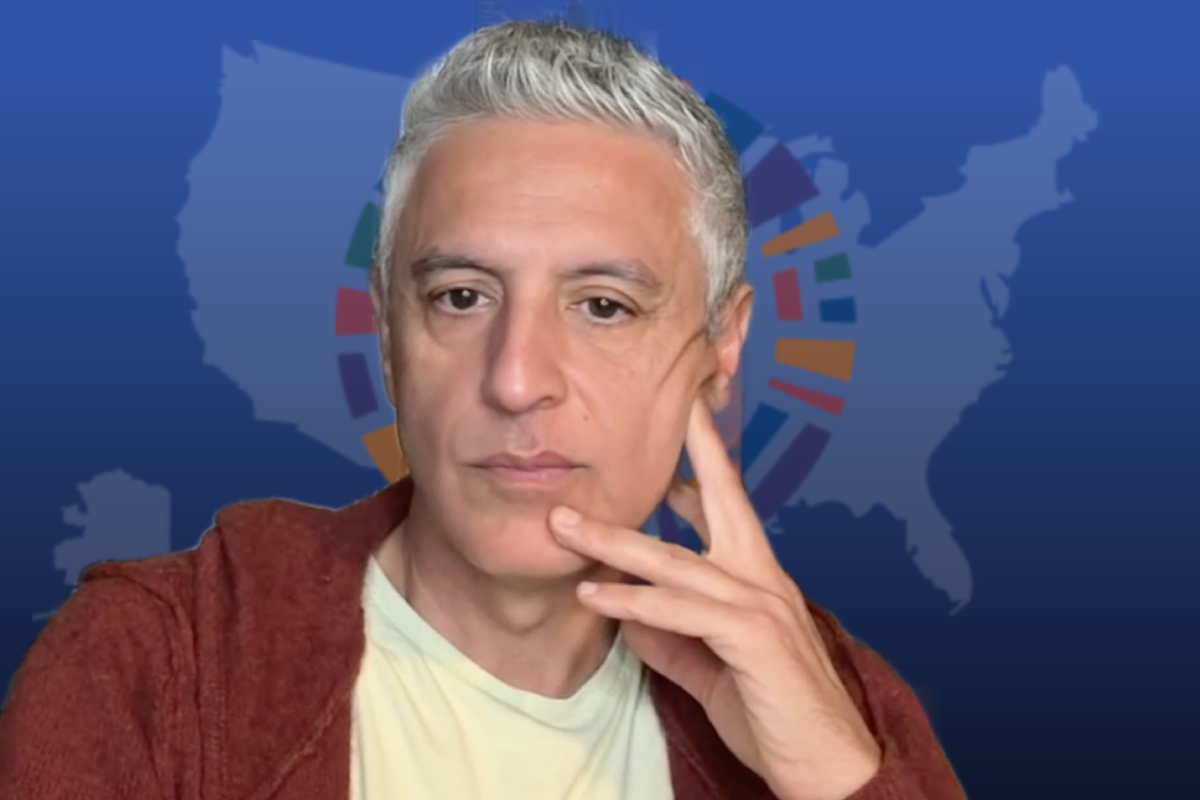
We’ve been looking at the war on Iran through the wrong lens, according to Iranian-American religion scholar Reza Aslan. It’s tempting to think that economic sanctions or military strikes will change Iran’s course overnight. But Reza’s words on The State of Belief challenge that assumption, revealing a deeper truth about history, identity, and the illusions we cling to.
Reza shares a striking story from his book on Howard Baskerville, the American missionary who fought alongside Iranians in 1907, to the century-long struggle for freedom that defines Iran’s modern history. More than just a series of revolutions, these events are part of an enduring quest for dignity and sovereignty—a fight that has repeatedly been undermined by foreign interference and internal repression.
Most surprising is how he dismantles the myth that religion uniquely dictates Iran’s actions. “Religion is just one part of identity,” he explains. “It’s used by regimes for control, but it doesn't inherently define the country’s trajectory.” That shift in perspective is illuminating. It reminds us that Iran’s complex history of democracy protests—dating back to 1905—has always been about Iranians asserting their right to shape their future. Yet, external powers have consistently interfered, from Britain in 1905 to the CIA-backed coup of 1953, and now, the current military escalation.
Reza sounds a warning for those celebrating the fall of the Supreme Leader: external attacks are a most effective way to rally internal support, invoking the surge in support for George W. Bush in the immediate aftermath of 9/11 as one relatable example. He challenges us to let go of simplistic hopes that bombs or sanctions will transform Iran overnight. Real change, Reza suggests, comes from within—and it will take generations, because history is not so much context as it is fuel for ongoing resistance and conflict.
MORE ABOUT REZA ASLAN:
Reza Aslan is a scholar of religion, a best-selling author, a college professor, and a public intellectual who has a gift for making complex religious history accessible to broad audiences. Reza's books include Zealot: The Life and Times of Jesus of Nazareth, and Beyond Fundamentalism: Confronting Religious Extremism in the Age of Globalism. He has hosted television programs exploring religion and culture, such as Believer with Reza Aslan.
Born in Iran, living in Los Angeles, Reza brings a depth of understanding to the current situation that is important to explore. The nuance he brings is expressed in a moving New York Times essay titled, The Mistake That Iranians Make About America.
Transcript
REV. PAUL BRANDEIS RAUSHENBUSH, HOST:
Reza Aslan is a scholar of religion, a writer, and a public intellectual who has a gift for making complex religious history accessible to broad audiences. Reza's books include Zealot: The Life and Times of Jesus of Nazareth - a book I loved - and Beyond Fundamentalism: Confronting Religious Extremism in the Age of Globalism. He has hosted television programs exploring religion and culture, such as Believer with Reza Aslan, which I also really loved - and which wasn't without its critics, but I was not one of them.
Born in Iran, living in Los Angeles, Reza brings a depth of understanding to the current situation that I think will be invaluable to explore here today. The nuance he brings is expressed in a moving way in a recent New York Times essay titled, The Mistake That Iranians Make About America.
Reza Eslan, welcome back to The State of Belief!
REZA ASLAN, GUEST:
Thank you, Paul. It's great to talk with you again.
PAUL RAUSHENBUSH:
So I want to start with a little biography, because it's important for our listeners to understand who you are and where you came from as a way of entering into this conversation of where we are right now in the world. So can you tell us a little bit about your family, how you grew up, where you grew up, and the trajectory of your life and how that has influenced how you view the world right now?
REZA ASLAN:
I was born in Iran in 1972, quite some time ago. And I came from a fairly standard Muslim family. We were religious the way so many people are religious. It was just kind of part of our day-to-day identity.
My father, however, was a bit of a troublemaker. He was a communist and an atheist. He would stick out like a sore thumb a lot in family conversations. When the revolution in 1979 happened, I think my father thought that it would be a good idea for us to leave for a little while, just to see what shook out. At that time, of course, Khamenei had already returned to Iran and he was making these statements about how he had no interest in politics or any kind of political office. He just wanted to be left alone with his studies and his family. My father, who never believed anything anyone with a turban said about any subject, thought that maybe we should probably leave just in case to see where this all shakes out. We got out pretty late. We got out right before the hostage crisis started and the country kind of shut down.
We arrived in Oklahoma first, actually. My dad had done a study abroad somewhere in Oklahoma. I think he just thought Oklahoma was America. He's not wrong, by the way, on that. That was an unusual experience for me, going from Tehran - Tehran's a very cosmopolitan city - to Enid, Oklahoma, kind of very small rural area.
It didn't take us long to realize that there's a lot more to America, and so we got in a car and started driving west and ended up in the Bay Area. California of course has a very large Iranian population, but that population kind of came in two different waves. The initial Los Angeles immigration was sort of all the wealthy Iranians, the Jews, those who had some connection to the government, who sort of knew what was about to come, who managed to get out with their Swiss bank accounts intact. And then the second wave, which was sort of the intellectuals, the workers, more of the middle class, and that wave settled more in the Bay Area than in Los Angeles. And so that's the Iranian community that I grew up with.
But nevertheless, like a lot of the diaspora, I I think this was a community that felt very bitter and angry, a lot of feeling betrayed by the clerical regime. These are people who, unlike the wave that initially settled in LA, were part of the protests. These were the revolution. These were the people who fought, risked their lives to get rid of the Shah. And then just saw one tyrant replace another. And so that bitterness, that desperation, that sense of helplessness is something that I think my family felt very deeply, and it was one that absolutely trickled down into me as I was growing up.
Obviously the hostage crisis was not great for a seven-year-old Iranian trying to feel normal in America. A lot of racism, a lot of suspicion, a lot of overt kind of anti-Iranian sentiment that I had to deal with - not just in my day-to-day life, but even in school. I think if you could imagine what it's like to be a first-grader who barely speaks English in a classroom that is covered in yellow ribbons in solidarity for the hostages that were taken by your home country, you have this kind of ticking clock every day of how long these hostages have been there. So it really gave me an understanding of a lot of different things, I think, at a young age, about religion and identity and culture and racism.
And then also about kind of how to reconcile those things in myself. And I think a lot of that went into my older life as I began to struggle to kind of make sense of those huge ideas, those big thoughts, both on a kind of larger philosophical level, but also on a deep personal level. And I've been very fortunate over the last couple of decades to have made a career out of thinking about these things, talking about these things. And I feel really blessed that, on the one hand, that I've gotten an audience for a lot of these ideas and have been able to engage in this sort of public realm of ideas. But on the other hand, the topics that I deal with just keep coming up over and over again. Whether it's war or terrorism or conflict or racism; religious conflicts, these things.
I feel like I kind of went into the right business, I guess. This is evergreen issues. And so here we are once again, America and Iran in conflict. Obviously it's a little bit different this time than in the past, but it just seems like for most of my adult life, these two nations that are so much a part of my dual identity have used each other, or at least a distorted version of each other, to identify themselves. it's been a fascinating thing for me to kind of navigate.
PAUL RAUSHENBUSH:
I want to talk about your article in The New York Times, The Mistake That Iranians Make About America. And I want to get into it because when I read it, I really felt connected to your own heartbreak.
You just mentioned a certain kind of love for both countries, as you know, not without conflict, but a certain kind of love, at least for the people, and yet here we are. I just would love for you to talk a little bit - just before we get into the specifics about what is happening - what is your heart like and what is your like spirit like?
REZA ASLAN:
It's pretty dark right now, I'm not going to lie. I've gone through a lot over the last few decades, years in which there was a lot of hope and lot of positivity and expectations that things would change in Iran. Not just in those moments of widespread protests, but in the more quiet moments in which the political structure of Iran seemed to be shifting a little bit and there was greater openness of the country, possibilities of the country, certainly the possibilities that arose after the nuclear negotiations that President Obama so masterfully negotiated. And I remember sort of that year and thinking to myself, this could be the pivot. This could very well be the pivot.
And then to see all of it completely fall apart for no discernible reason, just for the - who knows why this president does anything. And then the years and years of brutality and repression and the sort of inescapable thoughts of what would I be right now if my father hadn't made that decision to just get out for a little while and see what happens, if he had just waited a little bit longer? Who would I be right now? Would I have survived the Iran-Iraq war? Would I have been mowed down on the street? It's hard. And so, I really understand the frustration and the desperation that so many Iranians in the diaspora feel, and I think unfortunately results in supporting the most extreme responses from countries like Israel and the United States, including this bombing campaign.
I don't know if your listeners are aware of it, but the Iranian diaspora in the United States, particularly in Southern California, is overwhelmingly in favor of this military attack and has been clamoring for it for quite some time.
PAUL RAUSHENBUSH:
It's been interesting, and certainly used on some of the news media channels as proof of: why are you against liberation? And why do you hate women? It goes quickly into that kind of thing. And
And I do urge all of our listeners to to read the New York Times article, because I think it's very beautifully written - as everything that Reza writes is beautifully written. But that's something you mentioned at the start is that you're American now, as well. But this is a moment to say, even though thousands now have died, thousands of Iranians have died, and infrastructure, with this president, I'm just like, what did you think was going to happen?
And I think that that's one of the things that you really also bring into this: what can America really do right now to change the regime in Iran? And this probably isn't it, but I want to hear the way you describe that because, obviously, I'm coming at it from a totally different aspect, but talk a little bit more about even what it looks like to you to see the bombs falling on Tehran the way they are.
REZA ASLAN:
I do want to say that I don't want to make it sound as though those Iranians who were dancing on the streets in Westwood as the bombs were falling on Tehran, that they didn't care about the death and destruction that would inevitably follow and has come. And I think it's just going to get much, much worse. I don't think people really understand.
Yes, there's been, already, a lot of death and destruction as a result of the military campaign. But Tehran, especially, was a country that, environmentally speaking, was on the verge of collapse. Before the bombing started, the headlines about Tehran were about how it's about to run out of water. Well, it's out of water now. So you're talking about one of the most densely packed, most populated capitals in the world experiencing death from the skies while also not being able to get something as simple as drinking water. So the death and the destruction in Iran has just begun.
And I don't want to make it sound like the diaspora doesn't care. They do care. They just think it's worth it. They just think that if it requires, you know, 150 little girls to be buried in rubble in order to remove this regime, then so be it. And we can talk about the morality of that argument, obviously, but I do have sympathy for it. I really do. I understand. I lost my country. I watched the death and destruction. I watched those bombs fall on neighborhoods that not only did I used to live in and I used to know, but that I still have family living in. I don't know what's become of them. I really don't.
I try my hardest to get information as much as I can, but it's very hard to do so. I understand the anger and the emotion that goes into the statement, “It's worth it.” But it is also very important to understand that the notion that bombs falling from Israeli planes will lead to a groundswell of reform and revolution and will lead to the end of this regime is absurd. It's illogical. It's irrational.
For those people who are out there who are making this sort of argument, I want you to think about what happened on 9/11 in the United States. We probably don't remember 9/10. George Bush was the most unpopular president we have had in generations - until 9/11. Do you think that the rest of the world is somehow different than you? Do you think that Iran doesn't function in the same way? I mean, do you honestly and truly believe that Israeli bombs destroying homes and infrastructure, American bombs killing little girl,s is going to rally the people against the regime? Of course not. It's done the exact opposite.
Iranians are a deeply prideful, deeply nationalistic people, but you don't even need to be uniquely Iranian to know that in times of crisis, in times of national security, in times of war, people rally to their state, to their government. And that's exactly what's happened now. Yes, there are Iranians dancing in Westwood. Do you know who is not protesting this regime? Iranians in Iran. Why? Because there is no room for that kind of idea. In fact, what we have seen is a consolidation of the most hardline, most militaristic voices; and an absolute stifling - even more so, an absolute suffocation of any voice that is in any way calling for either moderation or reform. And I think that's the reality that Iranians have to face.
PAUL RAUSHENBUSH:
And it may just continue even after the bombs stop falling. There's going to be even more rationale among the rulers to just completely eradicate any dissent. You and I have had many discussions about radical religion, and that is all religions, I hasten to say, because there's certainly been people on the American side who have used language that taps into the worst of American/Christian radicalism using Christian expansionism and kind of the Crusades metaphors, and just this absolute joke of a person, Pete Hegseth, who is unbelievably dumb and with a Crusades tattoo and his machismo.
I want to lean into your expertise essentially on radicalism, and just to give a little bit of a lesson to all of us about what is radical Islam. I hate that word. But, you know, what is it? What is Islam in this manifestation of the leadership of Iran? How does it understand the world? What is the way that religion is functioning in Iran right now?
REZA ASLAN:
Such a complicated question. I do want to emphasize one thing that you said. You know, there are people in America who have this same kind of holy war mentality. Those people are prosecuting the war. It's not like there's just people in America…
PAUL RAUSHENBUSH:
For sure. We are at the zenith of power of all of those people. Lindsey Graham goes around saying everything is a holy war. Lindsey Graham, I mean, it's like unbelievably, it's incredibly irresponsible.
REZA ASLAN:
Yeah, the Secretary of Defense, the generals who are actually speaking to our soldiers. It's not just people. It's the people who are in charge of the war are presenting it with this holy war conception to it. This is going to sound a little…
I just need your listeners to follow me for a moment here. There is nothing unusual or extraordinary or different about Islam than any other religion in the world. It's very easy to look at Iran and call it a theocracy. Sure, you can call it a theocracy and it certainly has theocratic elements to it. It uses religion as a form of authoritarian power and it uses religion as a means of population control. There's no question about it. But the lunacy of thinking that religion is what defines foreign policy in Iran, or religion is how they decide troop movements and military policy in Iran, or religion has anything to do with how the economy is structured... I mean, it goes back to what I was saying before, this idea that we all do this, we all do this. We have such a difficult time defining ourselves.
It's very easy to say what we aren't. So we construct these absolutely imaginary versions of an “other” just so we could define ourselves against it. You heard this from Pete Hegseth, who is a religious extremist, who by his own admission is fighting a holy war. But when he talks about Iranians, that's how he talks about them. He talks about them as though he's describing himself.
And by the way, the same thing happens in Iran. You think the Iranians are not aware of the rhetoric coming out of the American military establishment? Of course they are. This idea of, is there some insight about Islam that'll help us understand Iran and how to work with Iran and how to deal with it and defeat it? No! No, there isn't. Religion is just an aspect of both individual and collective identity. It is one of many, many, many parts of one's identity.
If you are a fervent nationalist, a die-hard patriot, and you happen to be religious, whether you're Jewish or Christian or Muslim or Hindu, then of course you're going to marry that to religion and create a kind of muscular version of nationalistic religion, whether it's holy war Christianity or Jewish Zionism or whether it's the Islamic Republic in Iran or whether it's the Hindutva ideology of the ruling party in India.
There's nothing weird or unique about religion that establishes itself in a different category than any of these other ideologies, any of these other factors of one's identity. It's just kind of who you are and how you see the world. That affects what your religion is if you happen to also be religious. Religion doesn't dictate anything, literally. It doesn't dictate anything. I've said this about a thousand times, but I'll just say it again. I think we have this idea that people derive their values from their religion. That is demonstrably false. People do not derive their values from their religion. People insert their values into their religion.
PAUL RAUSHENBUSH:
And that's what you see both in Iran and you see it in America. And in some ways, you can view Iran's actions and you can view Americans' actions all in terms of very different things than religious. And at this point, it's...
REZA ASLAN:
Everywhere. You see it everywhere.
PAUL RAUSHENBUSH:
It is hard to, because the rhetoric is so strong, it's hard to come back from that and to have sober minds about what we're actually dealing with in the region.
You've written a book about Howard Baskerville, and I do think that it's not a bad time, given what we just talked about, to bring in his name and to talk a little bit about Iran's history, modern Iran. Persia has a 3,000-year-old history and one of the great civilizations of the world. This didn't start in ’79; it started far before that. I'm sorry to put you in this position because it's very one-on-one, but I do think it's important right now because we forget history but other people are not forgetting history. And even if they're not, even if they don't have it front of mind, it's somewhere in there. The history is there. And so you said history is not context, it is fuel. So can you talk a little bit about the history and what you mean by history as fuel?
REZA ASLAN:
I think there's sort of two parallel things, two parallel arcs, if you will, that are important here. And one is the 120-year struggle for Iranians to achieve some measure of freedom and independence, both from foreign rule and from authoritarian rule in their own country. I think a lot of people are probably aware of the revolution of 1979 and certainly maybe people who are up to the current affairs have noticed the different popular protests that have happened in 2009 with the Green movement right up to the women's movement that we saw a couple of years ago.
I think what people are probably not aware is that this has been a 120-year process, the very first democratic revolution in the entire Middle East took place in Iran in 1905. It's called the Constitutional Revolution, a revolution in which young Iranians came out to the street, men and women, demanding the most basic rights and privileges, the right to have a say in the decisions that run their lives. It's not a huge ask, it's the most basic of human rights. And this was the first of three major revolutions.
Of course, there was another revolution in 1953 that ousted the Shah. The 1905 revolution was against the Shah. It also ousted the Shah at the time. And then in 1979, yet again, a popular revolution that ousted the Shah, which then created this vacuum of power that was filled by the clerical establishment. That's very important. I mean, in post-revolutionary propaganda, the 1979 revolution is constantly called the Islamic Revolution. I was there for that revolution. This was not an Islamic revolution. This was a revolution that had Marxists and communists and men and women and intellectuals, Jews, Christians. mean, every sector of Iranian society took part in this revolution. It's just that in the post-revolutionary chaos, the loudest and strongest voice rose to the the top and that was the voice of Ayatollah Khamenei and the rest is history. So that's the first principle, is this more than a century long struggle for Iranians to achieve this basic right in the face of authoritarianism at home and in the face of foreign interference abroad.
The second part is the foreign interference part and the role that America has played, the destructive role that America has played through it all, going all the way back to 1905 and that constitutional revolution. And this is where the story of Howard Baskerville picks up. Howard Baskerville was a 22-year-old Christian missionary from Nebraska who in 1907 was sent to Iran - at the time it was still called Persia - in order to preach the gospel and teach English. And he arrived smack dab in the middle of this first revolution. And he had this transformative experience that ultimately led him to abandon both his missionary post and his teaching position, ultimately to give up his American citizenship and to fight alongside his students against the Shah for the freedoms that he himself took for granted as an American.
And despite the clamoring of Iranians at that time for American support in this battle - and this was, remember, at a time in which America had no interests in Iran; this was before oil was discovered, before Iran was of any strategic importance. There was no reason for the United States not to support the revolutionaries, except for the reasons that the US State Department itself gave, which was the idea that a bunch of Muslims could have democracy is so absurd that there's no point in supporting this movement.
And Howard Baskerville, this Christian missionary, disagreed. And so he divorced himself from his American identity and fought alongside his students and then ultimately died this kind of historic death, and was considered a martyr, is still to this day considered a martyr. That's a very big deal in Iranian culture to call anyone a martyr, let alone an American Christian missionary a martyr. He's still revered in Iran for this position. But he represented this vision of American involvement in Iran, this idea that he himself very famously said before his death. His great quote was, “The only difference between me and these people” - the people he was fighting against – “is the place of my birth. And that is a very small thing.”
And then of course, in 1953, the same group of Iranians, the same forces of Iranians that brought down the Shah in 1905, rose up once again to fight against the Shah, once again brought down the Shah. And as students of history know, the CIA put the Shah back on that throne. This time the Americans did have a lot of economic and national security interests in Iran.
And then once again in 1979, same exact coalition of Iranians came out demanding the exact same thing again, and yet again brought the Shah down. And in many ways, if you want to talk about what were the forces in ‘79, ‘80, ‘81 that ultimately resulted in the Islamic Republic that we see today, it wsn't so much the context of those years, but it was the context of the history that I just said. It was the idea of, okay, this is now the third time we have done this. How do we make sure that the Shah doesn't come back again because of foreign interference?
I should say in the first revolution, it was mostly the British, actually, who put the dynasty back together again with help from the Russians. So America didn't have that much of an involvement, but the refusal to involve themselves was a kind of decision. And I think what you saw was the hostage crisis, the Iran-Iraq war, the consolidation of power in the most hardline anti-American elements. All of that was really a result of this destructive relationship with the United States and with foreign powers.
And here we go again, this idea that somehow - I think this was the point of the New York Times piece - was this fantasy that somehow America is going to come to Iran's rescue. Something that Iranians have been living with and maybe even dreaming of for more than a century is just that - it's a fantasy. America has no interest in coming to the rescue of the Iranian people, it never has. That's not where its interests lie. Its interests are diametrically opposed, really, to the interests of the Iranian people, not the government or the establishment or anything like that. And while I completely understand and sympathize with that wish, it is just a wish. It's just a fantasy.
PAUL RAUSHENBUSH:
Well, we're recording this and I guess it's been going on for 10 days, 12 days. Where do you think this goes? I mean, I don't want to put you in like the position of, you know, a magic ball, it's hard to see - especially with the involvement of other Gulf states and trying to imagine, how does this end in a way that is plausible? I mean, it just seems like it's very, very worrisome in every way. Is there anything that you place your hopes in right now?
REZA ASLAN:
Those are two different questions. To the question of where does this go, how does it end? That's a very easy question to answer. Look at what's happening now. This is where it ends. Donald Trump doesn't care about either the Iranian people or, frankly, the Iranian government or, frankly, really much of anything.
He is already looking for an off-ramp. He was manipulated into this war by the Prime Minister of Israel, Benjamin Netanyahu, who for two decades has been trying to manipulate American presidents into bombing Iran. For two decades he's been trying to talk every single president into bombing Iran, and he found a fool willing to believe his lies, that this would be a very simple thing, would drop a few bombs. The Iranian people will rise up. You'll be the great Cyrus of the Jewish people. They'll make a big bronze statue of you in Tehran and then you can go home and have a parade. I'm certain that’s what he thought would happen. In fact, I am absolutely certain of it.
Do you know how I know? Because you can just watch Donald Trump in real time over the last two weeks coming to a realization of what he has done. You can see it in his eyes. You can see him go from, it’s a two day war to this will last a couple of weeks to this might be a few months to maybe what comes after is worse than what was before. You just watch him realize, oops. This is a man with the attention span of a five-year-old. And in about a week he'll lose interest. He'll declare victory and he'll move on to the next thing.
And what he will leave behind is not just death and destruction and a completely destabilized Middle East, but he will leave behind in Iran a regime that, as I had mentioned before, will only further consolidate power in the wake of this unprecedented attack from the two enemies that it has based its entire foundation upon. The way that it has survived being the most unpopular government in the world, the way that it has survived the absolute loathing and hatred of its entire population, is by pointing to the threat of these two external enemies. And now it's not a threat, it's reality.
There is no more room for reform or progress or mediation or conversation or engagement or any of those things any longer. The absolute worst elements of Iranian society are now given carte blanche. And I know a lot of my fellow Iranians are saying they already had carte blanche. Sort of, they did. But as we've seen over the last decade in protest movement after protest movement and people demanding change and in the government being forced to respond, that's over. That's over. There's no more room for protests on the streets. That's not going to happen. And again, I hear the response already. “Well, they would already slaughter those children.” That is true. But there will not even be room for the protest any longer. And Trump will give himself a parade and declare victory and maybe get a crown out of it or something, who knows.
However, where do I have hope? There is one thing that happened over the last couple of days that isn't really being truly understood. And that is the succession of Mojtaba Khamenei as the new Supreme Leader. And I think in the US, you've never heard of this guy. He's Ali Khamenei's son. He's the former Supreme Leader's son. Nobody really knows who he is. And at best there's talk about the fact that he is a much harder-line person, that he has the support of the Revolutionary Guard and the military establishment, etc., etc. But you have to understand the Supreme Leader, which is a joke of a title, is predicated on a very simple premise created by Khomeini himself, the founder of the Islamic Republic, which is that to have a truly moral state, it needs to be run by this particular figure who is the highest religious authority in the state. Whoever is the highest religious authority should, by the nature of that position, be a kind of papal figure, if you will, who then becomes the moral arbiter of the state and the government and the people, etc. etc.
Now, ironically, Khomeini, when he came up with this position and then gave it to himself, obviously, was not the highest religious authority. He was just an ayatollah. There were grand ayatollahs who were much, much higher than him. But to a person, every grand ayatollah rejected this idea, thought it was blasphemous, thought it was crazy, this notion Khomeini said that high authority should have the exact same authority as the Prophet Muhammad. I mean, this was blasphemous to his elders, but he's the head of the party, he's the loudest voice, he's Khomeini. So he gives himself that position, and then he arrests his superiors for disagreeing. And then he holds it.
When Khamenei achieved this position, as the successor to Khomeini, he was by no means the highest religious authority in Iran by any stretch of the imagination. And he had nowhere near the authority that even Khomeini had. But he's a founder of the Republic, a revolutionary, had been president for two terms, was Khomeini's right-hand man, was seen as somebody who wouldn't really rock the boat and would just kind of continue Khomeini's vision. And so there was a lot of consternation about, is this guy really qualified to be the highest religious authority in Iran?
The answer is no, but I mean, okay, Khomeini handpicked him. That's one thing. And okay, it's a dilution of the office, but fine. The notion that this 56-year-old son, Mojtaba, who is not an ayatollah, who is a low to mid-level cleric, who has no religious qualifications at all, who's never held any kind of office, who is nobody and who's sole qualification is that he's the son of the previous leader.
The entire revolution, the entire Islamic Republic was predicated on putting an end to hereditary rule. That was the whole point. The whole point. That's the entire legitimacy of it. And then to create this new position that is the opposite of hereditary rule... The highest religious authority. The notion that this kid - I say kid, he's 56 - is going to be handed this position is, despite what I think a lot of outsiders understand, really the final crack in this crumbling notion of moral and religious legitimacy.
And yes, this legitimacy has already been cracking from the repression of the people, the corruption, all of those things, the collapsing economy. There was barely any legitimacy left. But make no mistake, there's still a sizable swath of Iranians who are very pious and who accept the sort of self-ascribed religious legitimacy of the state. That's gone. This puts a lie to the entire structure, the entire foundation.
So, to me, this decision will, in the long run, probably have far greater consequences to putting an end to this regime than any bomb falling on Tehran. In the short term, what you are going to see is a far more repressive, far more violent, far more insulated police state as a result of this military attack. In the long run, it is possible that particularly the younger seminary students who are already very suspicious of this whole Supreme Leader idea anyway, that this is kind of the last nail in the coffin of that. And what you are going to get is a whole new generation of pious Iranians, the natural base for the Islamic Republic, who cannot find a reason to justify the existence of this so-called moral state any longer. So if you're looking for hope, that's the hope that I can give you.
PAUL RAUSHENBUSH:
Reza Aslan is an author, religion scholar, and public intellectual bringing accessible analysis of complicated matters. And I just want to say personally and for all of our listeners, thank you so much for sharing all of your knowledge, your soul, and that last bit is really something I have not heard before, and really important and interesting. And that's reason we pay you the modest bucks. So, thank you so much for being with us on The State of Belief.
REZA ASLAN:
I'll expect to check in the mail. Thank you, Paul. It was my pleasure. Thanks for having me.

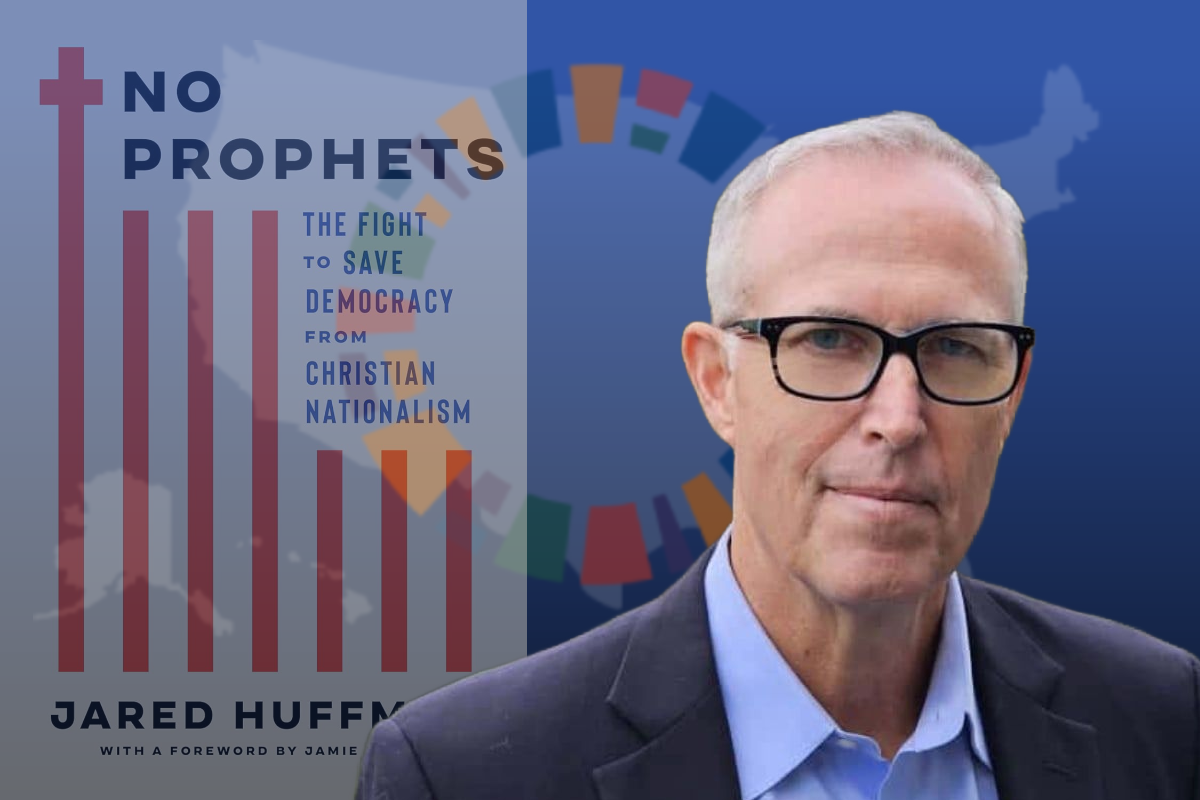
Congressman Jared Huffman: The Fight to Save Democracy From Christian Nationalism
The co-founder of the Congressional Freethought Caucus joins host Rev. Paul Brandeis Raushenbush to discuss how he's seen authoritarian impulses show up in our government and to share some of the insider stories featured in his best-selling new book, "No Prophets"