State of Belief
Interfaith Responses to ICE with Najeeba Syeed

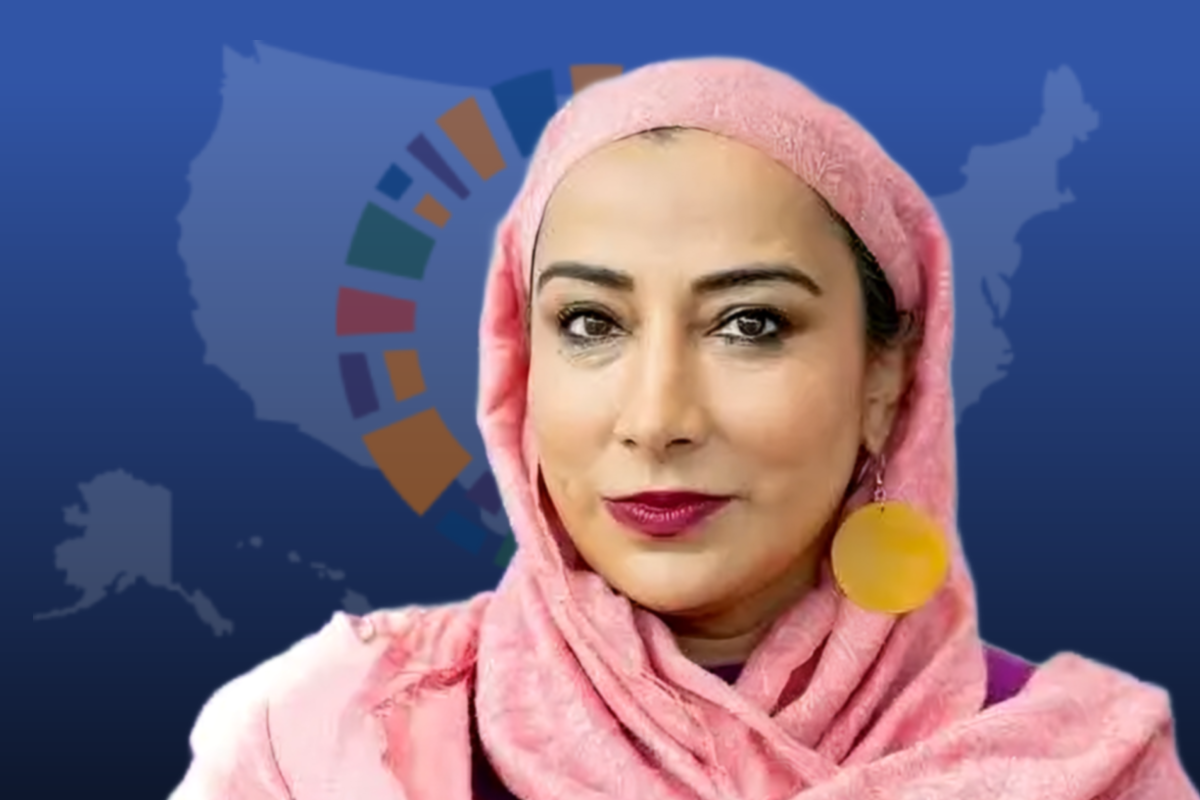
This week on The State of Belief: incredible insights from the remarkable Dr. Najeeba Syeed. As a celebrated peacemaker, educator, and scholar in interfaith studies and conflict resolution, Najeeba brings a wealth of knowledge and compassion to the conversation. Here are some key takeaways that you'll find both intriguing and inspiring.
Minneapolis is home to the largest Somali community outside of Mogadishu. It’s centered on the Cedar-Riverside Community, which has long been a welcoming place for refugees and immigrants, from Jewish congregations and Protestant refugees to East African immigrants, particularly Somali Americans. The Somali Muslim community here is facing increased scrutiny and enforcement actions by ICE, alongside divisive political rhetoric. In fact, over 80% of the Somali community are U.S. citizens, challenging the justification for targeting them.
Najeeba celebrates the power of interfaith cooperation and unity in crisis, with powerful examples of interfaith gatherings, like a recent meeting hosted by a Muslim imam and a Christian pastor, attended by a supportive rabbi. Acts of emboldened empathy can look like simply showing up to support one another, like attending Friday prayers at mosques, can be a profound act of solidarity.
The appeal of collective punishment is a worrying trend Najeeba identifies across the political spectrum. She warns against narratives that justify collective punishment of entire communities based on the actions of a few. Instead, Najeeba calls for collective empowerment, moving beyond zero-sum thinking to embrace a collective, pluralistic approach to power-building and recognizing that individual and communal flourishing are interconnected.
The episode also features my conversation with Imam Ayman Soliman - granted asylum status way back in 2018 - a beloved chaplain at Cincinnati’s Children’s Hospital seized by ICE and held for ten weeks under threat of deportation. His case activated a wide interfaith network of support and concern.
You’ll also hear about a brand-new public campaign from Interfaith Alliance, a 30-second video ad highlighting the immorality and horror of ICE disrupting religious and secular celebrations of this special time of the year.
More About Dr. Najeeba Syeed:
Najeeba is a celebrated peacemaker, educator, and scholar in interfaith studies and conflict resolution, serving as the inaugural El-Hibri Endowed Chair and Executive Director of the Interfaith Institute at Augsburg University. She has more than two decades of experience in mediation, restorative justice, and social equity work. With communities in Minnesota being targeted for capricious enforcement of ICE policies, it is invaluable to have an expert witness and effective leader to share her insights with us.
Transcript
REV. PAUL BRANDEIS RAUSHENBUSH, HOST:
Dr. Najeeb Saeed is a celebrated peacemaker, educator and scholar in interfaith studies and conflict resolution, serving as the inaugural Al Hibri Endowed Chair and Executive Director of the Interfaith Institute at Augsburg University. She has more than two decades of experience in mediation, restorative justice, and social equity work. With communities in Minnesota, what can we say, being targeted for enforcement of capricious ICE policies, it is so important for us to talk to an expert witness and a leader to share her insights with us today.
So, Doctor Syeed, welcome back to The State of Belief. I'm so glad to be talking to you.
NAJEEBA SYEED:
Thank you. And I'm willing to talk to you even though you're not an Augsburg grad, but a graduate of another Minnesota university that we’ll leave unnamed.
PAUL RAUSHENBUSH:
It's called Macalester College, and I am coming back for my 40th reunion, and I am definitely coming across to see you and thank you personally for all that you're doing in this time. And one of the reasons I want our listeners to hear from you - you've been on the show before, but hear from you is, you are you are clearly in the center of the storm.
And I want to start just by acknowledging that that's difficult. And I want to check in and see how you are feeling in spirit and heart and mind, and just to acknowledge that this is hard.
NAJEEBA SYEED:
Definitely. And it's all happening in the midst of multiple - what feels like multiple feet of snow.
So, I think that you're right, that this is a time that we all have to kind of take a moment and take a deep breath and understand that multiple communities are exposed. Multiple communities are facing incredible challenges. And that I think what has been beautiful about the approach of faith leaders in the cities is what binds us together. How can we show up for each other? And I would definitely say one of the powerful things about this moment is that people who were not activated before, faith communities that sat on the sidelines, are asking, well, how do I show up for my neighbor? And that's the part of the story that I think is really important to tell.
And what I would say is, that's not new to Minnesota. That part of the fabric of the state, but also of the Twin Cities, has been a welcoming - the Cedar Riverside neighborhood where our university is located, which is the largest Somali Muslim population outside of Mogadishu, that that has been the history of this neighborhood. So it happens to be Somali Americans as well as people of East African descent from other communities.
But, you know, 20 years ago, 30 years ago - we looked at the history of this community. In fact, generations ago, this was a neighborhood that had, also, a synagogue. So it was a place that received people that were fleeing persecution for being Jewish. For Protestant believers, we have a Lutheran university that came to be birthed here in this region. So I think that's important because part of the story we need to tell is the story of this region, and that it has always been a welcoming region, a place where you step off of somewhere else, that was open to communities that were fleeing persecution. And I want to mention that because that's not only the story of this region, that's the story of this country.
PAUL RAUSHENBUSH:
Yeah, I love that you started there because I that that is such an important message. And I think it's a central message that, having enjoyed hearing you speak and being the beneficiary of the Interfaith Institute at Oxford University myself and learning from you all, really, the story of waves of immigrants; and then the next wave comes and the previous wave, instead of shutting the door, says, here's my hand.
And in some ways, the history that you represent and that the leadership of Augsburg University represents now is actually - yes, our history is as a Lutheran University. And part of that history compels us to welcome the people who are coming to our shores and our doors right now. And I think that is so exciting. And the incredible diversity at Augsburg University that reflects the diversity of the Twin Cities. And I think that these are stories that, I just think it's so important that we lift them up - especially when the rhetoric is so terrible, coming out of the White House.
That's not the only rhetoric out there. It's not the only story out there. And we have to make sure that you, our listeners, hear these other stories that have to be even more compelling - because right now, the narrative of who is American and who counts as American is is really at stake.
NAJEEBA SYEED:
Yeah. And I'll just share a story in the past couple of weeks, as there was concern for communities experiencing, targeting, particularly for rhetoric that could be hurtful for those communities. So I was at a meeting, hosted by an imam, a Muslim leader, and a pastor. and so this is a meeting held by an imam and a pastor at a church. And, one of the most powerful statements that came out of that evening was a rabbi who was attending. Mind you, there are all people here in the cities. And the rabbi said, “I want you to know I'm showing up here tonight because for me, the targeting of a community with a rhetoric that is dehumanizing, that that's something my community has been through. So I feel compelled to show up today at this meeting and commit to whatever kind of support is necessary.”
So think about that for a moment. A rabbi speaking in a church at an event held by an imam and a pastor. And, you know, that was all organic. That was all in the moment, responsive. That was not something that we put together.
You know, sometimes I - I just finished doing an interfaith dialogue for a workplace, and I had carefully curated my rabbi friend, my professor of Christianity, and, actually in this case, we engaged an atheist voice. This happened with moment’s notice that people showed up for each other. So what does that mean? It means that there is something visceral within us that says that the future we want for this country actually reflects our past. And I think that's what you said, Paul, is that we're not presenting a new model. This is not a new conversation. This is the story of our neighborhood, of a place that, as I mentioned, at one time was home to not just Christians leaving or escaping from persecution, but also people who were in Jewish congregations.
So, you know, that's powerful.
PAUL RAUSHENBUSH:
It is so powerful. And frankly, what we're describing here, this tension between these different narratives, has also always been here. Because if we look back a hundred years and people saying, oh no, we can only take so many from that part because there's too many Eastern European, too many Jews in the 20s or the wrong kind of Jews. And that's the reason, I think, this rhetoric laid on top of what is happening with ICE, and I know that this is really affecting the community in particular ways and frightening ways. I don't know what you can share about how the community is reacting in this way in this moment…
NAJEEBA SYEED:
I think what's unique about the Somali community that folks may not know is that the vast majority are citizens. So over 80%, some say closer to 90, are US citizens and many are born here.
So many of our Somali brothers and sisters are quite young, so I think that raises a particular sort of need to think about, well, what does it mean? And I really wanted to talk about something here that I'm seeing from across the political spectrum - and this is the notion of collective punishment. Some scholars call it, also, symbolic humiliation, where you pull out some people from a group, you identify them, you punish them, and make them examples so that the whole group will self-regulate. That's, in fact, the best way to dehumanize and create an environment in which people are afraid.
And so I wanted to mention that because I feel like there's rhetoric that says, for some communities, if a couple of people do something that is unacceptable or problematic, the whole community must suffer. and I think that that's something we have to really think about from a moral and religious perspective; that instead of saying, well, we want that to happen for other groups or for all communities. You know, I've heard that argument, Well, let's impose that equally on every group.
And I want to stand back and say, actually, no, I don't want that for my Christian brothers and sisters, either. I don't want there to be collective punishment if an individual has made a mistake that the whole community should suffer. So I wanted to really have your listeners think for a moment about this notion of collective punishment and how it can be selectively imposed, and what is our intervention for that?
Because I will frankly say, another disturbing narrative that I've been hearing is: well, people voted a certain way, so they should expect a certain kind of treatment. And I also just want to point out the moral imperative that that's also, in many ways, collective punishment. Let's take a moment to think about that. that if you voted this way… I think about this notion of chaplaincy for everyday democracy. I've written about it. And if we extend chaplaincy principles to this moment, it doesn't matter to me how you voted.
It matters to me what is happening to you right now, in this moment. And I worry that people can dismiss suffering, and we don't know, what is that percentage? Okay, if 60% of you voted this way, then you don't deserve it. But if 30%... What's that threshold? There's always some people that didn't vote that way. And what about children? Children don't have that. So do we punish the children of that community? I just wanted to point that out, because I think that there's some ways in which we have to be very careful if we approach any suffering in the world. How much do we blame people for bringing it on themselves, and how much are we able to say, wait a minute, no one deserves to suffer, and we want to find ways in which we move forward together. I want to think about how we create spaces that are unifying instead of more splintering, more divisiveness, more popularity. Because I don't think that's really a way that we're going to solve any of the issues that we face, whether it's in this moment, or in the future.
PAUL RAUSHENBUSH:
I think you said earlier, people have shown up in positive ways. What are some tangible things that - it's Minnesota now, but it's been so many other communities. And this will continue, unfortunately, to happen. And it's on all of us to imagine ourselves as responding positively in these moments. I wonder if you have any steps that you think are really good steps to take for people who want to step into this from the perspective of really believing what you said: no one deserves to suffer, no one deserves to be targeted, and we all need to show up for one another in moments like these. What are one or two?
NAJEEBA SYEED:
Well, I would say, yeah, definitely. There's also some examples from the past week. I think one thing we do is sacred, is showing up just to witness, because as I was telling someone, we may not be able to change the outcome of something. We may not be able to change the outcome of suffering. But in those moments of suffering, if there's no one saying, we don't cosign this. If there's no one in the street that sees that act of robbing someone of their freedom. If there's no one there, then that means not just for that moment, but for history, that it's that sacred act of witness.
So whatever that might be, in whatever scenario or situation, just - even if you're silent, you don't need to say anything, but the presence - to say, as a person of faith, a person of moral foundation, that we need to be able to say, listen, this is not something that I am a proponent of. Maybe I don't have the power, I don't have the resources, and I'm showing up. And that's why, if you think about whether it's a civil rights movement or you think about so many movements throughout history. It's that physical, embodied showing up that becomes part of the calculus that pushes the moral compass, that art that Dr. King talked about.
Don't underestimate your physical, emotional, spiritual presence, not just as a witness for history, but as a witness for the people that are going through that experience. And I just wanted to invite all of us… We're not all ready for everything. We're not all prepared. We may have risks in our lives. We may have young children that we need to attend to.
So I'll just give you a beautiful example of, locally here in our neighborhood: last Friday, a group of mostly Christian - but not only Christian, people of different faiths - people of no religious tradition, keep that in mind, if you don't have a religious tradition, you can still show up - went to the local mosque. And this is a practice that they've done before, which is, served tea. And in this case, it's a mostly Somali mosque. So the tea is Somali. And if you've had Somali tea, you know that it's incredible and really good.
And as an act of service, show up, serve the tea, and just show up there saying, we're here. And this happened. We kind of did it locally on our own, but it happened across the state of Minnesota with multiple organizations where people show up at the Friday prayer, not just as an act of safety and security. Sometimes I think people focus on safety, security, reduction of harm - which is absolutely an important way to show up, in some ways. But that takes training, that takes other efforts. There are ways in which we can show up just to say, I'm here.
And I've been talking a lot about public theology. Public theology doesn't have to be a written word. Public theology doesn't have to be something in which you give a sermon on. What if public theology were these acts of care? What if public theology was exactly as we did in that moment, just show up? And I cannot tell you the degree to which our neighbors said: “Thank you for being here. This means so much to me.”
These seem like small pieces of a much larger puzzle, and I think there are so many other ways that we need to show up or can show up. I just wanted to encourage us to think about that act of neighborliness, as, in my work, I call it “embodied empathy.”
PAUL RAUSHENBUSH:
I love that, and I think that that is so important. Where we place our bodies in this moment. And I really think it's important for the listeners to hear, but all of us to recognize: not all of us are ready to get arrested. That's a very particular kind of action. But there's so many other actions that can be also really important.
And also, this can change the way people understand a moment. And I remember doing a piece when I was at Huffington Post and there was a lot of push to, like, oh, religion is doing bad things again. Let's cover that. Those do really well. Let's get a lot of clicks. Well, my pushback was like, actually, when religion does good things, which it does even more than it does bad things, those get even more clicks. And one of the examples I gave was, we covered this story about these Muslims who surrounded a church in Pakistan holding hands, saying, we are going to show up for our neighbors and offer them protection and love. And, you know, it had a risk factor, but mostly it was symbolic and showing up in public theology. It was like, this is what matters to us.
Well, let me tell you, you want a viral piece - that did better than almost any piece in the history of Huffington Post, which is saying something.
NAJEEBA SYEED:
It is saying something, because it means people are hungry for those stories.
PAUL RAUSHENBUSH:
They are hurting for those stories. And let me tell you right now, we've been following what's been going on in Minnesota and on our social platforms at Interfaith Alliance. And we highlighted some of the speakers from that service that you mentioned. It's going crazy. People are starving for these.
NAJEEBA SYEED:
And those are multiple. So I'll highlight there was what I was talking about; there was a meeting at a church that was a very small meeting in our neighborhood. Then there was a large press conference that you highlighted. So there have been lots of things happening. And then there was the tea, showing up at a mosque with tea. This was just like a very small piece.
What I thought was really powerful about the press conference and the message was, we're here together. That was really the message. We're already here. We're here together. And you know, one thing I've been hearing a lot from the Somali-American community is: don't say - first of all, don't say “Somalian” because there isn't such a thing. But don't just say “Somali” - add the “American.” Say “Somali-American,” because this is a community that is part and parcel, is a part of the fabric of this community, has been here, now, as I mentioned, the vast majority are citizens.
So they really see themselves not just as Somali, but as Somali-American. And that when we remove the “American,” then, in fact, that is also signaling something about exclusion, part of the exclusion. So I just wanted to think about how important language can be in these moments and what I've learned from this community. And I would say that, for instance, when we think about what people are experiencing, the causes of it, can be multiple.
And particularly with Somali-Americans, one of the things that generates, unfortunately, so much of the rhetoric around hate is a kind of triple reality - which I think are superpowers and beautiful. And I have a lot of students that embody this. It's the reality of facing anti-Blackness, facing anti-immigrant and xenophobic views, and anti-Muslim rhetoric. So I wanted to point out that that alchemy of identity, which is an incredibly positive experience, that's what I want to remind people, is that there is so much beauty in these different communities and identities, but unfortunately people have twisted that. So you're going to see interventions that need to happen at all of those different levels.
So sometimes it's interfaith conversations. Sometimes it's showing up interfaith-wise, if that makes sense in our religious spaces. But there are also many other spaces where people can show up. So I'll give another example.
Right now throughout Minnesota, a lot of immigrant enterprises are suffering because people are afraid to show up and shop. So locally here, there was a group that came together that said, we want to just shop in the local Somali businesses. And then this happened also at another part of the city with Latino businesses. So actually, that's another thing you can do: spend your dollar in a community that is suffering because of economic decline, because of the reality. So I wanted to point that out.
The last thing that I've seen a lot of action around has been showing up with food. So actually, this is something our evangelical Christian community has been leading on, some of them from the Latino community, some of them from other communities, that there have been food shelves and food banks in our community centers. But showing up.
And it hasn't been just faith-based places. There have been businesses, Latino businesses that have said, hey, we're noticing people are not coming. They're not able to come. Why don't we take the food to them? And one of the local pastors in Minneapolis and Saint Paul has organized hundreds of people doing that kind of work. So there's ways in which you can show up that are really following the commandments of your tradition: feed people, clothe people. All of those things.
We don't have to… I think this is something I really want us to think about, is we do so much crisis response work. What if we began to integrate what we learned, for instance, in the pandemic around feeding people? What we learned around neighborliness? If we were to continue to integrate that into the lives of our religious communities - and I think many of us have. But what if we were to continue what we build now, and it becomes the practice that once a month a church shows up at a mosque, once a month a mosque… You know, just I just wanted to encourage us to think about this moment.
But one of the reasons that we are in this place in history is because we have atomized, we have separated, we have divided, we have become independent instead of interdependent. So I think the greatest antidote to this moment is to recognize how we got here and undo and unravel those steps and build something that is solid, that is created with intentional design for us to flourish only when the other flourishes as well.
PAUL RAUSHENBUSH:
The last question that I really would love to hear you talk about is that, you know, we've been talking a lot about courage this year and what what courage looks like. What does courage look like to you right now?
NAJEEBA SYEED:
I mean, I think courage looks like standing for a definition of America that answers the question, are we in each other's futures? And I think, courage right now looks like not, at times, lip service in inclusive language, but I think at the deeper level, courage looks like those of us that are being left behind us showing up, being there, being at the table, staying at the table, saying that even when it's been really concerning for me, reading reports about young children who are impacted by feeling like they, as a community, are have such dehumanizing terms to them.
Courage is us staying. I mean, that doesn't seem like a big deal, but it's showing up and staying and saying, you know what? I have a collective vision in which I'm a part of it. And so courage for people who are deeply dehumanized continuing to exist. And that's really something I was going to mention that we're learning from a lot of Native and Indigenous leaders in Minnesota, is just their current and continuous existence is in itself an act of incredible power. That they continue to exist.
And I would say that for all of us, courage means taking a moment to question whether or not the vision that you have for your family, for yourself, is it truly interrelated with people across different traditions? I worry that a lot of times, and this is for all of us, of all different religious traditions, that line between how do we instill pride and confidence in our religious history and our religious teachings, where does that line move into? Well, I have pride, and that means it has to be tied to me being in power.
Are we able to begin to understand how pluralism is not just about religious literacy, but how does it relate to power making and power building? Does it mean that if someone else from a different community gains power, that that's taking away mine? And I still think we are often, even in spaces where people are very deeply engaged in social justice work, still thinking about a zero-sum game of power.
And I really want us to think about these notions of chaplaincy in our work with one another. Because to me, it's much more powerful, in many ways. If we begin to interpret moving forward as a country in a far more collective notion than in just my own individual community, because right now we have people that are convinced that the future of this country, if it's not exclusive to one group, it will not be successful. And I don't want to recreate that narrative and say, well, the solution is not your group, but my group. But the solution is actually all of us, and I think it's going to take a new way, a recalibration, a reimagination of what achieving power means.
And I hope that we start to have those real conversations about collective, inclusive, engaged, interdependent visions of power-building and power-making together.
PAUL RAUSHENBUSH:
Dr. Najeeba Syeed is the inaugural endowed chair and executive director of the Interfaith Institute at Augsburg University.
Thank you so much for being with us here on The State of Belief, and we just appreciate you so much, and your voice and your wisdom!
NAJEEBA SYEED:
Thank you.
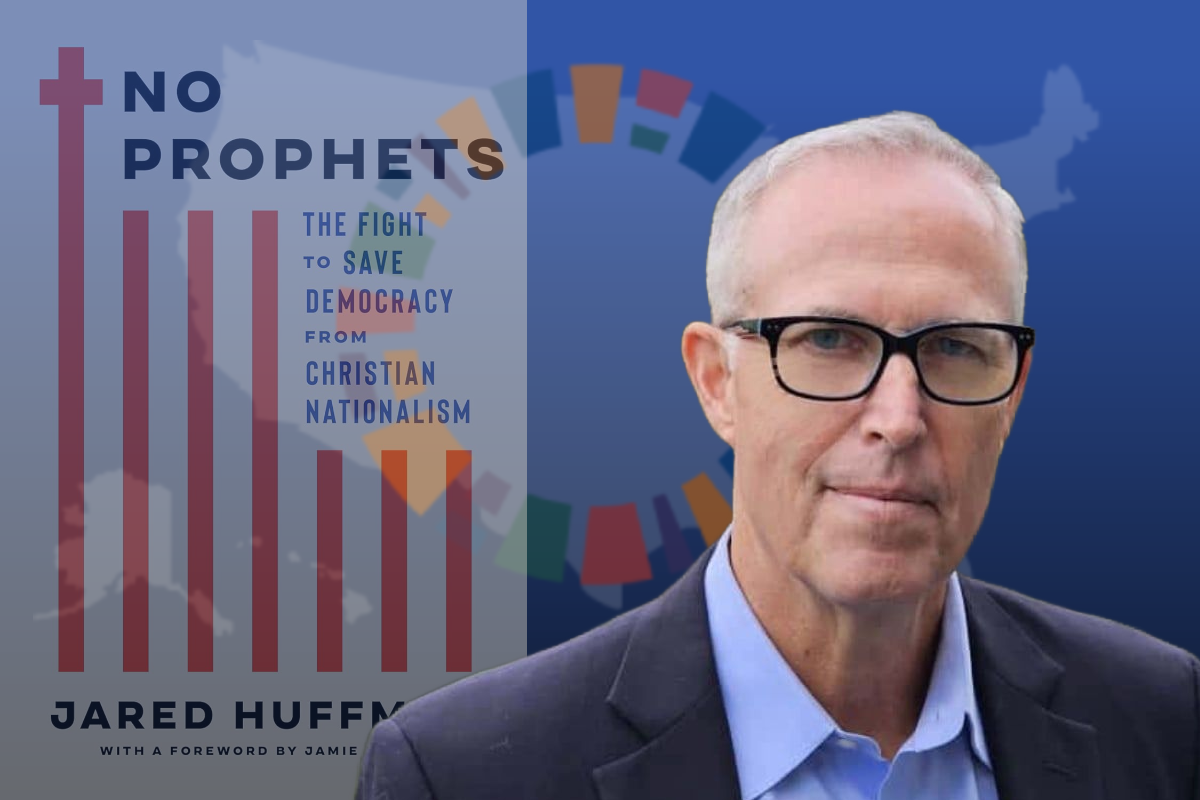
Congressman Jared Huffman: The Fight to Save Democracy From Christian Nationalism
The co-founder of the Congressional Freethought Caucus joins host Rev. Paul Brandeis Raushenbush to discuss how he's seen authoritarian impulses show up in our government and to share some of the insider stories featured in his best-selling new book, "No Prophets"