State of Belief
Jewish-Muslim Solidarity: Moral Witness in Pressing Times

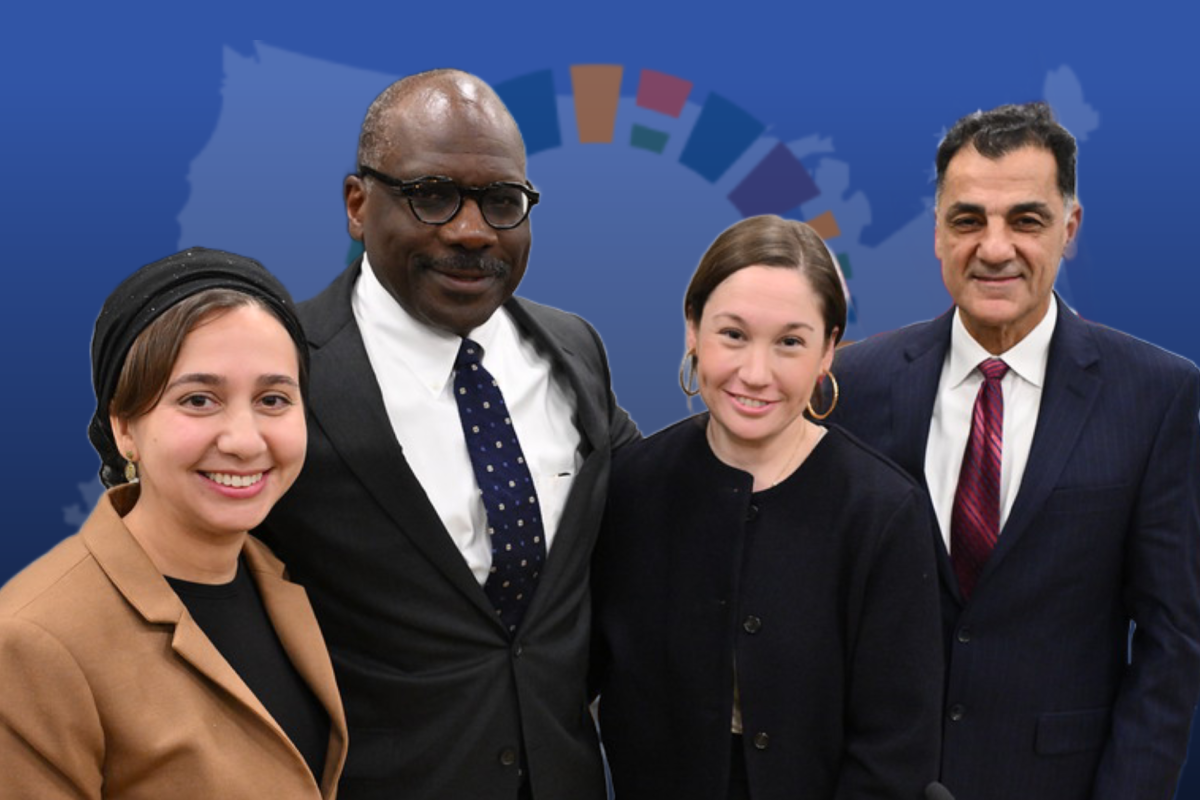
It’s not a zero-sum game. This week on The State of Belief, interfaith organizer Maggie Siddiqi makes clear that coming together to counter antisemitism and Islamophobia is an essential part of the effort to protect American democracy. And doing that requires countering the narrative that somehow supporting one of these communities is harming the other.
Maggie and host Rev. Paul Brandeis Raushenbush discuss some of the concrete ways these communities are, in fact, coming together, but also the very real risks that doing so brings, and the courage needed to persevere in the face of challenges that can include divisions and mistrust within diverse communities themselves.
The result can be profoundly inspiring: Paul and Maggie talk in-depth about a major Capitol Hill briefing last December convened by the Jewish Council for Public Affairs (JCPA) and Muslim Public Affairs Council (MPAC), in partnership with Interfaith Alliance and Union Theological Seminary. In addition to MPAC President Salam Al-Marayati and JCPA CEO Amy Spitalnick, Congresswoman Lateefah Simon, a Muslim, and Congressman Jamie Raskin, who is Jewish, addressed the gathering, moderated by Union Seminary Senior Executive Vice President Rev. Fred Davie.
Paul and Maggie walk us through some of the highlights of the event, with excerpts from the various speakers and commentary on the significance of their words. For context, the briefing took place just days after the Hanukkah massacre of Jews in Sydney, Australia. But the focus on each other’s humanity, on the critical need for solidarity - especially during times of pain and fear – was unshakable. You can watch a recording of the entire briefing on the Interfaith Alliance YouTube page.
Paul also shares his first-person experiences on the front lines with faith leaders from all over the country who gathered last week in Minneapolis to take a moral stand against the authoritarian atrocities being perpetrated by ICE in that community.
More about Maggie Siddiqi:
Maggie Siddiqi is senior advisor at Interfaith Alliance. She is an expert in faith-based advocacy for social change, coalition-building across lines of difference, and public policy on religious freedom and standing up against hate. Maggie is also a non-resident fellow at MPAC. She has held important faith-focused positions at the office of the U.S. Secretary of Education and at the Center for American Progress. Maggie served as emcee for the briefing, in addition to playing a key role in organizing the event itself.
Transcript
REV. PAUL BRANDEIS RAUSHENBUSH, HOST:
Maggie Siddiqi is senior advisor at Interfaith Alliance. She is an expert in faith-based advocacy for social change, coalition-building across lines of difference, and public policy on religious freedom and standing up against hate. Maggie has held important faith-focused positions at the office of the U.S. Secretary of Education and at the Center for American Progress.
Maggie was the emcee of an important panel that Interfaith Alliance co-presented on Capitol Hill at the end of last year in partnership with the Jewish Council for Public Affairs and Muslim Public Affairs Council as well as Union Theological Seminary. We convened leaders and lawmakers across lines of difference to raise up solidarity as a critical value for today - and every day. And the person who is probably most responsible for having this been a success is Maggie Siddiqi, and I'm so proud to welcome you here today.
MAGGIE SIDDIQI:, GUEST:
Thank you so much, Paul, for having me.
PAUL RAUSHENBUSH:
So Maggie, you know, I've been a fan, like I think so many people have, of your work for so long. And I think I've tried to hire you at every single job I've ever been at. I've always wanted to work with you, so long. And so when the opportunity came last year, as your work at the Department of Education ended, I really wanted you to come and work alongside you with all of your expertise. And I just want to start with a note of gratitude for your wisdom and how much heart you put into this work.
Maybe you can start by just telling us a little bit about your background and how you got to this very, very important work developing alliances with people of different faith traditions, working together for the betterment of all.
MAGGIE SIDDIQI:
Well, first of all, thank you so much for those kind words. I'm glad we finally made it happen to be able to work together. You're right. It has been a long journey, but we finally made it work.
Yeah, that's a good question. I was introduced to it first in college, and I think understanding the importance of cross-community relationships around something that is so deeply a part of how we understand the world, how we make meaning out of the world, to be able to connect with folks around those questions of meaning and purpose and spirituality - it really allows us to connect more deeply with other human beings. So I've always been very drawn to that.
And simultaneously was really drawn to the work of public policy. And I remember thinking early on, how on earth are those two interests going to come together? And then lo and behold, being able to connect with other human beings across religious lines of difference is actually politically strategic. And so I think the work that we're doing in this moment, in particular around Jewish-Muslim solidarity but also through other cross-community relationships, is so what's desperately needed in this moment when people are being pitted against one another, are being actively divided because of political interests, it is politically strategic to create a big tent, figure out how to come together with people who are very different, sometimes, from ourselves and think very differently about the world.
PAUL RAUSHENBUSH:
It's such important work. It's maybe the most important work for those of us who work in an interfaith context, who are really aware of how much disruption and breaking apart of coalitions that were established, that the events in the Middle East, horrific events, and it has really caused people who have similar interests, in many ways, to really not be able to work together. We can talk about Jews and Muslims, but there's all sorts of ways. This, actually, is not just about that set of groups, but other groups that are being driven apart in an authoritarian moment that has every vested interest in us not talking to one another and finding common cause.
And one of the first things you've been working on, which I'm so excited about, and I think a lot of this stems out of it, is this broad project called Reimagining Interfaith, recognizing that this moment - in American history, but history broadly - requires different skill sets, in some ways, or roadmaps in how to do interfaith work.
Can you say a little bit about the thinking behind Reimagining Interfaith so that people know that this is actually something that our listeners can use in their own community? This is not something reserved for things on the Hill; this is something that we're really developing for every community across the country.
MAGGIE SIDDIQI:
The first thing I want to say about this notion of reimagining interfaith - this is something that Dr. Sabrina Dent has coined before. Eboo Patel has had a moment of reimagining interfaith for our time. This is something where I think we have these constant inflection points where we need to reimagine what interfaith relations are in our moment. And as we've had these conversations, Paul, you have mentioned, for example, the sort of confluence of demographic shifts, of geopolitical challenges, and the threat of authoritarianism all kind of coming together in this moment and necessitating this need for reimagining what interfaith relations look like.
And I think, in particular, it is recognizing that we have the ability to essentially model what democracy looks like through big tent interfaith coalitions. And that is incredibly difficult work, because we have strong differences of opinion on a number of issues. And it is difficult to figure out a way forward in light of that.
I think part of why I got into this work of deeper interfaith relations and why I spent so much time working to learn about antisemitism, in particular, as a Muslim was recognizing that when it came to certain issues like Israel-Palestine, I felt at times like my Jewish conversation partners had a different set of values than I did.
And I learned that I was actually kind of mistrusting that they had the same commitment to social justice that I did, if they had a difference of opinion than me on that issue. And when I realized that, I did not like that I had those negative assumptions that they don't share the same values. And so for the past decade or so, in particular, I have spent a lot of time with Jewish communities trying to understand more, understanding the complexity of narratives in those communities, coming to appreciate that we share so many values and so many commitments.
And we absolutely, in some cases, will have moments of departure on the issues. But I think learning to connect with the values of people of different faiths is such an important exercise. And figuring out how to do that so that we can strengthen our coalition so that we can model democracy through that constant negotiation in our interfaith and community spaces is a really critical part of the way forward.
PAUL RAUSHENBUSH:
So one of the really amazing pieces of work that you have done over the last year really started with something that MPAC, which is the Muslim Public Affairs Council, wanted to put out there - which was, can we set a table and invite our Jewish colleagues, similar Jewish leaders and Muslim leaders, to join together in understanding our need to be together in this moment in the challenges of our democracy.
And that container that you created, you helped create, but Jewish and Muslim leaders had to continuously choose to stay. Am I right? Talk to us a little bit about this really important work because I think there was a narrative out there, I'll just say, that Jews and Muslims cannot talk to each other right now. People came together and said, okay, I'm going try to stay in communities. What was that feeling like?
MAGGIE SIDDIQI:
I appreciate you giving me credit, but credit really goes to Salam Al-Marayati and Haris Tarin, the Muslim Public Affairs Council, who took the initiative to say: we really need to be in conversation as national Muslim leaders and national Jewish leaders. We're not creating a new thing here. We're just trying to figure out how we can be in relationship with one another and be united in support of democracy, recognizing that there are particular ways that our communities are being pitted against one another. There are particular ways that our vulnerabilities and our pain around what's happening in Israel and Palestine are being actively exploited as part of an authoritarian agenda.
What are ways that we can come together? What does that look like? And I think there's a lot of that conversation that's still underway, but there have been a whole series of convenings that I've had the incredible honor to be a part of and to be able to facilitate with the Muslim Public Affairs Council, and there's a lot of work I think that's going to come out of it. The event we had in December was one big example of that, and so that was really exciting.
I have been able to serve as both Senior Advisor to Interfaith Alliance and a non-resident fellow with the Muslim Public Affairs Council. Both organizations have essentially agreed that my facilitating this project would be a joint collaboration between the two and that I could share my time with both of them that way. That has been incredible, because I've been able to be all in with MPAC facilitating this Muslim-Jewish work. And I've been able to connect this work with our broader interfaith coalitions, and share about the learnings with so many people across the country, including our affiliates and networks who are learning about how to replicate some of the principles and the strategies that we're employing here.
I think in this moment when we need every tool and every resource available to us, it's going to take some creativity and some collaboration between smaller-sized community nonprofits that are doing this work. And so I just want to offer that up, because I think it's a really powerful example of how to do more with even sharing, essentially, a staff person on one project. I'm really, really grateful for your leadership in facilitating this, and for Salam and Haris at MPAC for theirs.
PAUL RAUSHENBUSH:
That’s great. But we should say this is not easy work. It's not like you say, okay, one and done: “Yeah, you're right. We should work together.” It's an ongoing sense of okay, this is what I'm feeling. This is what I need. And can we talk about trust? It seems like you have to develop a sense that there is a real care on your side for my community and on my side for your community. Without betraying any of the confidences of those private meetings, what were some of the… Not the roadblocks, but just recognizing that this took intentionality and work to keep showing up with one another.
MAGGIE SIDDIQI:
I think it's incredibly challenging, because the goal of these conversations is always really focused on: how do we protect American democracy? How do we come together and counter the antisemitism and Islamophobia that's happening here, and counter this narrative that somehow supporting one of our communities is harming the other?
Can we present an alternative narrative that shows: here's how you can support two vulnerable communities simultaneously and to provide that leadership and that example of how to do that, to point out to our own communities that any mistrust that we have of one another is actually being cultivated by folks who want to see us divided, want to see us torn apart, and that our incredibly strategic political move that we can make in contributing to pro-democracy efforts right now is to actually come together and to do so loudly and boldly, even in the midst of real significant differences that we have over Israel and Gaza and incredible pain that we have there.
And it is challenging, because we don't all agree about what's happening in Israel, Palestine. But we do all believe in shared humanity. We do all believe in honoring the pain that we all share in that. We all believe that there has to be a better way forward. And so we are laser focused here in our dedication to supporting American Democracy, to standing against authoritarianism - and doing that even in the midst, sometimes, of real difference.
So not everyone who has joined these convenings at different times is practiced in the work of interfaith. And I think what makes it so challenging is that because of these divide and conquer tactics that have been used against our communities, there is that real question of: if members of my own community know that I'm in this conversation with leaders from this other community, will they think that some time, somehow, I am undermining the causes that we are working toward?
I know folks are expending a lot of social capital, potentially, within their communities in order to be there in solidarity with the other community. And that is not a small step to take. so whatever actions we make as a collective between Muslim and Jewish leaders here, they have to be strategic. They have to be worth being able to go back to our communities and say: we talk to people with whom we disagree, but we look what we did as a result. And that, ideally, is countering authoritarianism that harms us all.
PAUL RAUSHENBUSH:
Well, I want to get into what really happened on the Hill, because I was present and I was amazed at the way that these two communities really came together. It was extraordinary. We had representation from the Muslim community and the Jewish community, as well as a Jewish member of Congress and a Muslim member of Congress. And we're going to hear from some of those talks later. But maybe you can set the stage a little bit about what happened, and that was a way that you could particularly show: we have been working together and we have a shared set of demands that were made, in some ways, public at this Hill briefing.
MAGGIE SIDDIQI:
This was just one event, just one action, out of the series of things that we hope to do together as a Jewish and Muslim and interfaith collective here. But this was a specific partnership between the Jewish Council for Public Affairs and the Muslim Public Affairs Council, in partnership with Interfaith Alliance and the Union Theological Seminary, to publicly uplift this alternative narrative on Capitol Hill, that there is a way to support Jewish and Muslim communities. There is a way to counter antisemitism and Islamophobia that benefits both of our communities; that we object to this notion of a zero-sum game that you can only support one or the other, but not both; and that we reject authoritarianism. And to provide language to policymakers to reject these divide and conquer tactics and find a way forward to support us both. So that was the idea there.
PAUL RAUSHENBUSH:
It's incredible. And then, you had to get a couple members to say, yeah, we see what you're doing. We want to be a part of that. And that's, again, it's not so easy for members because they're always making calculations. Can I do this? Who can I show up with? Does this help my standing back at home? But you got two members, Representative Jamie Raskin and Representative Lateefah Simon, to both show up and be really, kind of: I support this work, I put myself together. And it’s not just these groups; it's also people, our representatives, who see the narrative that you're putting forward and want to step into it. And I think that that was really important.
We're going to hear some clips, actually, from some of the speakers. And again, I was there. I felt like, as a Christian, I felt like there was something very holy happening in front of me. I just was really so honored to be there. I also want to recognize that the event happened right after the horrible attack in Australia during a Hanukkah celebration in Sydney. So there was this heightened sense of a moment, and how are we meeting in the face of this?
Salam Al-Marayati, the head of MPAC, made an opening statement. Can you give us any background on that? Did he say, I want to say something?
MAGGIE SIDDIQI:
Yes, he did. He specifically wanted to offer his condolences to Jewish communities who were certainly reeling from this terrible antisemitic attack. And he wanted to showcase an alternative Muslim narrative, uplift the Muslim heroes in that story and not the Muslim perpetrators, and to amplify the narrative of the heroes in that moment in standing in solidarity with Jewish communities.
PAUL RAUSHENBUSH:
So, we're going to listen to Salam Al-Marayati, his opening talk, and it was really the way the whole event began.
SALAM AL-MARAYATI: As we all witnessed the horrific tragedy in Sydney over the weekend at a time when Jews were celebrating Hanukkah, the celebration of light, as some are hidden in darkness, Hanukkah gives us that light. And we saw the antisemitic terrorist attack on people who were doing nothing more than practicing their faith, commemorating what is sacred to them.
And so we just wanted to emphasize - as has been stated by several Muslim organizations and I believe [the?] Muslim peoples - how horrific it was to us, as it should be to any human being. And we stand in solidarity with the Jewish community in this time of danger and this time of horror that we will not tolerate any act like that - especially if anybody gives any sense that this is done in the name of our faith.
So this is a time to stand tall. This is a time to stand together. This is a time to stand for the theology of life against the cult of death. And it really is represented and demonstrated and embodied by one man named Ahmed Ahmed who was there and took on danger to stand up against that cult of death. And as both the Quran and the Talmud have told us, the one who kills a human being, it's as if he has killed all of humanity. And the one who saves a human being, it's as if he has saved all of humanity.
So we are on the side of saving lives. We are on the side of giving precious life, air to breathe, and giving that theology space in our houses of worship, here in the public space, and especially in our homes. So we just wanted to express that solidarity with the Jewish community today and standing against antisemitism, and also saying that we are all human and we should stand for what is being human - most importantly the freedom to express oneself and the freedom to worship as any person wants to worship.
PAUL RAUSHENBUSH:
So next we're going to hear from Amy Spitalnik, who is an extraordinary leader at the Jewish Council for Public Affairs. And she wanted to talk about the way that Jewish and Muslim communities are pitted against each other. You know, Amy, through all of this work. Let's listen to her, and then I want to hear a little bit of your reaction.
AMY SPITALNICK: we're also being offered false choices on the right. were being offered this false choice by the administration and others that the only way to keep Jews safe is to undermine our democratic norms, to gut academic freedom or research, civil liberties and due process, unions and so much more that has been really inherent to my own family safety and advancement in this country. I'm the grandkid of Holocaust survivors and the ways in which democracy here, unions have and so much more have helped my own family advance is clear. And so we're being offered that false choice by the administration on that side.
And on the flip side, we're being told by extreme voices that we can't be proudly Jewish or have a connection to the Jewish homeland while also maintaining small “d” democratic and humanitarian values or a commitment to Palestinian human rights or Muslim or Arab-American rights and dignity. And these are all false choices. Most of us actually are able to hold that complexity. And so the policies that keep us all safe reject these binaries, reject the exploitation and weaponization that we're seeing, and instead invest in building the democratic resiliency we need, whether it is hate crimes prevention; whether it's civil rights protection like Title Six at a time when the administration has decimated the very tools we have to keep Jewish and Muslim and all students safe on campuses; whether it's media and digital literacy or holding social media companies accountable for allowing this hate and extremism to run rampant; or whether it's broader investment in building this resiliency and inoculation to hate at a time when it's being so normalized by the loudest voices.
And so the policies that keep Jews safe keep all of us safe, and the policies that keep Muslims safe keep all of us safe. And we need to understand it that way as opposed to treating this hate in silos - because that's exactly what those seeking to pit us against one another want us to do.
PAUL RAUSHENBUSH:
So listening to Amy's words, can you recall what you were feeling at the time? And maybe you've heard a lot of what she had said before, but this was a public statement on the Hill in a real briefing in front of people. What did it feel like to hear that?
MAGGIE SIDDIQI:
Amy Spitalnick has been such a champion of highlighting all of these issues, the weaponization of antisemitism, the false choice that people are being offered, as she said, that you can either keep Jews safe or you can keep Muslims safe, rather than focusing on the policies that keep us all safe. We're actively being pitted against one another like there are only these two options.
That has made it incredibly hard in interfaith coalitions, when you have all of these allies who want to do something to end Islamophobia and end antisemitism and feel like they can only choose one or the other. That is not the choice that they should be offered. That is the authoritarian framework that is intentional, to make it seem as if the only option is to fracture.
PAUL RAUSHENBUSH:
I was there with my niece, Genevieve, and when Congresswoman Lateefah Simon stood up, she was like: that's my Congress representative. She was so excited. Genevieve is someone who really cares about interfaith work, and was so gratified by the message. But she was also really excited that her representative, who is a Muslim, wanted to show up and give a similar message. It seemed like she was all in. I mean, do you have any insight? She was someone who I had not interacted with before. It seemed like you didn't have to convince her to show up there.
MAGGIE SIDDIQI:
That's absolutely right. Same is true of Representative Jamie Raskin. Both were very eager to be in solidarity. Congresswoman Simon shared about her upbringing and learning about the Quran, and she cited suras from the Quran in her speech. For so many people, though, this is the story: being in solidarity with different communities, recognizing our shared humanity, this is common sense to us. And it is these sort of bad political actors that have tried to convince us that those are not the values we hold.
And so having an event like this, it should be a simple thing. It is not, for all of the reasons that I have mentioned, but it is actually the predominant story.
And that was part of what we were trying to showcase with this event is this idea that Jewish-Muslim solidarity is hard. No, it's not. This is what it looks like! This is the real story of local communities and neighbors living together all across this country. We've allowed the narrative to get distorted here, but this is the real narrative. And so I love that she brought up her upbringing in Islamic school in invoking why she so is committed to solidarity with Jews and Muslims.
REP. LATEEFAH SIMON: Rejecting antisemitism alone is not enough. It's just not enough. Rejecting Islamophobia alone is just not enough. We have to consistently practice - which is in our faith - to reject the false story that safety can be built on another's erasure.
PAUL RAUSHENBUSH:
Rev. Fred Davie of Union Theological Seminary is a good friend who has been on this show. He moderated the panel, and he asked both Amy and Salam about the threat of White Christian Nationalism. And White Christian Nationalism is kind of the handmaiden of authoritarianism, and in some ways the tip of the spear. Here's some of what they both shared.
SALAM AL-MARAYATI: There's nothing Christian about White Christian Nationalism, just like there's nothing Islamic about Islamic violent extremism or nothing Jewish about Jewish extremism. These are political vehicles used for political power and exploiting fear and concerns of the average American - and in this case, White Americans. And I think the way to bypass it is through these forums and direct engagement.
AMY SPITALNICK: At the core of White Christian Nationalism, much like so much extremism, is this idea that there's only so much of the pie to go around. That for this country to be safe or to be the country that they want it to be, this narrowly-defined vision of who an American is - White, Christian, hetero, straight, etc. - there isn't room for anyone else here. And that is exactly why these conspiracy theories and tropes that are at the core of White Christian Nationalism and the broader policies are used to pit communities against one another and make it seem as if this is a zero-sum fight, as if immigrants, Jews, Black people, Muslims, whoever it might be, take away from what's possible in this country rather than add to it.
…And so we have to understand White Christian Nationalism and this broader extremism as a tool to undermine democracy rather than a simple idea in and of itself. It really is the vehicle through which our communities are being pitted against one another. These policies and ideas are being normalized and advanced. And again, it's why we need to be providing a different view, a different space, that makes clear we're safest in building these strong inclusive coalitions across lines of difference.
PAUL RAUSHENBUSH:
Amy went on to share specifically how antisemitism plays a unique role in White Christian Nationalism. I thought that was fascinating.
AMY SPITALNICK: antisemitism also uniquely operates as this insidious, pernicious conspiracy theory rooted in tropes and lies around Jewish control and power. And that's what makes it such a salient wedge across the ideological spectrum. It's intended to sow distrust and pit communities against one another. It's intended to help make people think that our institutions are working for some shadowy powerful cabal rather than for the people that they're supposed to work for.
PAUL RAUSHENBUSH:
And then on top of what Amy said, Salam went on to share these unique impacts of White Christian Nationalism and authoritarianism on Muslim communities, connecting White Christian Nationalism and the danger it poses to both Jews as well as Muslims.
SALAM AL-MARAYATI: what is happening to American Muslim students, what's happening to many of us, is the unleashing of the national security apparatus against our community. And that's the difference: when we talk about anti-Muslim animus compared to hatred in general that is targeting various groups, is now not only you have to deal with the mob, you have to deal with the national security apparatus of the most powerful government in the world, the United States government. And so having discussions about, well, what is real national security? National security was invoked for Japanese-American internment; national security is invoked every time we want to go to war, even though they are unjust wars.
So, when we're dealing with that, and students now are put under certain surveillance, and organizations are designated as foreign terrorist organizations even though they have a 501(c)(3) status… And this is not going to be the end of it. It will continue. And then you have, I believe it was Rep. Fine who said that there's no such thing as a moderate Muslim - they should all be destroyed. And he said that in the Congress.
PAUL RAUSHENBUSH:
Next, we're going hear from both Amy and Salam about the ways that this present moment really just underscores why we need to come together across difference. This is something that I think is the kind of sin qua non of the whole gathering is that we're in a moment where we can't afford any longer not to show up for one another. That seems to be a through line, am I right, Maggie?
MAGGIE SIDDIQI:
Absolutely. we've said - I'd like to quote my friend Allison Ralph, who says that a coalition of people with whom you agree on every single issue is a coalition of one. And I think that's so true. There are so many differences that we all have. And so we have to be able to say, okay, we may not agree on most things, even, but if we can agree on American democracy, let's work for American democracy together. What does that look like? Because we need all of us.
PAUL RAUSHENBUSH:
Well, and before we get to that, a quick story. I remember talking to MPAC early on in my time at Interfaith Alliance as president. And I went in there and I was like, there's going to be things that we can agree on. I really want to do that with you. I know you're not going to want to go with us on our work on LGBTQ rights and abortion and things like that. But we can work on other things. And they said, don't assume anything about what we can work on. You know, ask us.
And I think that that's a lesson. I love that story because it was such a way for me to think: don't go in assuming that you know what is possible in a relationship. Rather, ask good questions. But anyway, the real important point here is that we need one another. And so first we're going to hear from Salam and then Amy.
SALAM AL-MARAYATI: the members in this room, our organizations, as Amy said, this didn't just happen because we wanted to meet today. It happened from a series of meetings for, I think it's been over a year. And we've had differences. And the reason why we need to come together is because of those differences. This idea that you only come together with people you agree with - that doesn't even work in the family. Definitely not with my wife. At least that's what my wife tells me. So the idea that I will only talk to you if you come on my terms and concur with what I have to say - that doesn't happen in real life. And somehow, that's become the political nomenclature or the political culture that we too often see. So we need to push back against that, this idea that somehow we have to fall in line with one narrative from the top.
AMY SPITALNICK: We're only going to solve these crises by actually talking to those with whom we don't already agree on everything. And that requires us not just to show up and stay at these coalitions and tables, but also to show up and put our own selves on the line in whatever capacity we are able to do so against those who are exploiting this moment, against those who are seeking to threaten our communities, to weaponize fear and to otherwise advance this extremist agenda. And so if all of the people we've talked about were able to do it in far more dire and deadly circumstances, certainly we can keep coming to the table and keep fighting for the very policies and to reject the sort of extremism and polarization. That is so urgent right now.
PAUL RAUSHENBUSH:
Okay. We heard from Representative Lateefah Simon, but Jamie Raskin, who has been a huge champion of our work and about religious freedom and pluralism and the recognition of the need for diverse voices to come together, he was very busy that day. So he came in quickly and was able to take part.
I think you've probably known Representative Raskin for a long time. And he really has been a champion for this kind of work and the idea that refusing to give in to any narrative that would reduce the civil liberties of any group. And I think that's something he, as a constitutional law professor, he's very clear on.
REP. JAMIE RASKIN: we need to be building bridges across every conceivable racial, ethnic, religious, political, ideological, national line to stand up for democracy and freedom and the security of all people. That means that everybody needs to draw on the most positive wellsprings of hope and connection from within their own faith tradition, within their own political parties, within their own political ideologies, within their own countries, to make common cause with others who would reject this siren call of authoritarianism and fanaticism and violence all over the world.
PAUL RAUSHENBUSH:
Okay. So, again, not to fanboy too much, but I just felt like this was one of the most exciting and important things we did last year. I think it was the entire process of holding a container, working so closely with valued partners like JCPA and MPAC. And being able to put this out there, it was really a major, major accomplishment - but it's not the end. As you've been really clear to say, this is one of many things and opportunities that we can put forward.
I do want to, if you would, tell the story of what happened right after the event, because it was so charming. I mean, charming and revolutionary. We had some leftover treats. done some, we had had things like, desserts there available. And the thought was from both sides, JCPA as well as MPAC, that there might be a certain congressman who would maybe like to hear from us. Can you tell that story?
MAGGIE SIDDIQI:
So yes, Congressman Randy Fine had some truly unkind words to say about the Muslim community that week - and that is putting it mildly. Essentially said that all Muslims should be destroyed. And essentially, calling for killing an entire group of people based on their religion should not be acceptable anywhere - certainly not in US Congress. But the folks at the Muslim Public Affairs Council wanted to lead in their response with their Islamic values. And they said, you know, Randy Fine has not been very sweet to us, but we can still be sweet to him.
Together with our friends at the Jewish Council for Public Affairs and Union Theological Seminary, we all went from the event with our leftover sweets from the event and to his office and said, the congressman hasn't been very sweet to us, but we wanted to offer these sweets and ask that he emulate more of what we just had in our event. And it was wonderful to do that as an interfaith group and to say, hey, a different path is possible. And we're not giving up even on you, Congressman Fine, that you can find a better way forward.
PAUL RAUSHENBUSH:
It was very cool - and there was a great video that you can find out there of showing up together and some of the leaders from JCPA with kippah on and then standing right next to the amazing folks from MPAC. And I tell you, I think that staffer probably had a very, you know, “you will not believe what just happened!”
And let me just say, Randy Fine should certainly be censured for such remarks. And it is no laughing matter. And he absolutely should be ashamed of himself for just terrible, terrible comments. And it just should not be acceptable by anyone, anywhere, ever. And by a representative of the US Congress is absolutely shameful.
Listen, Maggie, any final words? We talk a lot about courage, but this took real courage for you and for all those who participated. What does courage look like in this context, and how can you imagine courage being a resource for those of us who really want to continue to move forward with our interfaith work, especially when it's hard?
MAGGIE SIDDIQI:
You know, as I've said, I think the way to show courage right now, the way to stand up against the horrors of what is happening, is to do what is actually kind of instinct for us all - which is to come together with our neighbors and to be committed to standing up for communities that are our own and communities that are not, that we're not a part of. And that sounds like a big thing, but I guarantee that so many of you out there are doing that in big and small ways every single day. Recognizing that that is part of what makes you human is wanting to be with one another and look out for one another. That's what being a good neighbor is all about. That's an incredible way to show courage.
And I'm so inspired by the Minnesotans right now who are just coming out, people who have never protested before, people who have never engaged in any kind of political action, just saying, hey, don't mess with my neighbors. And putting their lives on the line to just be out in the streets and say, please leave my neighbors alone. That is incredible courage. But again, coming from the same place, the same way that they live their lives every single day.
PAUL RAUSHENBUSH:
Maggie Siddiqi is Senior Advisor at Interfaith Alliance. She is an expert in faith-based advocacy with a long track record of effective organizing and leadership.
Thank you for being such an incredible colleague and for being with us today on The State of Belief.
MAGGIE SIDDIQI:
Thank you so much for having me.
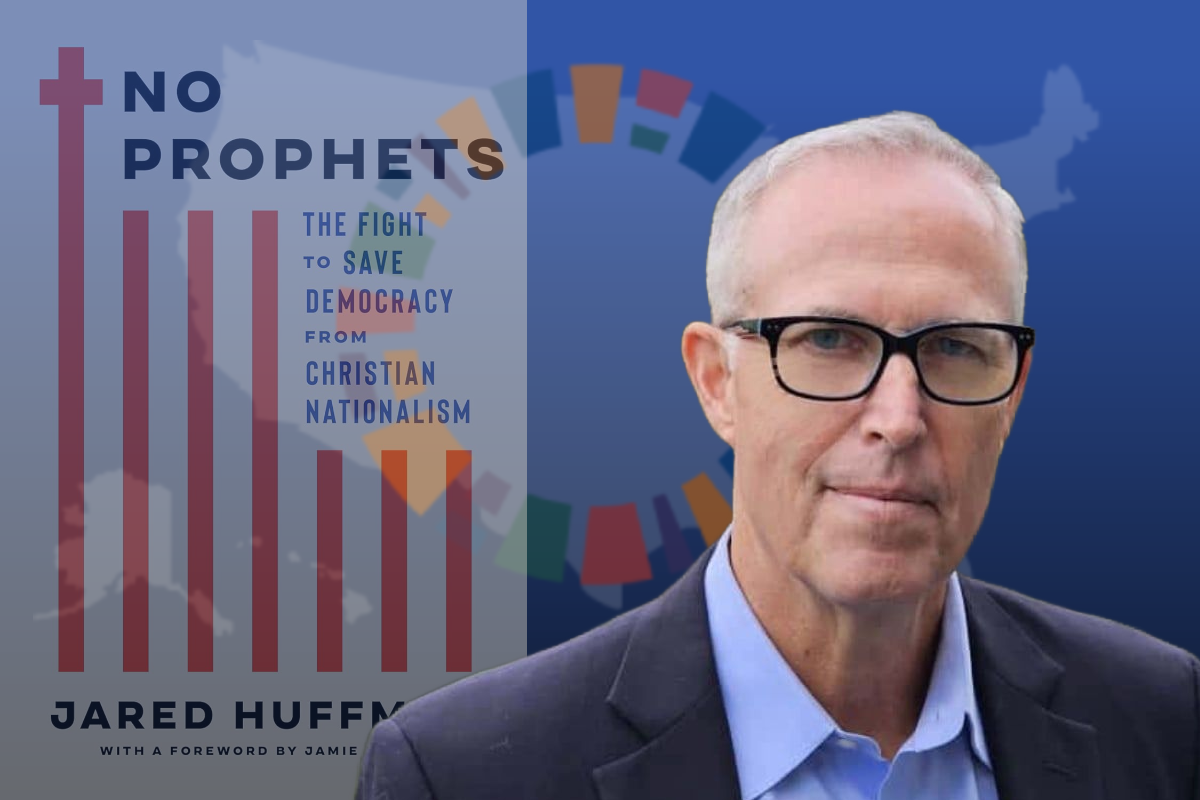
Congressman Jared Huffman: The Fight to Save Democracy From Christian Nationalism
The co-founder of the Congressional Freethought Caucus joins host Rev. Paul Brandeis Raushenbush to discuss how he's seen authoritarian impulses show up in our government and to share some of the insider stories featured in his best-selling new book, "No Prophets"
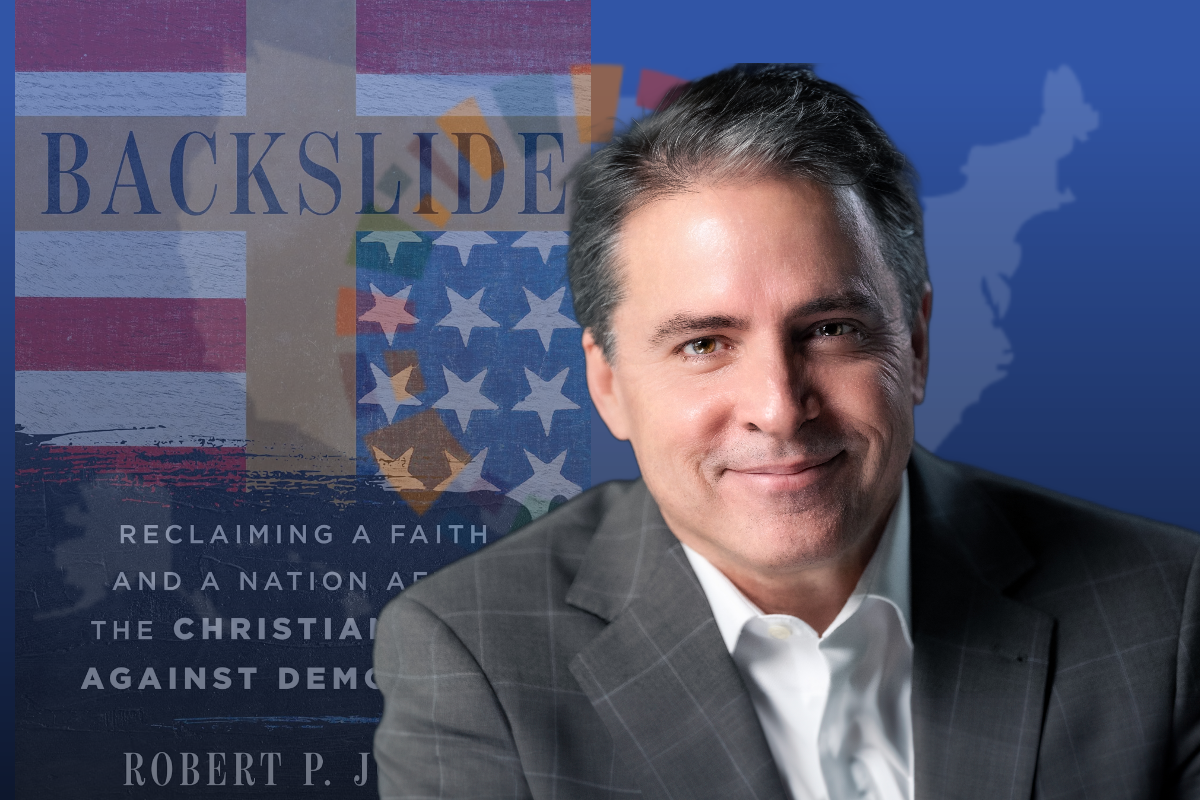
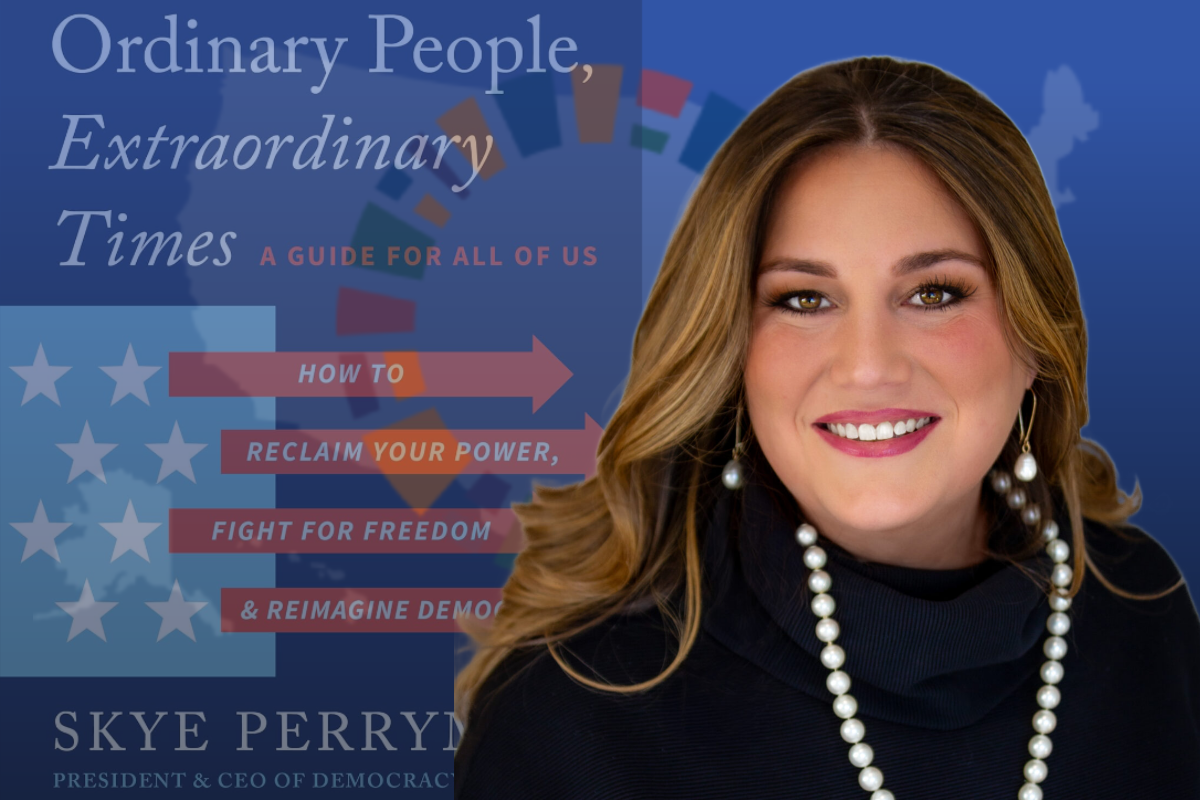
"What Can I Do?" Skye Perryman's New Book Answers the Question
The president of Democracy Forward joins Rev. Paul Brandeis Raushenbush to unpack the calls to effective action in her new book, "Ordinary People, Extraordinary Times: How to Reclaim Your Power, Fight for Freedom, and Reimagine Democracy"