Advocacy
Interfaith Solidarity with LDS Communities


These past few weeks have been some of the hardest for our partners in the Church of Jesus Christ of Latter-day Saints (LDS). On September 27th, LDS Church President Russell M. Nelson passed away at the age of 101. President Nelson served as the Church’s 17th president and was a leader in promoting deep partnerships during a trying time in the Church’s history, including with other faith communities. We extend our deepest condolences to members of the LDS Church and wish them comfort as they mourn the passing of such an important leader.
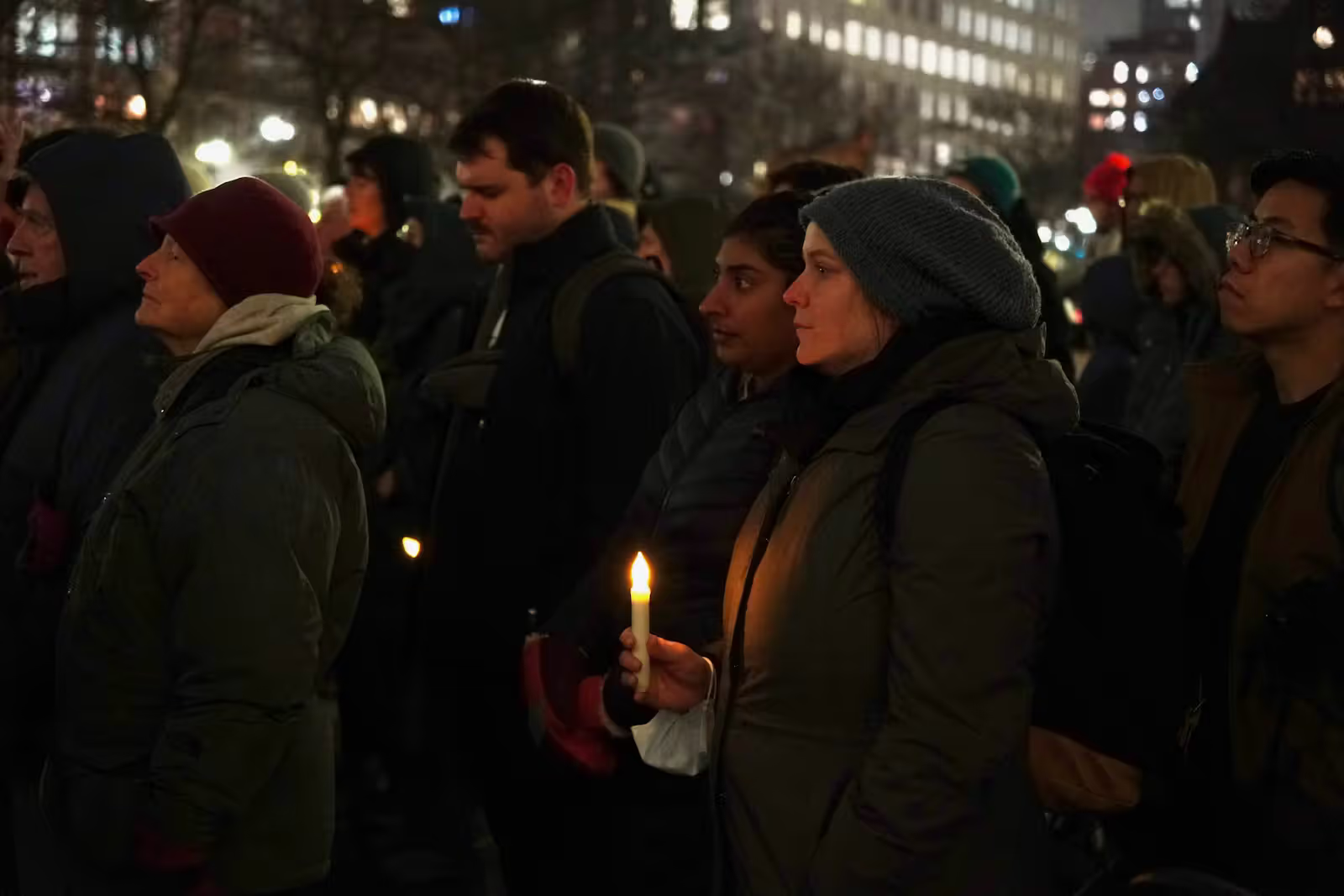
In the wake of his passing, there was another tragic incident which affected members of the Church. During a service on September 28th, an individual opened fire at a LDS Church in Grand Blanc, Michigan, and set the building ablaze, tragically causing the death of four people and wounding eight. Though his motive is still uncertain, writer and activist Simran Jeet Singh cited evidence that the shooter had said, “Mormons are the Antichrist,” a reminder that public examples of hate speech often lead to hateful acts of violence, making all communities less safe.
In such a challenging time, it’s important to reflect on the wisdom and voices of LDS communities in our interfaith coalitions. For much of their history, LDS church members have been targeted with violence and acts of hate. Even today, key Christian nationalist leaders have denigrated LDS Church members and tried to differentiate between supposedly authentic Christians and members of the LDS community. As former Idaho state representative and Interfaith Leadership Network member Chenele Dixon writes, “I am a Latter-day Saint, a woman and an Idahoan. If Christian nationalism has its way, my faith and my voice would be pushed out of the public square.” It’s important that members of all faith traditions push back and proudly support our LDS neighbors as we advocate for the common cause of inclusion and democracy. We can learn from the late President Nelson, who once said:
“I urge you to choose to be a peacemaker, now and always. Brothers and sisters, we can literally change the world—one person and one interaction at a time. How? By modeling how to manage honest differences of opinion with mutual respect and dignified dialogue."
As we know, attacks on houses of worship are among the most tragic infringements on a community’s ability to experience religious freedom. The shooting at a Sikh gurdwara in Oak Creek, Wisconsin, in 2012, and the antisemitic attack at the Tree of Life Synagogue in 2018 are both critical examples of how religious minorities live with threats of violence in their most sacred places. We must stand together to oppose these horrible attacks.
As Church spokesperson Doug Andersen wrote, “We are deeply grateful for the outpouring of prayers and concern from so many people around the world. In moments of sorrow and uncertainty, we find strength and comfort through our faith in Jesus Christ. Places of worship are meant to be sanctuaries of peacemaking, prayer and connection. We pray for peace and healing for all involved.”
Let us continue the important work of building multi-faith communities and supporting our LDS neighbors.
Zev Mishell is the National Programs Associate at Interfaith Alliance.
The views and beliefs expressed in this post and all Interfaith Alliance blogs are those held by the author of each respective piece. Nothing in this blog post is an endorsement of any political candidate. To learn more about the organizational views, policies, and positions of Interfaith Alliance on any issues, please contact [email protected].
Transcript

.avif)
Interfaith Alliance Joins Open Letter Denouncing Anti-Muslim Bigotry from Elected Officials
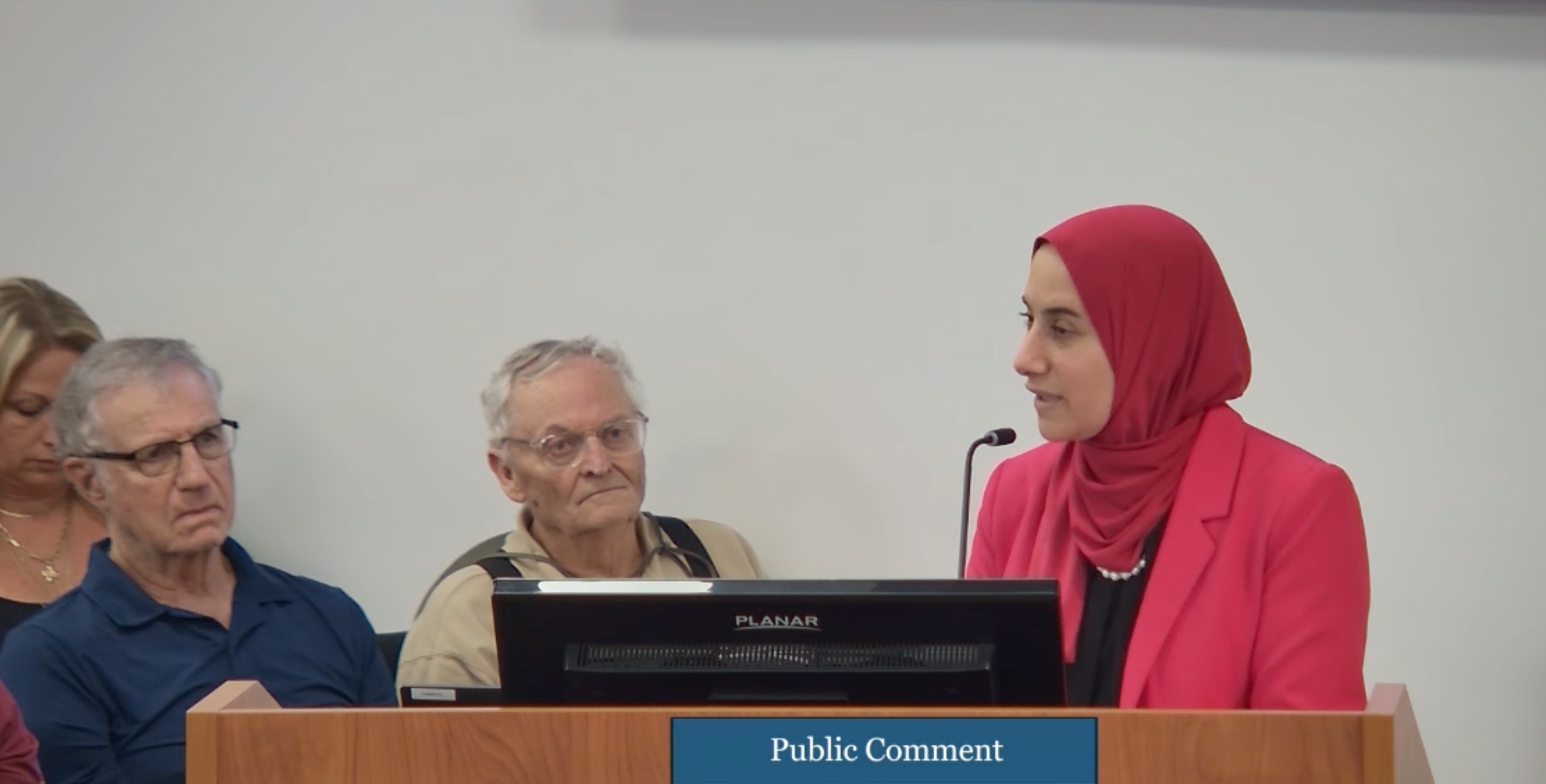
Joining more than 200 faith leaders and allies, along with over 70 religious and civic organizations, Interfaith Alliance signed onto an open letter denouncing normalization of anti-Muslim bigotry by U.S political leaders.