General
Faith, Freedom, and Reproductive Rights


This piece was written by Tranée McDonald with contributions from Jeffrey Jordan.
At the heart of our democracy is the belief that individuals should be free to make decisions guided by their own conscience, values, and beliefs, especially when it comes to their health care. The growing efforts to restrict access to reproductive health care under the guise of religious or political authority is deeply concerning and recent legal challenges across the country threaten not only access to care but also the foundational principle that no single religious tradition should determine public policy for everyone.
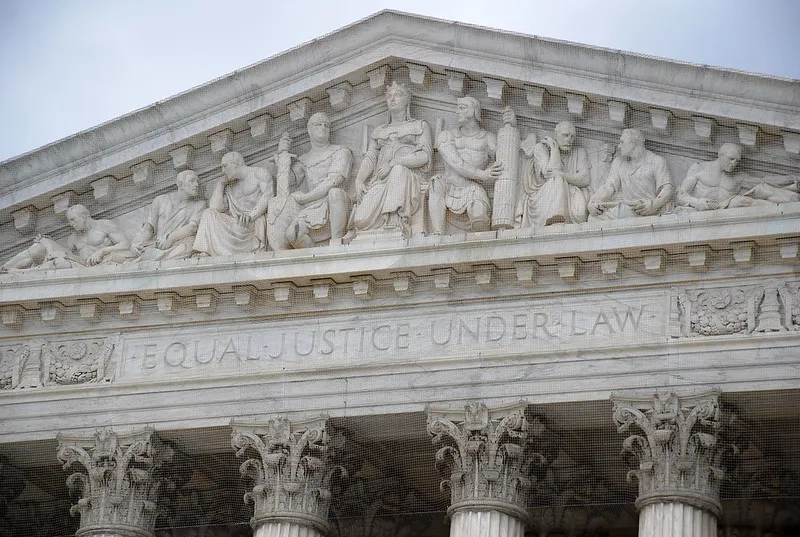
On April 2nd, the U.S. Supreme Court heard Medina v. Planned Parenthood South Atlantic, a case that will determine whether Medicaid beneficiaries have the right to choose their health care providers. Federal law guarantees that beneficiaries can select any provider enrolled in the Medicaid program who offers the services they need. This case, originating in South Carolina, is part of a broader trend among states including Arkansas, Texas, and Mississippi that have sought to block Medicaid recipients from accessing care at Planned Parenthood health centers.
Interfaith Alliance of South Carolina joined an amicus brief led by the Religious Coalition for Reproductive Choice, supporting the rights of Medicaid patients to access essential health services without political interference.
The brief argues that all major faith traditions affirm the equal dignity of every human being, regardless of wealth, and therefore uphold the moral imperative to provide healthcare to those in need. It contends that the Medicaid Act embodies this principle by ensuring that access to care for vulnerable populations. As it states, “The concern for the dignity of the poor that drives amici to acts of personal and institutional charity also demands that amici stand up to efforts that would undermine the promise of the Medicaid Act to support their values and the human dignity of the poor.”
The outcome of this case could trigger a wave of actions in Republican-controlled states to further target Planned Parenthood’s federal funding, which currently comprises more than one third of the organization’s budget. The motives behind these efforts are clear: to dismantle access to comprehensive reproductive health care under the guise of fiscal and moral concern. We believe in protecting the dignity, health, and autonomy of every individual, especially the most vulnerable among us. This includes the fundamental right to make personal decisions about one’s body and health care.
Also underscoring the persistent tension between individual rights and government overreach, the Johnson v. Wyoming case marks a pivotal moment where fundamental liberties and religious freedom hang in the balance.The legal issue involves a challenge to Wyoming’s “Life is a Human Right Act”, enacted in March 2023 that prohibits abortions with limited exceptions, such as cases of rape, incest, threats to the mother’s life, or certain lethal fatal abnormalities.
Additionally, the law bans prescription, dispensation, distribution, sale, or use of any drug for the purpose of procuring or performing an abortion. By codifying religious doctrines into law, the state not only marginalizes those with differing beliefs but also undermines the pluralistic foundation of society. Furthermore, true religious liberty encompasses the right to make personal decisions, including those about reproductive health, without governmental imposition of religiously motivated restrictions.
Our involvement underscores a collective commitment to advocating for religious freedom, social justice, and the separation of church and state within the context of the legal proceedings. In this instance, it is evident that religious freedom must be a shield that protects individual rights, not a sword used to impose a single religious perspective on a diverse population.True religious freedom is only upheld when government actions do not privilege one belief system over others, particularly when it comes to personal health decisions.
In both Medina v. Planned Parenthood South Atlantic and Johnson v. Wyoming, we see a troubling pattern of states using religiously motivated legislation to limit personal health care decisions and undermine established federal protections. Interfaith Alliance remains committed to defending the right of every individual to access reproductive health care and to make choices that align with their own moral and spiritual beliefs, free from coercion or government interference. Our involvement in these amicus briefs reflects our continued advocacy for religious freedom, social justice, and the constitutional separation of religion and government. In this critical moment, we urge all people of faith and conscience to stand with us in protecting the rights and dignity of every person.
The views and beliefs expressed in this post and all Interfaith Alliance blogs are those held by the author of each respective piece. To learn more about the organizational views, policies and positions of Interfaith Alliance on any issues, please contact [email protected].
Transcript
Announcing the 2025-2026 Interfaith Leadership Network Fellows
Interfaith Alliance is proud to announce the 2025–2026 cohort of the Interfaith Leadership Network, an extraordinary group of clergy, pro-democracy advocates, and community leaders advancing civil rights, inclusive religious freedom, and democracy in communities across the country. Through practical support, funding, and a powerful peer network, these fellows will mobilize interfaith collaboration to confront urgent local challenges and strengthen a pluralistic democracy.
One Year of The Trump Administration’s Attacks on Faith Communities and Abuse of Religion
Over its first year, the Trump administration has weaponized religion to advance a white Christian nationalist agenda, attacking faith leaders, houses of worship, immigrants, and religious minorities while undermining core principles of religious freedom. Even as federal power has been used to intimidate and exclude, faith communities across traditions have mobilized to defend democracy, pluralism, and the right of all people to practice their beliefs.