State of Belief
The Defiant Divine Journey of the Rev. Dr. Molly Marshall

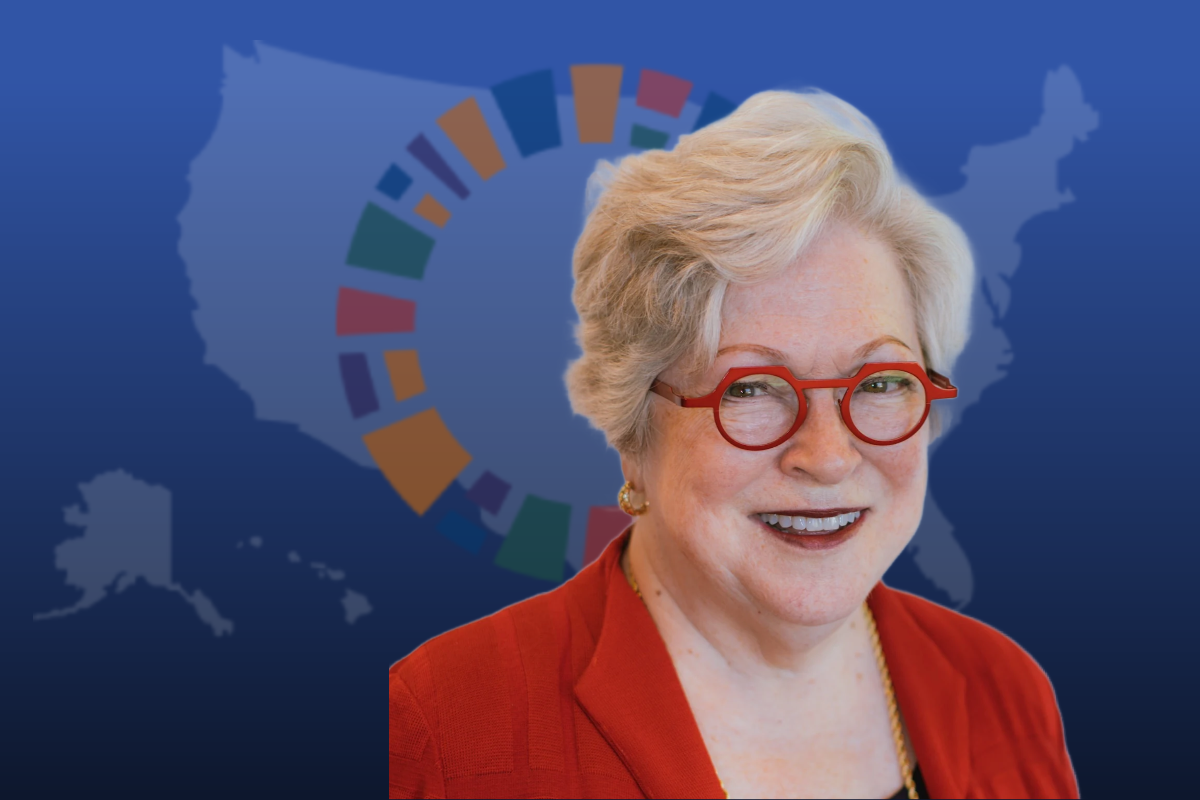
This week on The State of Belief, host Rev. Paul Brandeis Raushenbush welcomes a living legend: Rev. Dr.Molly T. Marshall, a pioneering voice in theological education and an advocate for gender justice in the Church. As she embarks on her final year as president of United Theological Seminary of the Twin Cities, Dr. Marshall reflects on her remarkable journey, including the challenges she faced as a preacher and educator ordained in the Southern Baptist Convention just as that denomination began its long descent into marginalizing women. Her career survived the threat of a heresy trial and expanded into a multifaith and ever more inclusive vision for the Church and for our society.
More about Molly Marshall:
Rev. Dr. Marshall is a founding member of Baptist Women in Ministry, and her deeply influential books include Joining the Dance: A Theology of the Spirit, and What It Means to Be Human: Made in the Image of God. She received her PhD from Southern Baptist Theological Seminary and has served as president of United Theological Seminary of the Twin Cities since 2022.
The State of Belief host Rev. Paul Brandeis Raushenbush is President and CEO of Interfaith Alliance.
Transcript
REV. PAUL BRANDEIS RAUSHENBUSH, HOST:
Rev. Dr. Molly T. Marshall is a pioneering voice in theological education and a champion for gender justice in the Church. She is starting her final year as president of United Theological Seminary of the Twin Cities. Dr. Marshall's journey includes being forced off the faculty of Southern Baptist Theological Seminary in 1994 after facing opposition for her gender and accused of heresy - we're going to get into that - an experience she later described as a moment when “A scandalous providence preserved my vocation and my life's work.”
Molly's leadership and resilience have transformed institutions, created community and fostered historic growth, all while challenging patriarchical structures that hinder women's full participation in ministry. Dr. Marshall is a founding member of Baptist Women in Ministry, and her deeply influential books include No Salvation Outside of the Church? and What It Means to Be Human: Made in the Image of God.
Molly Marshall, I am delighted to have you join us today on The State of Belief!
REV. DR. MOLLY T. MARSHALL, GUEST:
It's good to be here. Thanks so much, Paul.
PAUL RAUSHENBUSH:
So let's start. When I described you to my producer, I said, she's a legend. And I feel that way. I mean, I know you don't want to be thought of as a legend in the past tense, but you have gone through so much and you have persevered and you have allowed so many to thrive because you have made spaces for all of us to thrive.
And so when the opportunity came to interview you, I just want to say, you're really one of my heroes. And I've known of you for a long time, but we've never actually spent an abundance of time together. We've been in the same rooms often, but never enough time together. So I'm so excited for us to have this opportunity to have a conversation, but also for our listeners who are going to have a chance to listen in on one of the best conversations I plan on having this year.
So let’s start. I want to go back. We're going to go way back eventually, but I do want to go back to 1994 because that was a really important moment. It was the moment that I started seminary. I started seminary in 1994 at Union Theological Seminary, and we were watching what was happening at Southern. So can you take the listeners back to who you were in that moment and what was the environment that faced you there?
MOLLY MARSHALL:
I began teaching in 1984. I was the first woman in the School of Theology, and people were unnerved by adding a woman to the historic masculine bastion there at Southern. I had written a dissertation that was a challenging one, asking hard questions about other ways of faith, and that became a way in which fundamentalists began to attack my theological views. I think it had much more to do with gender and the fact that I was ordained, Paul.
When I finished my PhD I applied to about 120 schools, and nobody wanted me. They wanted somebody with quote “more ministry experience”, which meant they didn't want somebody who wore a skirt. So I became a rural pastor at that point and I was ordained. And that was my unabashed claim to pastoral authority, which was as much a problem as anything that I had ever written. And so the attacks became immediate.
PAUL RAUSHENBUSH:
I think that this is so interesting, and it's helpful for our listeners to understand the context, because you were in the Southern Baptist tradition. Am I right? That that was the Southern Baptist tradition and ordination of women was not unheard of, right? I mean, there were women being ordained at that time.
MOLLY MARSHALL:
A very few, very few.
PAUL RAUSHENBUSH:
Very few, but it was before the total purge that we're in right now. But it is such an important part of the story that you claimed that pastoral authority and just to recognize the context of what that means.
MOLLY MARSHALL:
Exactly. Now, women had been ordained in the sixties, at least one, in Southern Baptist life. But putting together an ordained woman and a theology professor at the time, in 1979, is when the Southern Baptist conservative resurgence or hostile takeover, depending on your side of the of the fence, began. And that's when I began PhD studies. And so I was graduating with a PhD at the time that the pot was boiling, and became a pastor right after completing my PhD.
And then within six months I joined the faculty at Southern and became exhibit A of all that was wrong about Southern. The notion that inerrancy would not support the ordination of women. And of course they got that right. I was not a biblical inerratist by any means, but to me it was both Baptist, Christian, and theologically appropriate to claim my rightful place.
PAUL RAUSHENBUSH:
So you were in this kind of… I mean, that's the problem here, is that the moment you set foot into your job you had a target on you. And yet you lasted for ten years.
MOLLY MARSHALL:
Nearly eleven, actually. Yes.
PAUL RAUSHENBUSH:
And this is a pretty influential time in American history. It's kind of part of the Reagan years and there's a lot going on in American history, but also it is a time when the kind of fundamentalist takeover of the Southern Baptist Convention really got consolidated and there became less and less and less room. And yet, just as a pastor and as a theologian and a professor, how did you survive day-to-day in that environment? Because I think this idea of religious antagonism is so real for so many people. Many of our listeners. I mean, we get that. And so I am curious, how did you survive that? It must have just been, like, you're not gonna make me leave until you really make me leave, right?
MOLLY MARSHALL:
Thanks for that, Paul. I had some good colleagues close in. Not everybody wanted to be close in because I was a lightning rod, and so some distanced themselves from me. But friends like Andy Lester and Dan Ayleshire and others who very much affirmed my calling and had a progressive vision of how women would serve. And of course Dr. Roy Honeycutt who hired me and who stood by me when the slings and arrows came, even putting me up for tenure in a very fraught time.
But what was important to me was my family and my church. I was a part of a church that understood that I was being targeted and actually cared about that. I was at the Deer Park Baptist Church, a Progressive Baptist Church there in Louisville, and they understood that I was a target at that point. And also the Baptist Women in Ministry Group, as we were fledglings, but there was empathy and support in that body.
PAUL RAUSHENBUSH:
Yeah, that's so important to remember. And I really appreciate you naming those names, many of which might not be known names, but it it's a reminder that when we show up for people who are under siege, it matters. And you remember those names because in a time when you might have been left alone or it might have been too kind of toxic for someone to be seen with you, they decided: I don't care and I'm going to be with my friend and someone who I believe in.
And I also really love you naming a Baptist, a progressive Baptist congregation in Louisville, who felt like this is a pastoral duty to our congregant. And I think that's another lesson is that we have people in our churches who need us to show up for them, especially if they feel singled out and targeted. And just to finish out this story, what was the final moment where it became crystal clear, or maybe it was made crystal clear to you, or maybe it was interior, I decide, but how did it end with you at Southern Baptist in Louisville?
MOLLY MARSHALL:
Let me say just one more thing. I remember my pastor Jim England at Deer Park. Glenn Henson and I were both members of that church and we were both being targeted. And Jim said at one point in a prayer service or whatever: It's very hard, as a pastor, to know how to pray or minister to two parishioners who are in such siege. And I appreciated him naming that. And of course Glenn Henson, one of the great heroes of Baptist identity.
How did it end? I was given an ultimatum either resign or go through a heresy trial.
PAUL RAUSHENBUSH:
Good Lord.
MOLLY MARSHALL:
And a heresy trial would be comprised of five faculty and eight board members. The president would not have to name the charges until they were filed. And so you see, I would have been setting up five colleagues to be in jeopardy, and the votes would have already been determined. And so I decided I would strike a bargain to complete my PhD students. I still had some at that point. If they would allow me, I would resign, but I would complete oversight of their dissertations.
Theological education has always been about the students, for me. Now, there are times, Paul, that I wish I'd gone through the heresy trial so that there would be this great paper trail about what the actual theological challenges were. I never felt like I was outside the Abstract of Principles, those twenty documents, principles in which it was basically a confessional statement, which had always been open to interpretation prior to Albert Mohler, who wanted a rather strict Calvinistic rendering of that. So I made a bargain. I'll resign. My mother was dying at that point and so I thought I'll resign, I'll finish the students, I'll teach one final doctoral seminar - fittingly in liberation theology - in the fall of of of 1994. So that was how it that's how it ended.
PAUL RAUSHENBUSH:
When I hear heresy trials, to me, it's just like, where are we? You know, the Puritans and the witch trials, I mean, all this; and also with Baptists, the crazy idea that you can put a Baptist on a heresy trial… I don't know. And you mentioned Al Mohler who has been in the news and you know, we might as well deal with it now. Al Mohler got into hot water because he talked about, there should be a heresy charge against anyone who doesn't say that America was founded as a Christian nation and Christians have a privileged position here.
I have to say Al Mohler feels like a very flimsy character to me because he's flip-flopped on Trump. I have no idea what he believes in, and honestly I'm not that interested. But I do feel like he's a weak character and I'm sorry that he has so much power in this country right now. And it's fitting that he was at that moment. And I will just say that I think it could have become a very good movie, your heresy trial. I I think it would have been like another Scopes trial.
But how hard was it for you in that time to be attacked in that way? But also did it feel in any way once you were through it like a liberation?
MOLLY MARSHALL:
Yes, Paul. And and thanks for saying that. the Southern Baptist constellation can be all-absorbing. Because it used to be so big, so all-encompassing. And when I was forced out, I headed to American Baptist Life, and now I cohabit ABC and the United Church of Christ, I I found a great freedom in this larger, progressive, mainline, liberal tradition that is encompassing in its welcome, in its progressive theological pursuit, and I find that at Southern I was forever trying to prove that I was orthodox enough to be acceptable. I felt like I was orthodox and appropriately Trinitarian, pneumatologically focused, and all the rest.
I'd add another book to your list - two more. Joining the Dance is my theology of the spirit. And that, to me, is my my best piece. And then a commentary after that. But moving into the larger progressive mainline traditions has been liberating to me, and the ecumenism that I believe is the great gift of progressive identity is a joy to me. And now moving evermore into multireligious contexts which I think is the shape of the religious landscape in America and where we ought to cultivate respect for the lived religion of others.
PAUL RAUSHENBUSH:
A hundred percent. I love all of that and I want to pick up there, but before we do, let's go all the way back. You were raised, I assume, in a Christian household. Can you tell us a little bit about the your background and where you come from?
MOLLY MARSHALL:
There are preachers in my heritage. my great-grandfather was a coal porter, one who sold religious literature, traveled the railroad, in Indian territory. And so that goes way back before statehood in Oklahoma. Statehood was not til 1907, and so he was there in the 1880s and a Baptist preacher on horseback and on the trains, etc.
My great uncle, Jasper Newton Marshall, a Texan, was called the prophet of the Perdinalis. He was a horse and buggy preacher. So this is the heritage. Although I am the first preacher, theologian, religious leader after them. And I was not whom they expected, of course. So, yes, my parents were faithful Christian leaders at First Baptist Church, Muscogee, Oklahoma. I believed I had a vocation, in Christian ministry at the age of fourteen and pursued that thereon and had wonderful opportunities to serve while in college, and then prior to seminary, during seminary, and after.
PAUL RAUSHENBUSH:
Where did you go to seminary? You went to Southern. Okay. Because it was considered the flagship.
MOLLY MARSHALL:
It was. When it came time for me I went and served a church in Little Rock for a couple of years, three, prior to coming back. I really considered going elsewhere to do PhD work. I've been encouraged to do it while still an MDiv student. But my calculus, Paul, was that the first woman they hire in the School of Theology will bear their fingerprints, their graceful imprint. And my calculus was right on that.
PAUL RAUSHENBUSH:
Yeah, that makes sense. It's so interesting, there's parallels because you know, my great-great-grandfather came to this country and he sold tracts. That was his thing. And he was a Lutheran who became a Baptist, traveled all around the country until he went to Rochester to lead the German section of Rochester Seminary, and then his son Walter Rauschenbusch was a pastor. And they were the seventh in a line of pastors coming from Germany, Lutheran pastors, and then nobody and none of the children of Walter Rauschenbusch and none of the grandchildren, and then there was me.
And I also was not what they expected, you know, being a gay man who is a little bit outside of the normal contours of faith. But then you feel called and people along the way draw you in and affirm you. And it really is a community. I think for me, I went to seminary without thinking I was going to be ordained.
And then I served a church, a small American Baptist church. And they drew me in and they showed me a way of being together. And I think churches are not, I don't even think they're primarily about dogma. In that church, I I did a little survey and I said, okay, give me three words to describe Jesus, three words to describe God, and three words to describe this church. There was very little overlap in how people describe God or Jesus, but they all described the church as safe, family, home, welcoming. There was a way in which the community was what really mattered and it was okay.
And so I'm thinking about that in terms of what you have been through as a leader of a seminary in the Twin Cities and the role of the Church and so many other faith communities. By the way, we want to be very hastened to say that what happened in Minnesota and the attack, basically an attack of the federal government on Minneapolis and St. Paul. And so many faith communities were part of big movements, but you had a front and center view of how this was impacting churches. So can you talk a little bit, take us back to late December, early January of this year and what happened in the Twin Cities, what you saw?
MOLLY MARSHALL:
I saw faith leaders at their best. the NPR religion writer came and stayed here. People asked him, why aren't you in Portland? Why aren't you in Chicago? He said, I write about religion de rosier. This is where faith leaders are stepping up. And United has a history of being a progressive social transformation public theology and so our alums, our faculty, our students were on the front lines. They functioned as movement chaplains, they functioned to organize, to sustain the faith leaders, to sing the songs of resistance, to foster community action. And I was so very proud of what they were doing. y the joke up here is, don't fight winter people in winter. You know, it was thirty-eight below at one point and here our folks are out in the street.
And what I have been observing is that some of our students, and maybe some folk in the larger community, weren't sure that there was much relevance left in congregational life. And the fact that they have seen faith leaders take up this particular charge and act for justice has renewed their sense that congregations are a place of justice and activity, community belonging, but also public advocacy. And that has made my heart rise up, Paul, because I want that kind of congregation, that kind of public witness, and I want us to be preparing that kind of leader here.
PAUL RAUSHENBUSH:
Yeah. Well, you know, I have been talking more and more about a spiritual awakening that I feel is happening. And really, Minnesota has inspired that. But it's not just Minnesota. Everywhere I go, even in my own hometown of New York City…
I was invited to be up on a panel and then there was going to be a training in a huge church and I was like, okay, you know, we're going to have the typical 35 people come and and the church will be huge and no one will be there. There was no room in that church! There were like 500 people there. And they weren't all church folks, but they were all coming to the church. And it was significant. And I think that there's something going on which is like a combination of this idea of soul force that we saw in the civil rights movement and this idea of the beloved community and the idea of democracy itself at risk and worth creating together, worth imagining together and showing up for it together.
And I'm sure you've heard this story, but there was an article about it that churches, actually, in the Twin Cities have seen growth out of this because people have showed up. And again, they're not trying to say, you know what? I want to know more about hermeneutics of eschatology or whatever, you know. Yeah, throwing out a few theological terms. They want to be a part of a community that matters, that cares for one another, that shows an ethic of love. Talk to me a little bit about that ethic of love, because that kept coming up over and over in my conversations with the faith leaders of Minnesota.
MOLLY MARSHALL:
That right, exactly. And you're correct. A number of congregations have seen growth and revitalization and a renewed sense of purpose. The word up here has been “neighbor”. Love your neighbor. And so ways to be neighborly have been front and center. And what I love about that, it surely is at the heart of a Christian ethic, but it is also an interfaith reality. Love your neighbor. Show up. Escort kids to school. Deliver diapers to your Somali neighbors. Make sure that food pantries are stocked when people are fearful to to get out and to shop much. I mean, love your neighbor has been at the heart of the reawakening, I think.
And interestingly, Paul, and you would be aware of this, after George Floyd's murder, there was such rampant rage and destruction that followed that because of the atrocity of that. Wise faith leaders said, We cannot do that again. That's what federal agents and those who would come here to prosecute their case, the ICE agents and all, we are not going to give them that pretext to foster this kind of outrage. We are going to resist with kindness and in a nonviolent way, something that would make Martin Luther King Jr. or Gandhi very proud, to be nonviolent in resistance.
PAUL RAUSHENBUSH:
Yeah. And I think that similar to Selma, it showed the country the aggression that was being perpetrated on people, and the kind of resistance that the people were making in loving their neighbor. And it's been really important and again, this is something that I am seeing in community after community about how people are showing up and the willingness, frankly, of faith leaders to put their their bodies on the line for what they believe. You know, we just saw the seven arrested in Vermont. And I used to hear a lot, and I used to preach this: People are so hungry for Christians to be actually act like Christians, like what they imagined Christians acting like as opposed to what they've seen, which is, you know, this judgmental thing.
I want to just hear a little bit of your thought around gender and the Church in this time, because these are still such active questions. Tthere has been progress made in some faith traditions, but in this country, gender is such a is so fraught. So can you talk a little bit about how United Theological Seminary - where you're, by the way, president right now, we kind of skipped over that part - but when did you become president, let me just get that in here first.
MOLLY MARSHALL:
I had retired and came to be an interim for a year, and now I'm in my sixth year, one of those. So March of ‘21.
I think gender is one of the most important issues for congregations, higher education, theological schools to be considering because we know so much more now about the fluidity of human identity. By the way, United will be hosting the Association of Welcoming and Affirming Baptists this weekend. And Professor Stelle of Princeton Theological Seminary will be the guest lecturer here.
One of the things that I love about the United Church of Christ is that it has been very progressive for many, many years on welcoming LGBTQ persons and now in these days identifying the great threat that trans people feel. United is distinguished to have the first tenured trans professor of any theological schools that I am aware of. And we honor the kind of journeys, gender journeys that people take, and are advocates for those often minoritized and often absolutely persecuted given the craziness, craziness of governmental decisions in these days.
Minnesota has long been a place of refuge for folk, and yet there are increasing threats and transphobia is rampant. it's a good thing that we have out politicians here and that they are considered persons of great worth and significance no matter gender identity.
PAUL RAUSHENBUSH:
The attack on trans people, you know, it's important to remember that they spent about two hundred million dollars in creating fear of trans people in the 2024 election. This is a campaign against a very small minority of American people, and yet they were the focus of such hatred, demonization. And I think part of the reason that, going back to kind of patriarchy, I really feel like the existence and the reality of trans people and trans experience undercuts the basic claims of patriarchy, that there is a hierarchy, that some people are by birth one thing and better and more powerful and da-da-da-da. And it puts all of that into question.
And it's very interesting to me, as a cisgendered man, but I think we should acknowledge, I love the way you started with this. We've been able to expand the idea of identity. That it's made us more free to talk about what gender is even for those of us who may not consider ourselves trans, but don't feel like we want to be locked into some idea of our gender that we have to fulfill. And I think especially women are very, like, I don't want to be your ideal. I want to be who I am. But men, too, often feel overwhelmed by what we're supposed to be. So I just think it's really interesting for theology and there's something very rich.
I don't do a lot of theology anymore, but I do think there's something very rich about trans identity and theology and how it can open up even our ideas of God.
MOLLY MARSHALL:
Very much so. I did a a lecture recently over at Wake Forest Div and I talked about how Biblical authority and male authority were so wedded in conservative Baptist life. And when you begin to think about gender diversity, you really do begin to dismantle this top-down patriarchal structure that has harmed so many, has diminished identity for so many. And so I'm glad the conversation continues in theological schools and that ministers carry this conversation into congregations and public service and and that it becomes not a requisite thing for any job to be cisgender, to be binary, to be this or that. I I feel like the richness of human identity is so replenished by this great diversity.
PAUL RAUSHENBUSH:
I love that. Liberation.
So you've retired - you'll probably come out of retirement again. But I would love for you to think back on maybe one of the most gratifying moments of such an illustrious career in theological education and in serving in so many capacities. Is there when you kind of think, I'm really glad I did that? Is there anything that comes to mind when you're just like, I was a part of that one thing? You've done so many things, so I know I'm putting you in an impossible situation, but is there anything that really just bursts into your interior consciousness?
MOLLY MARSHALL:
Paul, I had a conversation with my pastor a couple of days ago as I was thinking about an upcoming retirement this next year. And she asked me a wonderful question. She said, where does your best self show up? And I thought, I think it has always showed up in the classroom. And so for forty plus years in theological education, the great joy of seeing students come to life as they found new ways to narrate their spiritual journey and to interrogate how they have understood the divine along the way. And that has always made my heart rise up, and it's been a great, great privilege.
I moved from the classroom into administration, but it was all for the same mission that we are educating students and helping them find a better story. And that's what I so much care about in the formative work of theological education.
PAUL RAUSHENBUSH:
Let me end with this. What is your - and again, this all sounds like you're going away. You're not going away. You're going to be very present. But what is your benediction to the Church? What kind of blessing would you like to offer the church? And you can think about that. That's a lot of different ways to think about it. But if we think about the Church as a whole, as a community, disparate as it may be, of trying to continue in whatever way we can in the in the way of Jesus. What is your benediction to the broad Church today?
MOLLY MARSHALL:
My favorite theological word is pericoresis, which talks about the movement of the triune God who creates space, ever expanding, creating space, as the movement of the Spirit draws us into the life of Christ to the glory of God. And so my benediction for the Church is: May you participate in the divine movement that creates space; a place where all are welcome.
PAUL RAUSHENBUSH:
I do love that. The last thing I'll say is that President Rev. Dr. Molly Marshall is at United Theological Seminary of the Twin Cities. If you're thinking that you might want to go to seminary someday, check out. Because I have been watching United for a long time and said, ooh, that's a good place. And if you have an extra little chunk of cash and you want to support a seminary like that, why not send it to them? I mean, of course, first to Interfaith Alliance, but then the next place you'll send.
Okay. The Reverend Dr. Molly Marshall is president of United Theological Seminary of the Twin Cities. A groundbreaking feminist theologian, she has cast a vision for an inclusive Church and persevered in the face of fierce opposition. And now she is free to create space wherever she goes.
Dr. Marshall, I appreciate you so much, and I've so benefited from this conversation today.
MOLLY MARSHALL:
Paul, I admire you, I admire your heritage, but admire all that you are about in these days and thank you for your public witness. It matters.
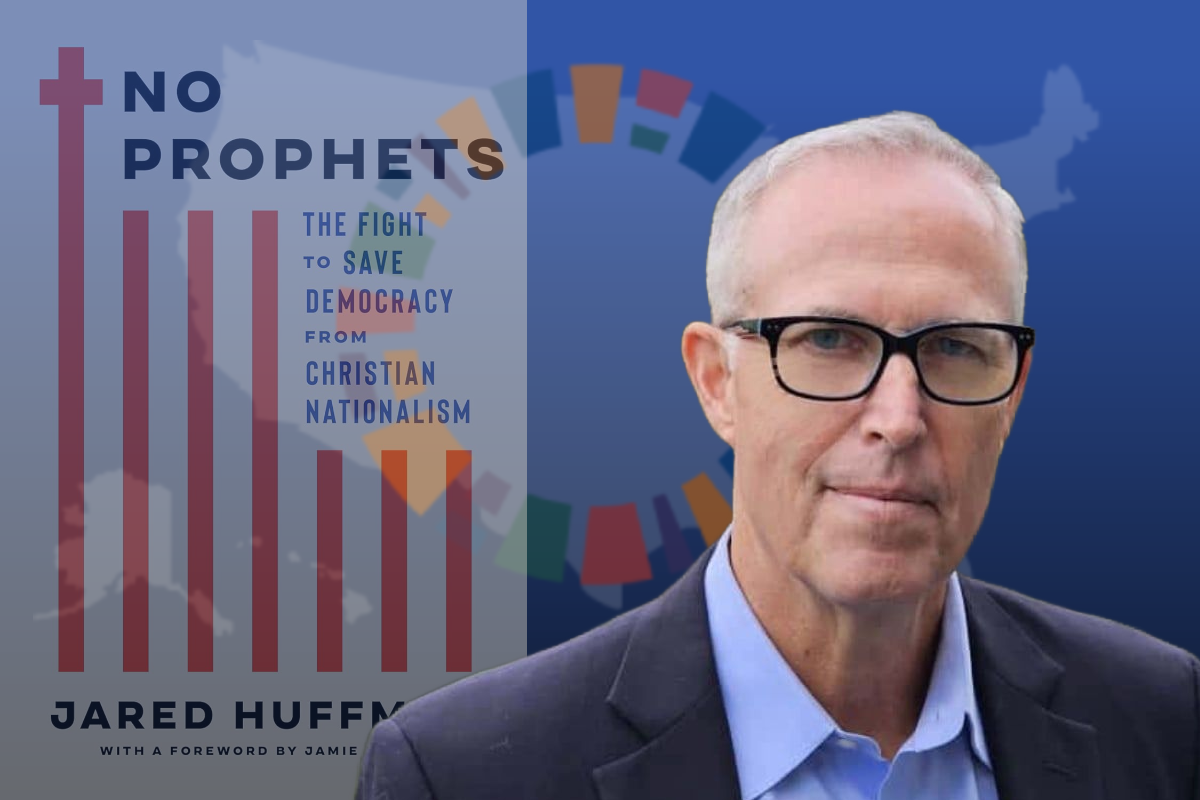
Congressman Jared Huffman: The Fight to Save Democracy From Christian Nationalism
The co-founder of the Congressional Freethought Caucus joins host Rev. Paul Brandeis Raushenbush to discuss how he's seen authoritarian impulses show up in our government and to share some of the insider stories featured in his best-selling new book, "No Prophets"
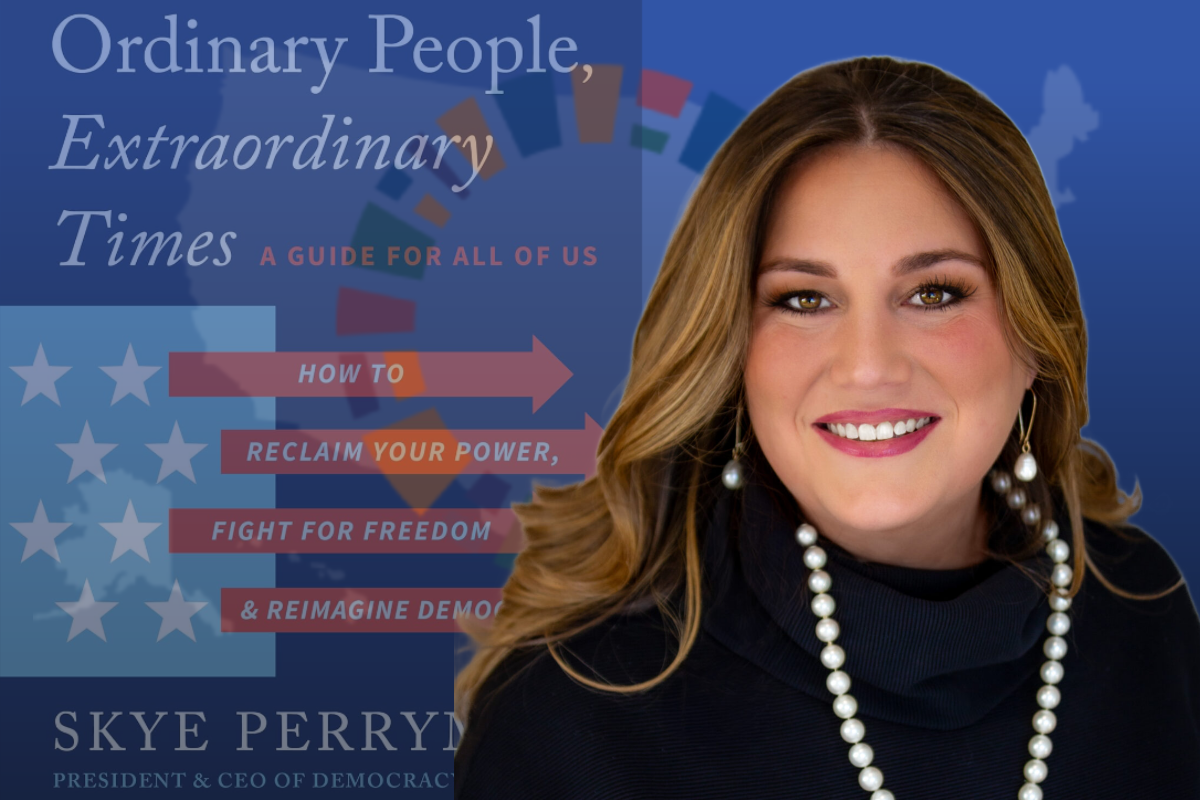
"What Can I Do?" Skye Perryman's New Book Answers the Question
The president of Democracy Forward joins Rev. Paul Brandeis Raushenbush to unpack the calls to effective action in her new book, "Ordinary People, Extraordinary Times: How to Reclaim Your Power, Fight for Freedom, and Reimagine Democracy"