Advocacy
Reflections from the Interfaith Democracy Breakfast Roundtable

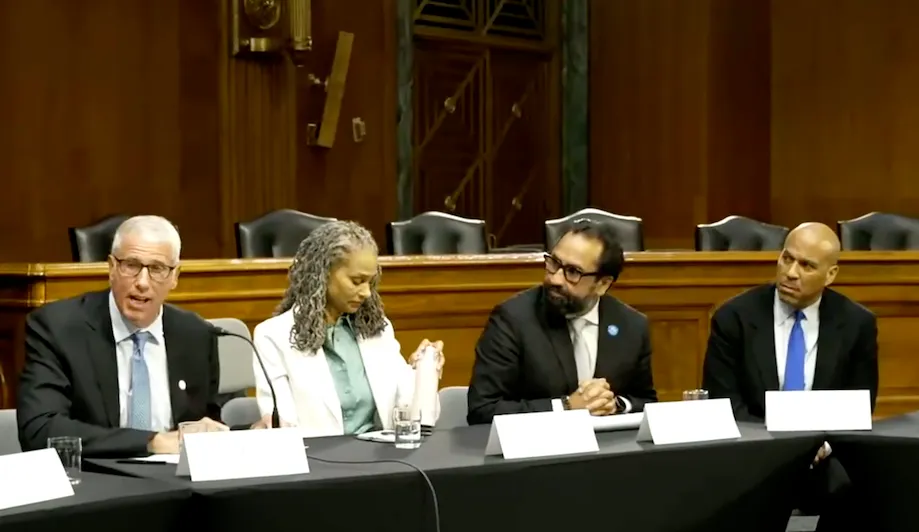
Recently, I had the opportunity to attend the Democracy Breakfast Roundtable hosted by Senate Rules and Administration Ranking Member Alex Padilla, in partnership with the Faithful Democracy coalition and the Senate Democrats' Election Protection Task Force.
We gathered intentionally around the anniversary of Congressman John Lewis's passing. As a tribute to his legacy, they brought faith and civil rights leaders together with sitting Senators to talk about the state of voting rights in this country, and the work our communities are doing to protect the freedom to vote.
Bishop William Barber's homily was the moment that stuck with me most. He reminded the room that an estimated 30 million poor people did not vote in the last election cycle, and that the composition of the current Congress came down to a margin of roughly 7,000 votes. It's the kind of statistic that reframes the whole conversation as a very concrete question of who shows up, who's allowed to show up, and what it costs us when they don't.
What followed was the roundtable, bringing together an extraordinary cross-section of the interfaith and civil rights world:
- Rev. Paul Raushenbush, Interfaith Alliance
- Maya Wiley, Leadership Conference on Civil and Human Rights
- Haris Tarin, Muslim Public Affairs Council
- Laurie Carafone, NETWORK
- Harman Singh, Sikh Coalition
- Darcy Hirsh, NCJW
- Bishop Julius C. Trimble, General Board of Church and Society of The UMC
- Ria Chakrabarty, Hindus for Human Rights
- Bishop Vashti McKenzie, National Council of Churches
- Rev. Carlos Malave, Latino Christian National Network
- Sr. Carol Zinn, Leadership Conference of Women Religious
- Juan Proano, LULAC
- Margaret Mitchell, YWCA
- Demetria McCain, LDF
A few moments stood out. Ria Chakrabarty didn't shy away from connecting the domestic fight for voting rights to Gaza, a reminder that for everyone in the room that the issues we fight are intersectional. And Sr. Carol Zinn, speaking on behalf of the Leadership Conference of Women Religious, offered something I didn't expect: an acknowledgment of the Catholic sisters' own complicity in racial bias, historically. It takes something to say that out loud in a room full of cameras and colleagues, and it set an honest and sincere tone for the rest of the event.
Fourteen organizations, representing Muslim, Jewish, Sikh, Hindu, Christian, Catholic, and interfaith traditions, alongside civil rights and legal advocacy groups, all in the same space, all making the same basic case: that safeguarding elections is sacred work, and that it's happening in every state, in every faith community, whether or not it makes headlines.
I walked away with the reminder that faith leaders and civil rights advocates working alongside lawmakers is bigger than any single organization's newsletter can capture. John Lewis served his community as a faith leader and a civil rights activist. On the anniversary of his passing, it was an honor to be in a room of people continuing his legacy.
The views and beliefs expressed in this post and all Interfaith Alliance blogs are those held by the author of each respective piece. To learn more about the organizational views, policies and positions of Interfaith Alliance on any issues, please contact [email protected].
Transcript
.avif)
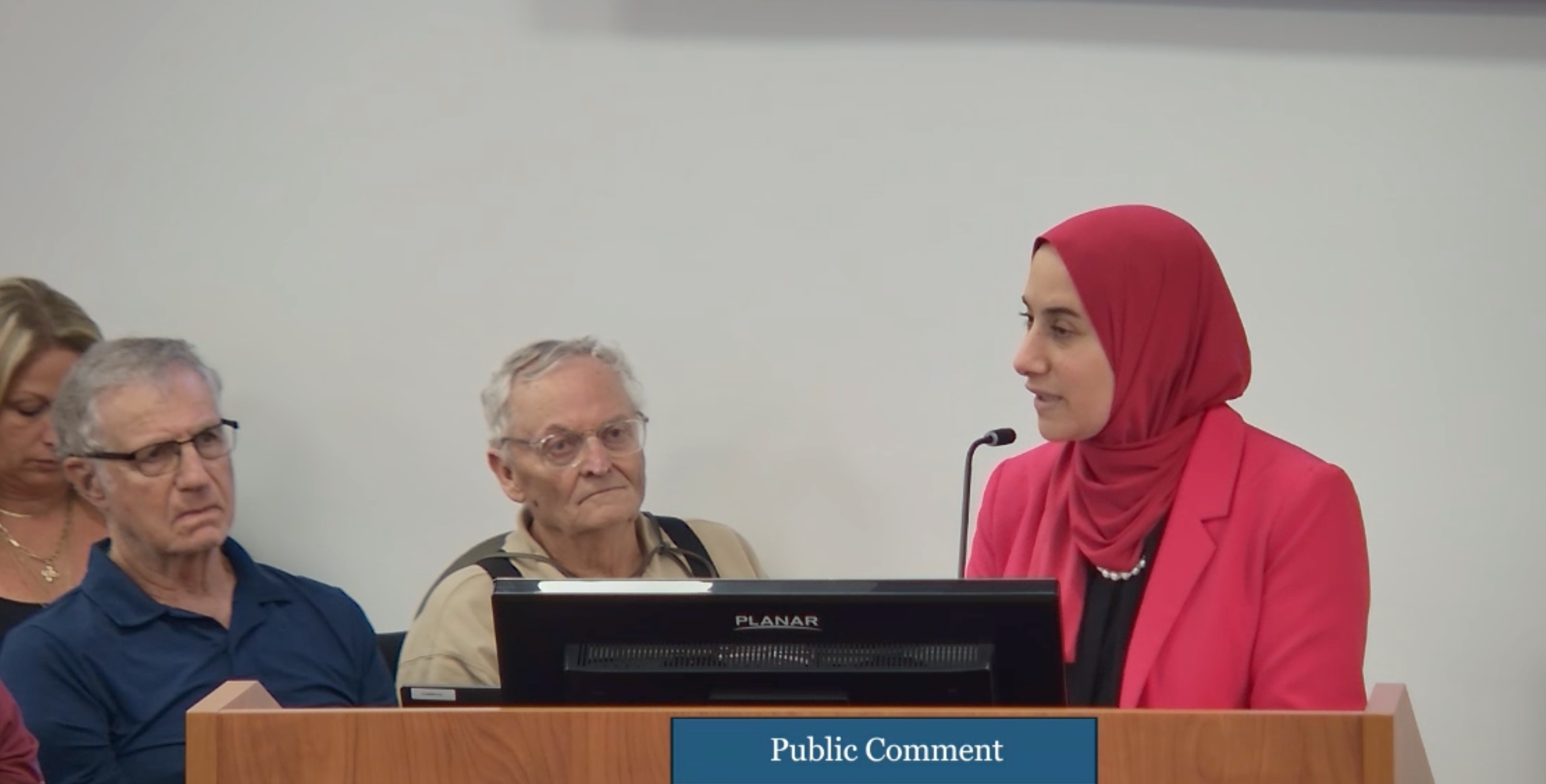
Interfaith Alliance Joins Open Letter Denouncing Anti-Muslim Bigotry from Elected Officials
Joining more than 200 faith leaders and allies, along with over 70 religious and civic organizations, Interfaith Alliance signed onto an open letter denouncing normalization of anti-Muslim bigotry by U.S political leaders.